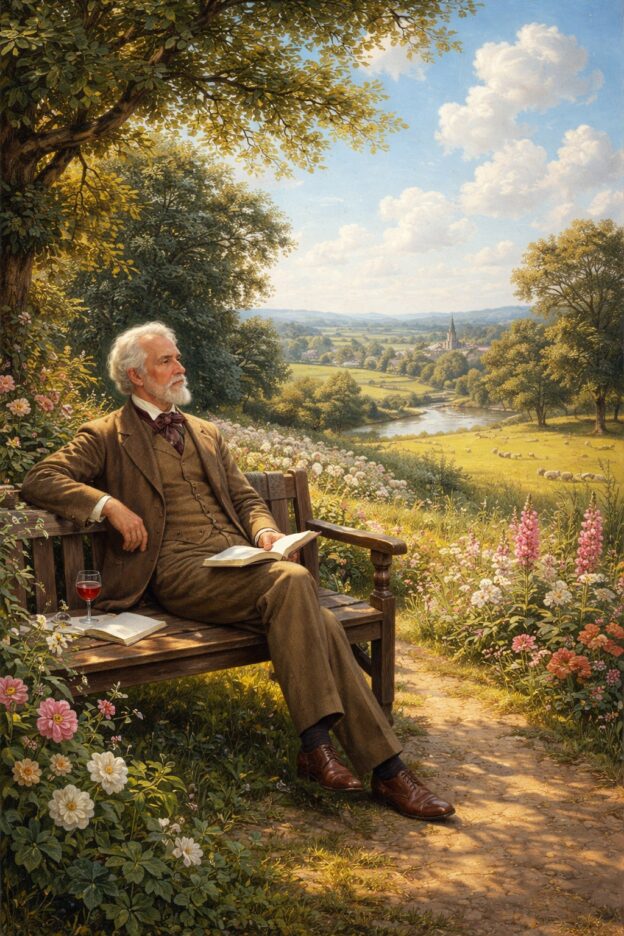
Some people, so I understand, are prone to dreams. At least, they verbalize that they like dreams, even apparently those that border on nightmarish, as though the attraction were pure entertainment. I on the other hand have always found dreams – on the infrequent occasion that I am aware of dreaming – to be universally unsettling, including the constancy of a colour mixture of dark green and black to add to the unfavourable character. I have never had so-called pleasant dreams – except perhaps during my infrequent afternoon naps when, not so much as dream, I simply arrest my mind in a comfortable quarter relieved of noise and anxiety.
The import of dreaming is however not confined to soporific dalliance. Indeed dreaming is as often attributable to a very alert state of mind. Nonetheless whatever its stimulus, it is difficult when talking about dreaming in any condition to escape the possibility of fantasy and illusion – though the “reality” is more likely to be ambition and yearning.
I flatter myself to imagine that my avoidance of dreams is a reflection not of lack of an imaginative mind rather the preference for fulfillment; that is, the preponderance of attitude conducive to achievement of a goal. Now I know this sounds both unnecessarily stylish and impossibly deceitful – after all, who can bypass the castle in Spain for pure diligence and industry. Though I admit to having from time to time a degree of reverie, seldom do I allow myself to be overtaken by delusion. This is not to say I detour the trance but – and I guess this is what I am saying – it isn’t long before my feet are back on the ground, eyes focused upon “la route précise“. I suppose I do not allow myself the passive luxury of dreaming. Or, perhaps, that I am fearful of losing my grip.
You may justifiably ask, dear Reader, why then I have so painfully prolonged this monologue, were it nothing more than a passing comment upon what amounts to something no more obtrusive than daydreaming. Certainly it is not a complaint about those who have their head in the clouds. Paradoxically it is a philippic in support of dreaming. With age I have found this hypnotic vehicle to be a welcome resort. And that alone is not entirely a slip of the tongue.
Dreaming for old people is a way of reckoning the past. It allows a calculation, estimation and summation of the past without one’s doctor, lawyer or accountant. At times dreaming may even afford the expiation of guilt associated with the past. Not all of us is free of misbehaviour and regrettable conduct. But dreaming is also a manner of concluding or shutting the door on what is no longer within reach. Dreaming may momentarily enliven a product or moment of the past – including often very cheerful remembrance – then close the cover of the album with the ribbon of maturity which says, “That is over, that is past, never to be redone.” This latter state of mind may prove to be half-conscious, a reverie from which we awaken. But the palliative effect is just as relieving and welcome. The dream curiously allows one to define the boundaries of life. Admitting that something is nothing but a dream is not a denial; rather, a restriction. With age there are many restrictions, not all of which we choose to acknowledge outright. Even without considering the strength of the complaint – whether arthritis or whatever – there simply comes a time in life to accept that things change. This is neither defeat nor admission; it is Nature’s way of subscribing the limits. Musing and wool-gathering are not hatching and conceiving; rather, models of the future.
The unfortunate result of pure, unproductive dreaming in the traditional sense is sometimes the ruination of the actual event to which one initially ascribed. That is, the dream proves to be more fantastic than the reality. The common adage that we cannot relive the past is an apt summation in these circumstances. Treading on this ground can be dangerous for those who are unwary.
Yet this does not mean one shouldn’t inspect the taste of a claret or initiate a steak tartare. There always remains equal opportunity for novelty – though perhaps with the application of preliminary enquiry and judicious limitations (the worthy apparatus of old age). From the bewitching cauldron of our past we may yet revive and enrapture a plausible dream.