
Every cloud must have a silver liningWait until the sun shines throughSmile, my honey dear, while I kiss away each tearOr else I shall be melancholy too
My Melancholy Baby by Bing Crosby
As we inaugurate the tail end of January, those of us destined by fate or pre-existing health conditions to remain shivering in Canada are nestling in for the upcoming critical period of winter including what we all hope will be a forgiving short month of February before launching into what is commonly the wistful though unpredictable month of March. But inspiration is in the offing – albeit 8 weeks remote. Under the circumstances – that is, unless one is a cross-country skier or other avid outdoorsman – the most favourable resort is one’s drawing room. That abstraction translates to books, podcasts and movies.
We no longer have a television. Instead everything of an entertainment or literary nature is a product of our individual electronic devices; namely, computers, iPads and iPhones. Curiously my most recent recollection of television is that I never learned to manage the handheld remote (nor why, for some further inexplicable reason, there were two independent devices, each of which insisted upon the cooperation of the other). It is an unexpected novelty for one of my advanced age that I have adjusted to the electronic devices. The surviving improvement of this transition from public to private communication is the corresponding relief from ambient sound and diverse conflict of interests. Headphones to the rescue! I confess I miss the cordiality of watching “together” (though the separation between the study and the drawing room is negligible). The bookcase has become a museum of antiquities, including not only hardcover books (and the occasional magazine recipe) but also an empty Lalique bowl and a crystal ball suitable for clairvoyance, a tiny wrought iron doorstop (now employed as a bookend), a silver moulded seraph, a collection of Schleich plastic animal toys, handmade pottery, a Sligh mantel clock now muted, a ceramic bust of Napoleon mounted on a porcelain base, and anything else in need of displacement or protective confinement.
While pedalling about the subterranean garage on my Ecolo Pronto tricycle earlier today I encountered a visibly mournful Canadian who, on this burgeoning snowy winter day, unhesitatingly confessed his regret at being unable to return this winter to New Smyrna Beach, Florida where he and his wife had normally hung out. Though we only stayed there once overnight upon return from the Keys, we have exceedingly fond memories of it as well. My friend nostalgically mentioned the beach; and the two us fell into momentary reverie.
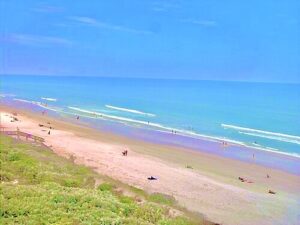 New Smyrna Beach – Wikipedia
I am staring out the window from my desk. As the snowflakes mount in their accumulation and fogginess, there arises within me a conflict between reminiscences of the southern climes and the competing beauty of our rural winter landscape. One is naturally invited to lapse into a philosophic régime; and, I reckon, it is impossible to escape the existential reality that whimsy and reality, though not one and the same, are not far removed one from the other. Disintegration into happy memories – planning trips, venturing along new highways, dining out at food stands or upon a pier, palm trees, ferns and the first sight of the rollicking blue ocean – these are the material of absorption and fantasy. Likewise, upon returning to planet earth, our minds still lingering in the clouds, the propriety of judicious decisions whether couched in economic, health or age related premises is undeniable.
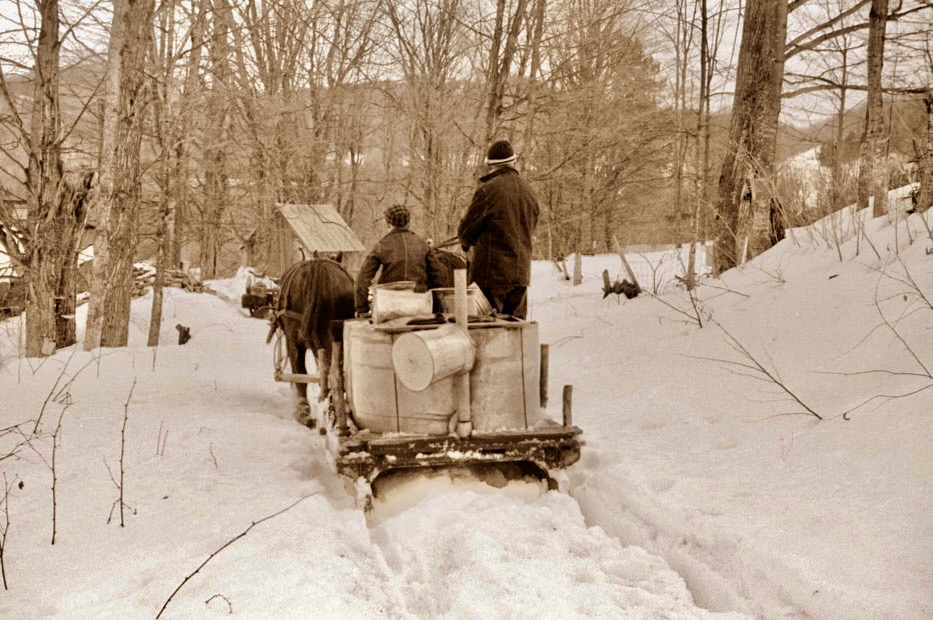
Fulton’s Farm Shop, Village of Pakenham
New Smyrna Beach is a city in Volusia County, Florida, United States, located on the central east coast of the state, with the Atlantic Ocean to the east. The downtown section of the city is located on the west side of the Indian River and the Indian River Lagoon system. The Coronado Beach Bridge crosses the Intracoastal Waterway just south of Ponce de Leon Inlet, connecting the mainland with the beach on the coastal barrier island.
The surrounding area offers many opportunities for outdoor recreation; these include fishing, sailing, motorboating, golfing, and hiking. Visitors participate in water sports of all kinds, including swimming, scuba diving, kitesurfing, and surfing. In July 2009, New Smyrna Beach was ranked number nine on the list of “best surf towns” in Surfer. It was recognized as one of the “world’s top 20 surf towns” by National Geographic in 2012. It has also been dubbed the “shark attack capital of the world.”
The area was first settled by Europeans in 1768, when Scottish physician Dr. Andrew Turnbull, a friend of James Grant, the governor of British East Florida, established the colony of New Smyrna. Dr. Turnbull had married Gracia Dura Bin (some sources give her name as Maria Gracia Rubini) the daughter of a Greek London merchant from the Ottoman city of Smyrna (modern-day İzmir in Turkey) and named the settlement in honour of his wife’s birthplace.
Turnbull recruited about 1,300 settlers, intending for them to grow hemp, sugarcane, and indigo, as well as to produce rum, at his plantation on the northeastern Atlantic coast of Florida. The majority of the colonists came from Menorca (historically called “Minorca” in English), one of the Mediterranean Balearic Islands of Spain, and were of Catalan culture and language.
Although the colony produced relatively large amounts of processed indigo in its first few years of operation, it eventually collapsed after suffering major losses due to insect-borne diseases and Indian raids, and growing tensions caused by mistreatment of the colonists on the part of Turnbull and his overseers. The survivors, about 600 in number, marched nearly 70 miles north on the King’s Road and relocated to St. Augustine, where their descendants live to this day.
In 1887, when New Smyrna was incorporated, it had a population of 150. In 1892, Henry Flagler provided service to the town via his Florida East Coast Railway. This led to a rapid increase in the area’s population. Its economy grew as tourism was added to its citrus and commercial fishing industries.
During Prohibition in the 1920s, the city and its river islands were popular sites for moonshine stills and hideouts for rum runners, who came from the Bahamas through Mosquito Inlet, now Ponce de León Inlet. “New Smyrna” became “New Smyrna Beach” in 1947, when the city annexed the seaside community of Coronado Beach.