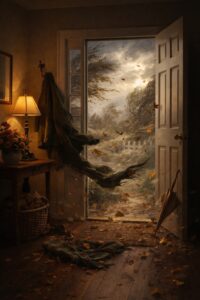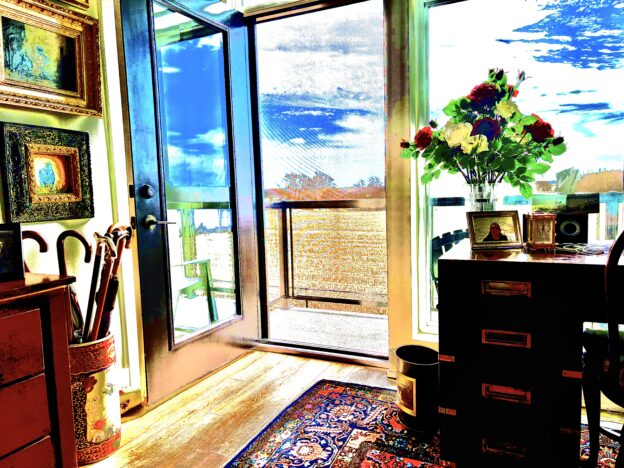
Whenever I hear – as I did today – the forceful sound of wind blustering and buffeting, whether out-of-doors or through a screen door or a partially opened window, I recall the eerie high-pitched sound of wind in the movie Satyricon by Federico Fellini. The plaintive sound captured the pre-Christian Roman world of debauchery during the reign of Emperor Nero. But its universal appeal is its unforgiving mournfulness, a poetic background to the tableaux of life both ancient and modern.
Wind customarily heralds change – approaching storm or alternating temperatures; clear or cloudy skies; clarity or fog. On the land, the wind blows the trees and scatters débris; on the sea, it curls the water and sprays the air. Inevitably its assertiveness has the effect to forget all the things that have happened or been done and to start again from the very beginning. It is Nature’s catharsis, a purge and release from repressed emotion.
It is an odd confession of living that the capricious signals of Nature – when permitted to insinuate one’s being – afford a reliable exhaustion of frivolity and discolouration. It is akin to washing one’s clothes or cutting one’s hair. The reverberations of wind succeed to jangle sufficiently to direct one’s mind to succinct correspondence with elemental features such as the past, dreams, exploitation, expression and choice.
Though unseen, the wind leaves a trail of conversance. When it lapses, the sudden absence of the wind reduces a once volatile symphony to a comparatively dull platitude. It is then that one’s vision settles upon the purified atmosphere, rendering the necessity to regain control of the capital at hand – though without the benefit of twists and turns.
HAL’s AI rendition:
Windy Day
Whenever I hear—as I did today—the forceful sound of wind blustering and buffeting, whether outdoors or pressing through a screen door or a partially opened window, I am recalled to the eerie, high-pitched lament of wind in Satyricon. That sound, so plaintive and unrelenting, seemed to belong wholly to the pre-Christian Roman world of excess under Nero. Yet its reach is broader: an austere, mournful music that serves as a poetic backdrop to the shifting tableaux of life, ancient and modern alike.
Wind is the customary herald of change—of approaching storm or shifting temperature; of skies that clear or cloud; of clarity that yields to fog. On land, it bends trees and scatters debris; at sea, it curls the water and salts the air. There is something inexorable in its insistence, as though it compels the forgetting of what has been done or endured, urging instead a return to beginnings. It is Nature’s catharsis: a purging, a release of what has long been held in suspension.
It is a curious admission of living that these capricious signals of Nature—when allowed to permeate one’s being—can exhaust frivolity and wash away the stains of distraction. The effect is not unlike laundering one’s clothes or cutting one’s hair: a quiet, restorative renewal. The reverberations of wind unsettle just enough to draw the mind into a more exact correspondence with elemental concerns—memory, dreams, misuse, expression, and choice.
Though unseen, the wind leaves behind a distinct trace of awareness. When it subsides, the sudden stillness reduces what was once a volatile symphony to a kind of subdued monotony. It is then that the eye settles upon a clarified atmosphere, and one feels the need to regain command of the small dominion at hand—though now without the benefit of turbulence, and with fewer illusions to guide the way.