The precedents to my day today were as usual 1) an exceedingly agreeable breakfast of two eggs fried in avocado oil sprinkled with Maldon salt followed by steel cut oats blended with kéfir topped with 3 luscious dates; 2) a 4 Kms tricycle ride throughout the neighbourhood amidst an unmistakably cool breeze; and, 3) lounging and dozing on a balcony chair in the morning sunshine in order to capture the relieving Vitamin D which is as much an allure to my face as it is to the face of plants.
As soon as I had thereafter begun my ritual automobile drive about the countryside this afternoon I tuned into the Met Opera from New York City. It is another of my conventions, one specifically aligned with a rambling Saturday afternoon. Today’s production was Mozart’s Don Giovanni.
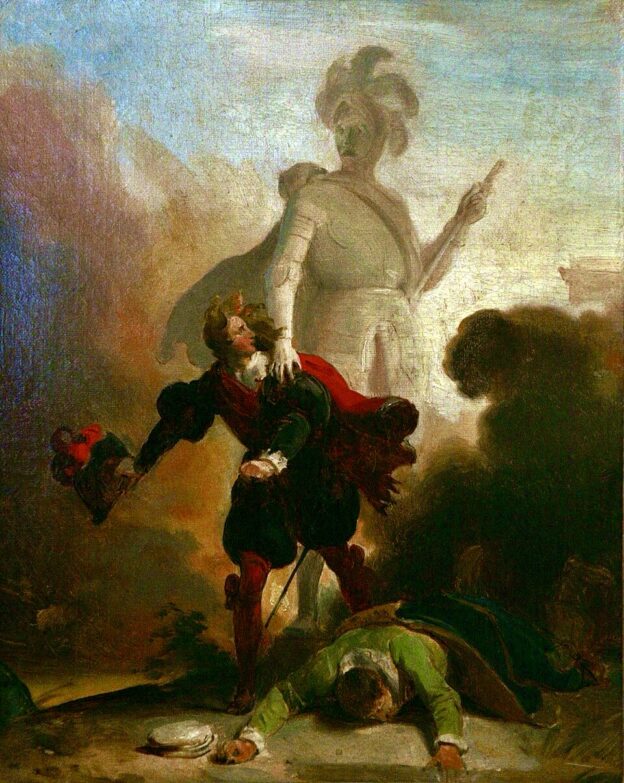
Don Giovanni (full title: Il dissoluto punito, ossia il Don Giovanni, literally ‘The Rake Punished, or Don Giovanni’) is an opera in two acts with music by Wolfgang Amadeus Mozart to an Italian libretto by Lorenzo Da Ponte. Its subject is a centuries-old Spanish legend about a libertine, Don Juan, as told by playwright Tirso de Molina in his 1630 play El burlador de Sevilla y convidado de piedra. It is a dramma giocoso blending comedy, melodrama and supernatural elements (although the composer entered it into his catalogue simply as opera buffa). It was premiered by the Prague Italian opera at the National Theatre (of Bohemia), now called the Estates Theatre, on 29 October 1787. Don Giovanni is regarded as one of the greatest operas of all time and has proved a fruitful subject for commentary in its own right; critic Fiona Maddocks has described it as one of Mozart’s “trio of masterpieces with librettos by Da Ponte”.
Although the opera has its evident dark side, it was nonetheless catalogued as opera buffa:
Opera buffa is a genre of opera. It was first used as an informal description of Italian comic operas variously classified by their authors as commedia in musica, commedia per musica, dramma bernesco, dramma comico, divertimento giocoso.
The plot summary:
Don Giovanni (1787) is a Mozart opera combining comedy, melodrama, and supernatural elements, detailing the final days of a reckless nobleman, Don Juan (Giovanni). After murdering the Commendatore, Giovanni pursues endless romantic conquests, only to be confronted and dragged to hell by the statue of his victim. Giovanni finds himself in a cemetery, where he audaciously invites the statue of the dead Commendatore to dine with him. The statue accepts and, when Giovanni refuses to repent for his wicked life, drags him down to Hell.
Given the ambitious extent of my daily drives (frequently exceeding 150 Kms) I interrupt my musical diversion by listening to an array of popular news channels, primarily to catch up on the political intrigues of the world. The content of traditional news media is seldom enlightening even though filled with projections and estimates. By the time I become exhausted listening to identical verbiage – and the inevitable advertisements – I welcome a return to the Met.
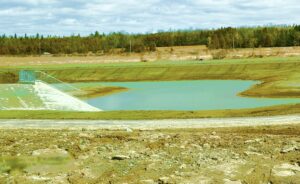
But even before determining the scope of my entertainment I thought to investigate the on-going nearby residential development of Minto Construction. I entered upon a roadway which – although paved – is currently limited to construction. It was here I discovered the proposed storm water basin. It affords a unique and highly amusing park-like territory in an otherwise dense residential location. If nothing else it is a fruitful and meaningful reminder of the necessity of infrastructure.
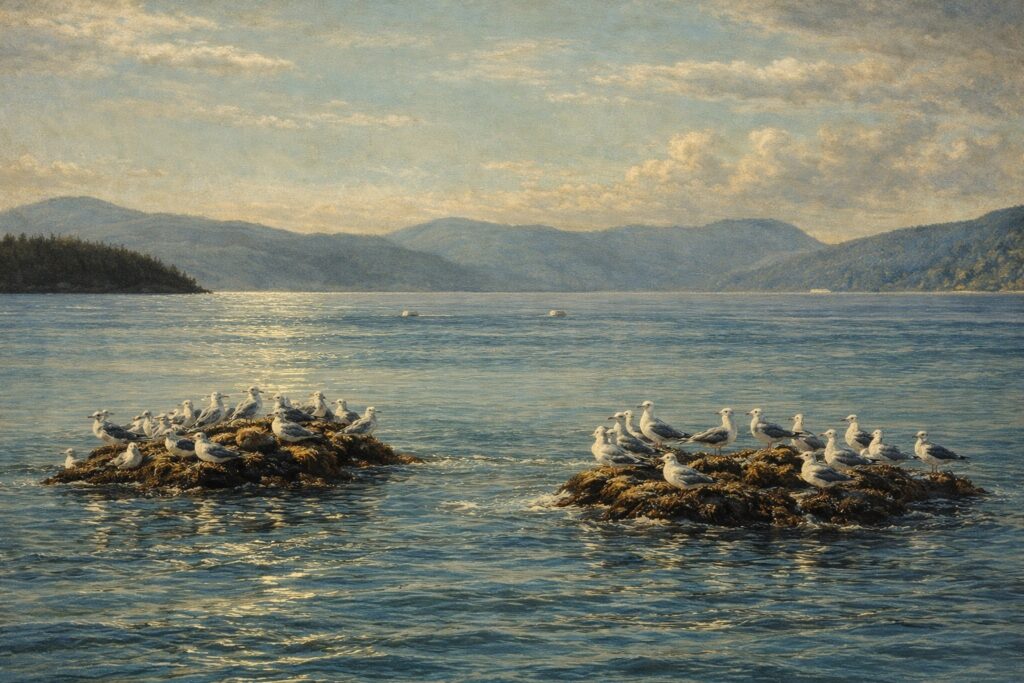
Upon my return home – and after having dutifully vacuumed the rugs of the car and replenished the windshield wiper fluid – I was subsequently diverted from monotony upon receipt of a photo of Saanich Inlet, British Columbia from our dear friend Marilyn who inhabits this select area of the world.
Saanich Inlet (also Saanich Arm) is a body of salt water that lies between the Saanich Peninsula and the Malahat highlands of Vancouver Island, British Columbia, Canada. Located just northwest of Victoria, the inlet is 25 km (16 mi) long, has a surface area of 67 km2(26 sq mi), and its maximum depth is 226 m (741 ft). It extends from Satellite Channel in the north (separating Salt Spring Island from the Saanich Peninsula) to Squally Reach and Finlayson Arm in the south. The only major tributary feeding the inlet is the Goldstream River.