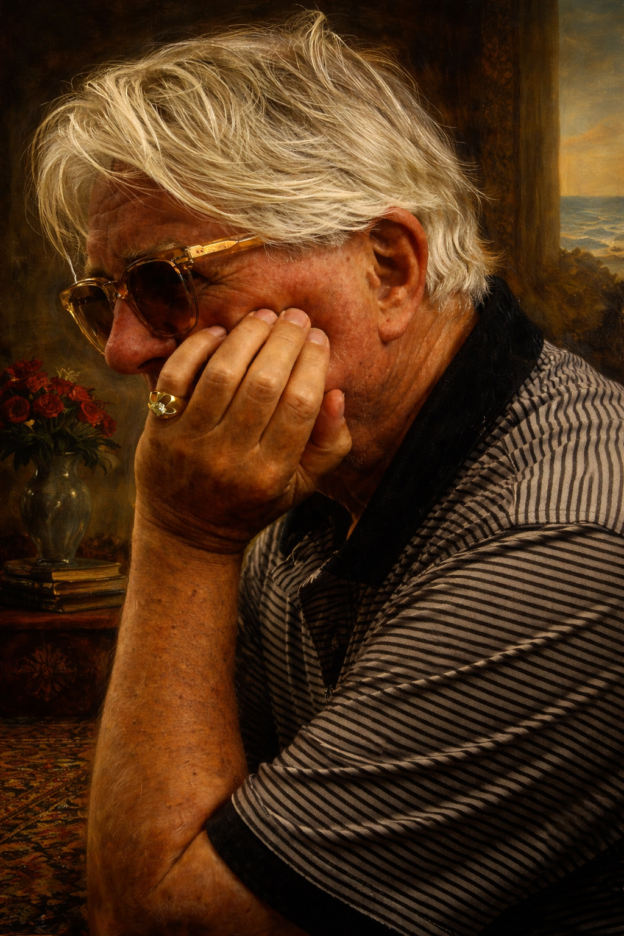
Author Archives: L. G. William Chapman, B.A., LL.B.

About L. G. William Chapman, B.A., LL.B.

Past President, Mississippi Masonic Hall Inc.; Past Master (by demit) of Mississippi Lodge No. 147, A.F. and A.M., G.R.C. (in Ontario) Chartered by the Grand Lodge of Canada July 20, 1861; Don, Devonshire House, University of Toronto, Toronto, Ontario; Juris Doctor, Dalhousie Law School, Halifax, Nova Scotia; Bachelor of Arts (Philosophy), Glendon Hall, York University, Toronto, Ontario; Old Boy (House Captain, Regimental Sgt. Major, Prefect and Head Boy), St. Andrew's College, Aurora, Ontario.

American cheese

At one time, it was not entirely unfounded to prefer a European rendition of almost anything over an American one. That preference, however, often translated into a certain hauteur when discussing American productions—food, art, music, even automobiles. It was difficult to escape the cachet of anything French, Italian, German, or Swiss.

I did, however, develop a bias in favour of American hardwood furniture from North Carolina—manufacturers such as Henredon, Thomasville, Maitland-Smith, Sligh, and Wesley Allen. No doubt this reflected my growing interest in home decoration. I broadened that education by researching Canadian-made products from Gibbard and by studying what I encountered in Country Life magazine from England.

Canada’s oldest furniture factory, The Gibbard Furniture Shops Limited of Napanee, Ontario, was founded by John Gibbard, a cabinetmaker who arrived in “The Napanee,” as the village was then known, in 1835. Shortly thereafter, he leased a mill on the canal that still runs through the Gibbard plant. He began manufacturing sash, doors, furniture, coffins, and a variety of implements for local farmers, including fanning mills.

The company remained under family control for four generations until 1940, when it was purchased by Jack McPherson, formerly its sales manager in the 1920s. Subsequent presidents included his widow, Mrs. Jack McPherson, David S. Roffey, and Bruce R. McPherson, the final chief executive.

In 1964, the company launched its flagship Canadian Legacy line of mahogany and cherrywood furniture—widely recognized as one of the finest Canadian furniture lines and sold internationally, from Kingston to Madrid. Seventy Canadian embassies and high commissions were furnished with Gibbard pieces. Bobby Orr reportedly slept in a Gibbard bed, and even Sir John A. Macdonald is said to have written at a Gibbard desk.

In 2009, after 173 years, the company closed its doors.

As for automobiles—an interest I was developing at the same time—I confined myself to nearby dealerships. The idea of interrupting my law practice to travel any distance for mechanical service struck me as impractical and unnecessarily time-consuming. Given that my practice was in the country, most local dealerships sold domestic models. Japanese and German marques were only beginning to establish a presence in those years.

That pragmatism did not diminish my fondness for American cars. Over a lifetime of roughly twenty-five new vehicles, every one has been an American make—exclusively General Motors and Ford. I continue to admire American automotive craftsmanship. With some regret, and a touch of disdain, I observe the current popularity of what I regard as imitations of BMW and Audi—vehicles that strike me as little more than glossed-up versions of Japanese racing toys, appealing to younger drivers with their noise and low profiles. I concede, of course, that this may simply mark me as an old fogey. My preferences have not changed in seven decades; I take that, perhaps, as a small compliment. I have also switched to fully electric automobiles – admittedly a vernacular attracting increasing popularity of Chinese makes.

Although I would not claim to be widely travelled, I have had the privilege of visiting Europe on several occasions—London, Paris, Düsseldorf, Hamburg, Rotterdam, Copenhagen, Stockholm, Helsinki, Oslo, Neuchâtel, the Costa Brava, St. Tropez, Sanremo, Rome, Montepulciano, Florence, and Cagliari. I have driven across Canada from coast to coast, visited resorts on both the Gulf and Pacific coasts of Mexico, explored many Caribbean islands, and travelled extensively along the eastern seaboard of the United States, with brief excursions to San Francisco and Las Vegas.

These experiences are tempered by the observation that there is, ultimately, no escaping oneself. Whether in my own home in Almonte or overlooking a forest of church spires in Rome with a martini in hand, everything is filtered through the same eyes and mind. Travel broadens, certainly—but recognizing its limits tempers the longing we often attach to distant places. I have always been somewhat sedentary, and with age I find myself less inclined to endure the inconveniences of travel.

All of which at one time brought me to the modest conclusion that Florida represents an agreeable compromise. There is something to be said—perhaps something shallow—for driving one’s own car, both to the destination and while there. Air and rail travel hold little appeal. Europe, particularly in its southern reaches, no longer exerts the same pull it once did. And there is comfort in remaining within the North American sphere—language, culture, and medical systems included.

It may sound complacent, even narrow-minded. I readily concede the charge. The truth is that my maverick impulse now extends no further than a road trip to Key West, to stay at the Waldorf-Astoria Casa Marina.

Alongside this inclination has grown a corresponding esteem for American ways of doing things. I had always taken pride in the conduct of my own business—an unqualified commitment to high-quality service. Nothing was permitted to dilute that objective. In my experience, the American model of business is often guided by a similar seriousness of purpose. I have generally found it a pleasure to deal with Americans.

An unusual feature of American society—one often acknowledged privately but rarely discussed openly—is its system of class distinctions. To deny their existence in a society that proclaims equality is, frankly, implausible. My own view is that such distinctions, however unfashionable, reflect a certain realism. They imply reciprocal duties and obligations and acknowledge that while circumstances differ, value and contribution are not thereby negated.

The phrase “all men are created equal,” penned by Thomas Jefferson in 1776 and refined in its final form with the influence of Benjamin Franklin, remains one of the most enduring declarations of the American experiment. Its meaning has been debated and expanded ever since.

The expression “Ugly American” is often invoked as criticism, though I suspect it is not entirely free from envy. Similar characterizations have been directed at other nationalities. The charge typically centres on a perceived brashness—a willingness to live loudly and visibly. Whether this arises from temperament, means, or both is difficult to say.

From where I stand, approaching the later chapters of life, I find something rather appealing in that inclination—to enjoy oneself fully and to expend more energy in living than in worrying about appearances. Not all Americans fit this description, of course; I am speaking of a certain type. Still, I find their company congenial. It encourages a robust camaraderie and an unmistakable sense of bon vivant.

Let me add one final point.

All cheese is processed. Every last bit of it. It is a human invention, not a naturally occurring substance. Even the simplest varieties—halloumi, for instance—require the deliberate intervention of rennet to separate curds from whey, followed by draining and pressing. More complex cheeses involve additional techniques: mozzarella and queso Oaxaca are kneaded and stretched; Gruyère and Comté are washed in bacterial brine.

So to the cheese purists, I propose a simple arrangement: you refrain from prescribing what belongs on my cheeseburger, and I will resist the temptation to place American Singles on your carefully curated cheese board.

The hills are alive!

Young parents lathered in babies, noisy kids on tiny tricycles with red plastic flares protruding from each handlebar, dogs patiently awaiting the parade along the parkway adjacent the river, proud grandparents talking of dinner with family and intended treats for grandchildren – these are the overnight signals of the coming of springtime. I too re-entered the out-of-doors vernacular for my own tricycle ride up and down the local avenues, precisely 4Km today, Active Calories 75CAL, Total Calories 151CAL, Avg. Speed 6.5KM/H, Avg. Heart Rate 86BPM in all Effort 5 Moderate.

Continue reading

Moving on…

Even if it is your good fortune not to have suffered greatly in life, I suspect you have nonetheless endured the challenge of moving on. I reckon no one is spared the occasional trial. We all have something we’d prefer to leave behind. It really matters very little that the strength of one’s particular encounter with fate is of comparatively weak intensity; in the end, accommodating a tribulation of any degree exacts some measure of duress. The consequence of moving on is letting go; the two concepts go hand-in-hand. One concept (moving on) is prospective; the other (letting go) is retrospective. You cannot move ahead if your foot is on the brake.

Continue reading

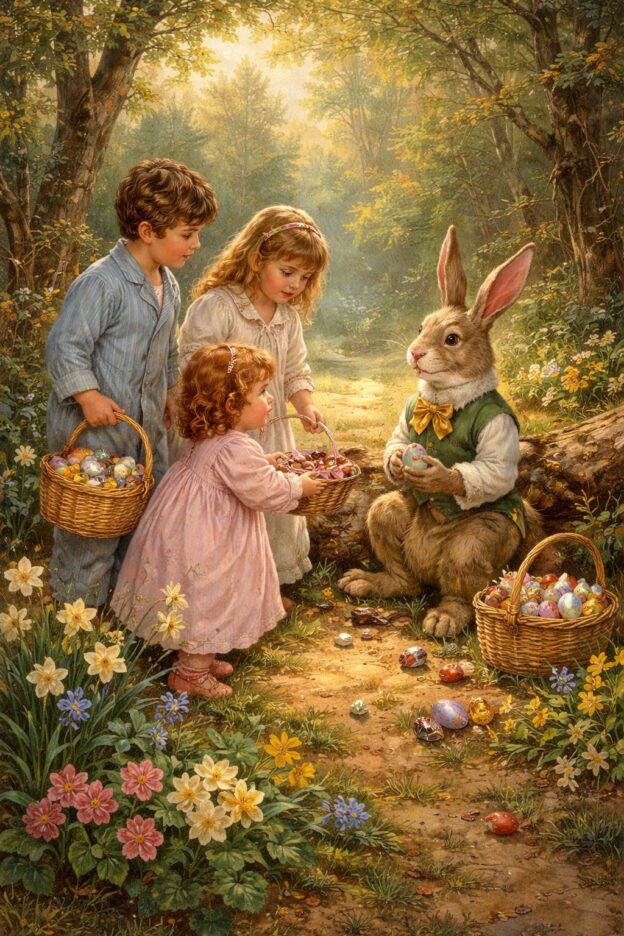
The Easter Bunny

On a bright and hopeful morning in early spring, the village woke to the gentle promise of Easter Sunday.

The grass still held tiny pearls of dew, and the air smelled faintly of chocolate—though no one quite knew why.

Inside a cozy blue house at the end of Maple Lane, three children were already wide awake.

“Do you think he’s been?” whispered Clara, her eyes shining.

“Of course he has,” said her older brother Thomas, trying to sound certain, though he hadn’t yet checked.

Their little sister, Rosie, bounced on her bed. “The Easter Bunny never forgets!”

They rushed downstairs in a flurry of slippers and giggles.

And there it was.

The living room had been transformed overnight.

Brightly coloured eggs peeked out from behind cushions. A trail of tiny foil-wrapped chocolates led toward the garden door. And on the table sat three baskets—each one tied with a ribbon.

Rosie gasped. “He remembered my favourite! Milk chocolate!”

Thomas picked up an egg and turned it over thoughtfully. “Strange,” he said. “Last year they were all in the garden. Why inside this time?”

Clara narrowed her eyes. “Maybe something went wrong.”

The three of them froze.

“What if…” Rosie whispered, “…the Easter Bunny had trouble?”

That was all it took.

Adventure, after all, waits for no child on Easter morning.

They pulled on coats over their pajamas and slipped out into the garden.

At first, everything looked normal. Blossoms trembled in the breeze. A robin hopped along the fence.

But then Thomas spotted something unusual.

Footprints.

Not quite rabbit. Not quite anything.

They followed the trail past the apple tree, through the gate, and into the small wooded path beyond their yard.

“Do you think he’s hurt?” Clara asked quietly.

Rosie clutched her basket tighter. “We have to help him.”

The trail led them to a little clearing—and there, behind a fallen log, they found him.

The Easter Bunny.

He was real. And he looked…exhausted.

“Oh dear,” he said, adjusting his tiny waistcoat. “I was hoping no one would notice.”

“You’re late!” Rosie blurted out.

“Rosie,” Clara said gently.

The Bunny gave a tired smile. “Not late. Just…overworked this year. So many children. So many eggs. And I seem to have misplaced my last basket.”

Thomas stepped forward. “We found lots already. You did a good job.”

The Bunny’s whiskers twitched. “Did I?”

Clara knelt beside him. “You did. But maybe…you don’t have to do it all alone.”

There was a long pause.

Then Rosie held out her basket. “You can have some of mine.”

Thomas nodded. “We can help you next year.”

The Bunny’s eyes softened.

“Well,” he said, “that might just be the finest Easter gift I’ve ever received.”

He stood, a little steadier now, and brushed off his coat.

“Kindness,” he said, “is the secret ingredient. Not chocolate. Though chocolate helps.”

Rosie giggled.

With a small bow, the Easter Bunny hopped away, his energy somehow restored.

The children made their way back home, the morning now glowing brighter than before.

Inside, their baskets waited.

But somehow, the chocolate tasted even sweeter.

And from that day on, every Easter morning held a quiet little mystery—
not just of eggs hidden in clever places,
but of kindness, shared and returned,
like a secret only children truly understand.


Afternoon escape,,,

We’ve primarily devoted the day to the abandonment of winter. The weather – though brisk – promises to reach 20°C by Good Friday, the beginning of the Easter long weekend and the welcome surge towards springtime. I punctuated the wishful advent by tricycling up the ramp from the subterranean garage onto the street into the open air. Naturally I had forgotten to wear gloves so my hands quickly resembled blocks of ice. Nonetheless with the aid of the electronic button on the tricycle handle I launched up the hill to the uppermost avenue, across the generous flat, then down another slide to return home. In all 2.64 Km which is just shy of my daily scheme of 3 Km over an estimated 30 – 40 minutes (depending upon how much and how often I stop to gossip).

Continue reading

The first quarter,,,

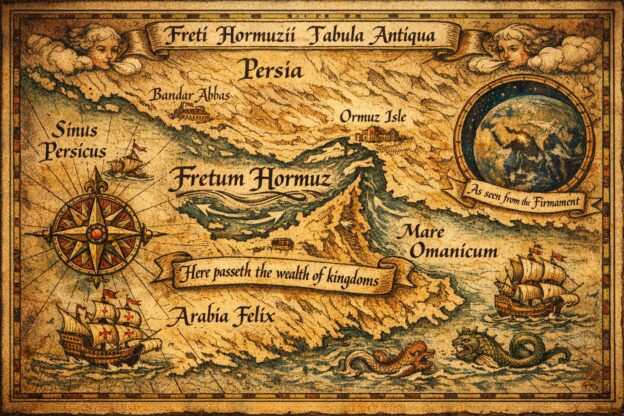
President Trump of the United States of America is angry at the NATO allies for not coming forward to repair the opening of the Strait of Hormuz. This unwelcome state of affairs signals further division between America and its erstwhile friends. The mechanics of the entire globe is undergoing an undeniable shift, including possibly a revival of strictly conservative thinking contradicted by an equally vociferous liberal agenda. If Iran gets its way, there may also be a heightened claim to possessory entitlement to levy charges similar to usage of the Panama Canal. When all is considered, international geography is at the forefront of global financial management. Oil remains an elemental feature of the modern world – in spite of China’s latest news that it has perfected a battery to charge its EVs (electric vehicles) in record time (equivalent to the time devoted to filling a gas tank).

Continue reading

When you least expect…

Although not everything lately has gone as swimmingly as I might have wished, undeniably today is the least worrisome I have been in a while. The combination of both medical and dental emergencies over the past four months has at last – thanks to the inestimable talent of my professional advisors – become tolerable. This afternoon, in deference to my new-found tranquility, I positioned myself on the balcony overlooking the field and upriver. When not dozing in the warm sunshine – stimulated in my dreamlike state by the squawking Canada geese which had assembled in parade lines along the river’s shores – I contemplated the summary fate of aging. Specifically I ruminated upon the narrowing reserve of one’s friends.

Continue reading

The geocentric view of the cosmos

PTOLEMY (2nd century) Greek astronomer and geographer. His teachings had enormous influence on medieval thought, the geocentric view of the cosmos being adopted as Christian doctrine until the late Renaissance. Ptolemy’s Geography, giving lists of places with their longitudes and latitudes, was also a standard work for centuries, despite its inaccuracies.

Continue reading

Some other time

The lyrics of “Some Other Time” have beguiled me for years. The melody is mesmerizing. Whenever I hear it, it instantly puts me in a state of reflective reverie and melancholy. I first listened to the song on a CD called “A Jazz Romance: A Night in With Verve” released January 1, 1998, Universal Studios Canada Ltd. The piece is beautifully performed by Diana Krall (vocal) and Mark Whitfield (guitar). To jazz enthusiasts these artists represent the top of their class. I have since discovered that the CD is a “must have” for the jazz aficionado.

Continue reading