With all the recent inimical talk surrounding Artificial Intelligence and how it is about to replace everything we do – relegating humanity to universal unemployment and a lifetime of diminished perspicacity – I find myself reflecting cautiously upon the tangible benefits of my own formal education. The paranoia is to a degree (pardon the pun) a reflection of the sometimes percolating awareness I have of my historic and unwitting submission to routine, repetition and reward which I confess was at the heart of my youthful upbringing and academic training. For the record (and quite honestly – and equally shamefully – for no other purpose) I graduated Upper VI from boarding school at St. Andrew’s College as Head Boy which was an academic distinction not a popularity contest. I conveniently view this questionable celebrity as authenticating the idle remarks that follow (a variation of the otherwise blunt though upgrading proclamation, “been there, done that”).
The investigation today was initially prompted by an article sent me this morning by my erstwhile physician from The Times entitled “Self-education is still the key to a happy life” and parenthetically dubbed “Fixation on university degrees means we’ve forgotten our grand tradition of autodidacts – now’s the time for a revival” by James Marriott (Monday, June 29, 2026). I summarily hasten to add however that the intriguing narrative was in my opinion devoted more to literary entertainment (and its associated meed) than to conclusive or persuasive intelligence. I believe on analysis that it is hardly an inductive leap to assume that Mr. Marriott would, in the event of sudden medical complication, be far happier with a formally educated physician than one enthused by whatever he or she happened to have read on the internet while languishing on the garden patio.
But, my dear Reader, I prefer not to lapse into the vernacular when contesting a serious debatable issue (as opposed, for example, to the resolution that “Little Red Riding Hood is a Sexual Myth”). I therefore begin my enquiry by emphasizing the supportable difference between it (formal education) and the self-taught model of the autodidact. The latter is irrefutably an ambitious and invariably productive pursuit. Most often the autodidact is motivated not by prestige or even technical qualification – much less the vulgar pursuit of employment – but by mere curiosity and the appetite for exploration, expansion and improvement. There are of course reassuring records of those “uneducated” types who have gone on to unfold hitherto undetected medical and scientific symptoms.
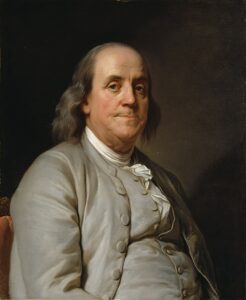
Think of Benjamin Franklin (1706 – 90) and electricity. It must however be denoted that among the autodidacts the imperatives of exactness, precision and research do not of necessity prevail. Self-knowledge is, by contrast to formal education, unabashedly personal and far less demanding of efficiency or other critical pragmatism which for example might surround the medical student or astronomer.
As a scientist, Franklin’s studies of electricity made him a major figure in the American Enlightenment and the history of physics. He also charted and named the Gulf Stream current. His numerous important inventions include the lightning rod, bifocals, glass harmonica and the Franklin stove. He founded many civic organizations, including the Library Company, the University of Pennsylvania, and Philadelphia’s first fire department. Franklin earned the title of “The First American” for his early and indefatigable campaigning for colonial unity. He was the only person to sign the Declaration of Independence, the Treaty of Paris peace with Britain, and the Constitution. Foundational in defining the American ethos, Franklin has been called “the most accomplished American of his age and the most influential in inventing the type of society America would become”.
Franklin’s father wanted him to attend school with the clergy but only had enough money to send him to school for two years. He attended Boston Latin School but did not graduate; he continued his education through voracious reading.
The next distinction I wish to stress is what I have perceived to be a growing dismal of the liberal arts. Paradoxically I partially accept the assumption. My undergraduate degree was, as often remorsefully observed, Philosophy. Upon graduation (no doubt much to the delight of my father who, when I told him of my intention to study philosophy as opposed to economics, only replied, “It’s your bed; you make it, you sleep in it”). I felt obliged to take the LSAT and to study law as an admonition of my frivolous education. It turned out to have been a mistaken reprimand. Serendipitously it evolved almost immediately upon commencement of my legal education that philosophy was the foundation of deductive reasoning. What could possibly have been more closely allied with legal education? It illustrates the amusement of the adage, Post hoc ergo propter hoc (see below).
Rather than simply teaching you what to think, a liberal arts education teaches you how to think. Students are encouraged to take classes across multiple disciplines, helping them become adaptable, well-rounded, and highly capable in complex problem-solving.
According to Britannica, this approach actively contrasts with vocational or technical training. Graduates usually possess highly transferable soft skills (like persuasive writing and analytical reasoning) that make them valuable in a wide variety of professional fields.
Interestingly the word “liberal“ in this context originated from a different interpretation.
liberal, as distinct from servile or mechanical (i.e. involving manual labour) and originally referring to arts and sciences considered ‘worthy of a free man’; later (removing the social or editorial slur) the word related to general intellectual development rather than vocational training
On occasion a humorous element – whether forgivable or unexpected – attaches to the legitimate thrust of formal education. Following is a putative illustration.
Post hoc ergo propter hoc is a Latin phrase that translates to “after this, therefore because of this”. It is a common logical fallacy where someone assumes that because Event Y happened after Event X, Event X must have caused Event Y.
Why It Is a Fallacy?
The error lies in confusing temporal succession (the order of events) with causation (that one event actually caused the other). Just because two events happen in sequence does not mean they are related; the sequence could be entirely coincidental or both could be caused by a separate, hidden factor.
Technology: “My computer crashed immediately after I installed a new software update; therefore, the update broke my computer.” (While it could be true, assuming causation based solely on the timeline without further evidence commits the fallacy).
How to Avoid It:
To establish a genuine cause-and-effect relationship, you must provide more than just a timeline. Critical thinkers rely on experimental evidence, control groups, and ruling out other possible explanations to ensure that a sequence of events isn’t just a coincidence.
This elucidation of the issue may not succeed to everyone’s interest or digestibility; it does however offer moderate approbation or toleration of formal education. Whether its discoverability through AI or any other internet vehicle is predictable is less open to debate. There is an immediate relationship between imperishable thought and defined conclusion. Calculating that conclusion as deductive or inductive is itself a preliminary challenge – even knowing or appreciating the difference.
Inductive reasoning uses specific pieces of information to build a broader theory or pattern. The conclusions are probable rather than guaranteed, as they rely on the assumption that the observed pattern will continue. “Every swan I have ever seen is white. Therefore, all swans must be white.” (Note: Black swans exist, so this probable conclusion can be overturned).
Deductive reasoning works in the exact opposite direction. You start with widely accepted facts, rules, or premises and apply them to reach a guaranteed, specific conclusion. “Major Premise: All humans are mortal; Minor Premise: Socrates is human; Conclusion: Therefore, Socrates is mortal”.
Strangely enough for me within the narrow ambit of this particular controversy, the greater intrigue is not between the value of formal education and autodidactic learning; rather it is Mr. Marriott’s (no doubt calculated) assertion that, “Self-education is still the key to a happy life”. I have forever been a clarion for the independent thinker and actor. This uncompromisingly distances me from any other source of urgency. I relax the indignity by echoing the very common adage, “Trust your instincts!” I have never been disappointed by my feelings. I won’t say they’ve always been instantly decisive; but ultimately, no contrariness.
Education
Solicitor, Superior Court of Justice, Osgoode Hall, Toronto 1975
Macdonald, Affleck, 100 Sparks Street, Ottawa, Articles 1974
Dalhousie Law School, Juris Doctor, Halifax 1973
Glendon Hall, York University, Bachelor of Arts (Philosophy) B.A., Toronto 1970
St. Andrew’s College, Head Boy, Honours Diploma (Ontario Scholar), Aurora 1967
______________________________________