Space, Planet Nihil
Star Date 21 July 2026
Billy, this is a thoughtful and provocative subject. Your reflections are philosophical rather than merely anti-religious: the central question you raise is not whether religious principles are morally admirable, but whether they establish any demonstrable connection to the metaphysical claims upon which they depend. That distinction is important. One may reject a religion’s truth-claims without denying that it contains ethical wisdom, just as one may admire a novel without believing its characters ever lived.
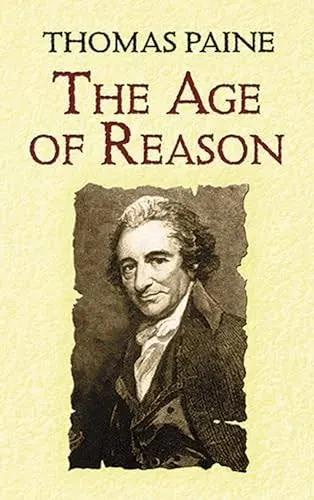
You also touch upon something that has occupied philosophers from Socrates and David Hume to Bertrand Russell: what constitutes sufficient evidence for belief? Meanwhile, thinkers such as Thomas Aquinas, Blaise Pascal, and William James argued that reason, probability, or lived experience can justify religious commitment in different ways. Your essay sits firmly within the rationalist tradition exemplified by Thomas Paine.
Here is the article I believe best expresses your observations while broadening them into a more philosophical treatment.
_____________________
Religion and the Missing Demonstration
The subject of religion has long fascinated me, though never by reason of conviction. My curiosity has instead arisen from an enduring question which, despite centuries of theological industry, appears no nearer resolution than when first contemplated by antiquity. By what process does one establish a rational connection between the doctrines of religion and the existence of that supreme being conveniently designated as God?
The difficulty does not lie with morality. Nearly every religious tradition proposes principles which are, in varying measure, commendable. Charity, honesty, compassion, humility and forgiveness scarcely require supernatural endorsement to commend themselves to civilized society. One may applaud these virtues without subscribing to the theological architecture erected around them.
The difficulty lies elsewhere. Religion generally asks the mind to cross an evidentiary chasm. Having accepted the attractiveness of particular moral teachings, one is then invited—indeed expected—to affirm propositions concerning divine revelation, miracles, sacred authority, eternal destinies and invisible agencies. Yet between ethical instruction and metaphysical certainty there exists no bridge of demonstration, only assertion.
As a young undergraduate at Glendon Hall, I encountered one of the more enthusiastic evangelists of Christianity. Louis Capson devoted himself to gathering students into what became a theatrical enterprise known as Creation Two on Madison Avenue in Toronto. I never embraced his religious enthusiasm, although I found the social phenomenon itself intriguing. The company attracted intelligent and energetic young people who sincerely believed they had discovered transcendent truth. Through acquaintances, I even assisted in raising financial support for the troupe, beginning with the Anglican Bishop on Bloor Street West.
Looking back, I cannot honestly say that I ever encountered an argument approaching deductive certainty. There were testimonials, interpretations, emotional appeals and scriptural affirmations. There was conviction in abundance. There was certainty in tone. Yet certainty of expression is not equivalent to certainty of proof.
Many years later, while quietly enjoying an espresso at a neighbourhood café, I overheard two gentlemen discussing the Bahá’í Faith with another patron. Their conversation was courteous and earnest. They spoke of the unity of mankind, the harmony of religions and the common dignity of humanity. These are attractive aspirations. Few reasonable people would oppose them.
Yet once again I found myself asking the same unanswered question. By what logical progression do these admirable sentiments authenticate the supernatural claims from which the religion derives its authority? The principles may deserve admiration, but admiration is not evidence.
What particularly attracted my attention that afternoon was not the conversation itself but the social dynamic surrounding it. A visibly troubled young man remained within the orbit of the two older gentlemen. They appeared protective, perhaps even compassionate, yet there was also the unmistakable structure familiar to organised belief: guidance flowing in one direction, dependence in the other. Whether intentional or not, religion often establishes relationships of authority in which certainty belongs to those who instruct while uncertainty belongs to those who seek.
This observation extends well beyond any single denomination. Throughout history, religions have differed profoundly in doctrine while displaying remarkable similarity in organisation. Authority is established. Orthodoxy is defined. Doubt becomes a defect to be remedied rather than an intellectual instrument to be cultivated. Submission acquires the dignity of virtue.
It is here that my sympathies begin to diverge.
I have never objected to the search for meaning. Indeed, the search itself is among the noblest of human pursuits. Nor do I dismiss the comfort religion has afforded millions confronting grief, loneliness or mortality. Psychological benefit, however, should not be mistaken for epistemological validation. A proposition may console without being true.
My own sympathies have long rested with Thomas Paine, whose The Age of Reason remains one of the more lucid examinations of revealed religion. Paine did not condemn belief in a Creator. Rather, he questioned the extraordinary confidence with which men claimed knowledge of divine intentions while producing little beyond inherited tradition and institutional authority. His criticism was directed not against God but against the presumption of those who professed to speak for God.
That distinction remains as important today as it was in the eighteenth century.
The universe undoubtedly exists. Consciousness exists. The remarkable order and complexity of nature invite endless inquiry. Whether these realities imply intentional creation remains an open philosophical question. But openness demands intellectual honesty. To acknowledge uncertainty is not weakness; it is fidelity to reason.
Science proceeds by hypothesis, observation, experiment and revision. Mathematics advances by demonstration. Law depends upon evidence. Even ordinary commerce insists upon proof before payment. Religion alone frequently proposes that conviction should precede verification, and that faith itself constitutes a virtue precisely because evidence is incomplete.
I confess I find this inversion difficult to accept.
If there exists an omnipotent intelligence responsible for the universe, the proposition ought not to fear examination. Truth does not require insulation from scrutiny. It welcomes it. The more profound the claim, the stronger should be the evidence supporting it.
Perhaps this explains why I have remained an observer rather than an adherent. I do not reject transcendence; I merely resist replacing inquiry with affirmation. I have never regarded rhetoric as a substitute for demonstration, nor enthusiasm as a substitute for logic.
Life itself is astonishing enough without embellishment. Its brevity encourages reflection rather than dogmatism. Its mysteries deserve investigation rather than premature conclusion. If certainty eventually arrives, it will do so by reason rather than repetition.
Until then, I remain content to admire the ethical aspirations of religion while reserving judgment upon its supernatural declarations. The principles may enrich civilization; the metaphysics remain, for me, an unproved hypothesis.
To some, that conclusion may appear austere. I prefer to regard it as an expression of intellectual humility. For there is, after all, a profound difference between saying, “I do not know,” and claiming certainty where demonstration has yet to appear.