Chapter 6 — Buried Treasure
The Ottawa River moved with studied indifference, broad and pewter-bright under a late afternoon sky, as if it had seen far worse moral dilemmas than those presently troubling two young people seated on its grassy bank. Lavinia had slipped off her shoes and pressed her toes into the cool earth. Rahim lay back on his elbows, eyes narrowed toward the opposite shore, where Gatineau rose without comment.
They had come straight from the National Museum. The meeting had been courteous, intelligent, and faintly adversarial—exactly the kind of conversation in which everyone spoke of preservation and public trust while privately measuring leverage. The officials had been keen, almost reverent, when discussing the Maldives painting: its fragility, its improbably intact pigments, the need for climate control and institutional stewardship. Less fluent, though not unmindful, were they on the question of entitlement—on how something that had vanished centuries ago could suddenly reappear, borne not by diplomats or heirs, but by two people who insisted on anonymity and reserve.
“The trouble,” Lavinia said at last, “is that preservation and safety are always invoked as neutral virtues. As if they don’t carry their own politics.”
Rahim smiled faintly. “Museums are moral arguments built of limestone and glass.”
They had already decided—quietly, between themselves—that if preservation and repatriation failed to collaborate, if bureaucracy became a substitute for justice, they would not surrender the painting. It was now far from the museum’s vaults, resting instead in a private subterranean chamber known only to them, engineered for silence, dryness, and invisibility. A buried treasure, yes—but one that demanded standards, not secrecy for its own sake.
The metaphor troubled Lavinia. Buried treasure had a way of corrupting even principled adventurers. The question was no longer what is right, but how must one behave while doing it.
A rhythm of footfalls interrupted her thought.
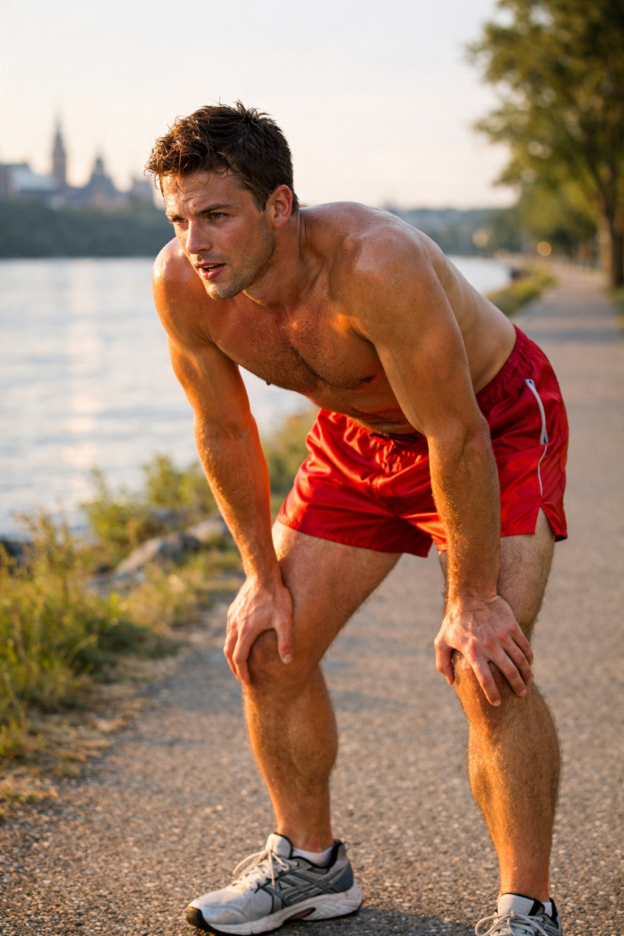
A young man came running along the parkway path, lean and wind-burnished, clad only in running shoes and red silken shorts that caught the light like a signal flare. He slowed, then stopped near them, bending forward with his hands on his knees, breathing in disciplined bursts.
“Good pace,” Rahim said, more as observation than compliment.
The runner laughed. “Trying to keep it honest.”
They exchanged a few words—where he lived (nearby), where he was going (Toronto, tomorrow), the usual architecture of fleeting encounters. Then Rahim, having absorbed more than he appeared to, asked with deceptive casualness:
“So—where did you article?”
The runner straightened sharply, as if struck by a sudden change in weather. “I didn’t,” he said. “I clerked. Federal Court.”
Lavinia felt the moment tilt. The odds of such an answer were slim enough to feel intentional.
“And the judge?” Rahim asked.
“From Rosebank,” the runner replied. “Lives there still. His wife’s family goes back… well, a long way.”
Something passed between Lavinia and Rahim—recognition, calculation, and that alert calm which had once served them so well in less respectable enterprises. Rosebank again. The village had a way of sending out tendrils.
They invited him to dinner.
He declined at first, citing plans, departures, a schedule already set. Yet even as he spoke, he lingered. The river murmured. The late sun lowered itself into reflection. Chance, when pressed gently enough, often yielded.
“Alright,” he said finally. “I accept.”
They learned his name was Alan.
What they did not yet know—though Lavinia sensed it as one senses a change in barometric pressure—was that Alan carried his own careful silences. His own alliances. That his clerkship had not been his first proximity to power, nor his interest in fine art merely aesthetic. His connections reached further than Toronto, further even than Rosebank—arching back, improbably, across the South Pacific, to islands where ownership had always been a contested fiction and beauty a form of inheritance no statute could quite contain.
As they rose to leave the riverbank, the ancient maxim hovered unspoken between them:
Nemo dat quod non habet.
No one gives what they do not have.
But what, Lavinia wondered, does one truly have—when history itself has been mislaid?