The seasons and rituals have a lot in common: they are both repetitive (the one quarterly; the other less balanced though equally compelling); they both mark different patterns; they are both elemental (the one Natural, the other Human); both are celebrated by ceremony and tradition; and they are both unavoidable. For reasons I cannot explain it was 2 o’clock this morning when I went to bed; then it was 8:30 am this morning that I awoke in order to go to the golf club for breakfast. Neither time reflects my ritual. The unreasonable side of it all is that I willingly slumbered and arose at such conflicted hours. The circumstances hadn’t demanded the abuse. I wasn’t having trouble sleeping or digesting. My consumption of pharmaceuticals had not changed. Nor had the time advanced or retired. It was simply an unforeseen detail of the schedule at hand; namely, to memorialize the annual close of the golf club. Except for private functions arranged with the caterers the club will shortly close for the season. It is a ceremony we’ve observed for many years, the inescapable dénouement of another memorable season which, in the Canadian vernacular and among the aficionados of golf in particular, is the summer. The season this year been marginally longer than normal. We’ve enjoyed a frightfully warm autumn. But today – with the practice of the ritual – we have embraced what is possibly the last yet almost imperceptible change of the season. To punctuate the event today we received, in addition to the customary well cooked nourishment, a singular note of thanks for our support from Chefs Wendy and Chris MacDonald. It is a keepsake already carefully stashed among our memorabilia.
Author Archives: L. G. William Chapman, B.A., LL.B.
What do I say, what do I do?
Speaking to young people should not be a difficult task. I mean, what could possibly be the hindrance? Yet often the paradigm is not without obstruction. This, irrespective whether you are teacher, parent or grandparent (with the possible exception of godparent – as I gleefully report I have the distinction to be to my elder and inexpressibly handsome niece Jennifer, the equestrian and professional photographer non pareil). As a general rule though, if you’re an outsider such as I am most frequently there is added vagary and irrelevance to the menu. And don’t get me started about the ostracizing ambiguity of being a lawyer! White hair – or, simply, the over 30 crowd – don’t always predict a welcome insinuation or digestible narrative in the nest of vigour.
Now can I sit?
Whew! Finally! I get to remove my street shoes – the Sperry Top Siders – and put on my evening wear – Clogs (size 11 to accommodate my made in Canada thick mohair therapeutic socks from The Real Wool Shop in Carleton Place). And sit down! As enthused as I am by the inexpressibly magnificent weather we’ve had this autumn, the pervasive reality – the splash of cold water so to speak – is my increasing paralysis (or at least, decomposition and withering). Thank gawd for Tylenol Arthritis 650 mg each caplets! Honestly I wouldn’t survive without them. Instead I’d be in a condition of constant complaint. Pain is an uncompromising additive. Yet, without the pain, and perhaps the help of some THC/CBD – well, we’re on the road again!
Country Living
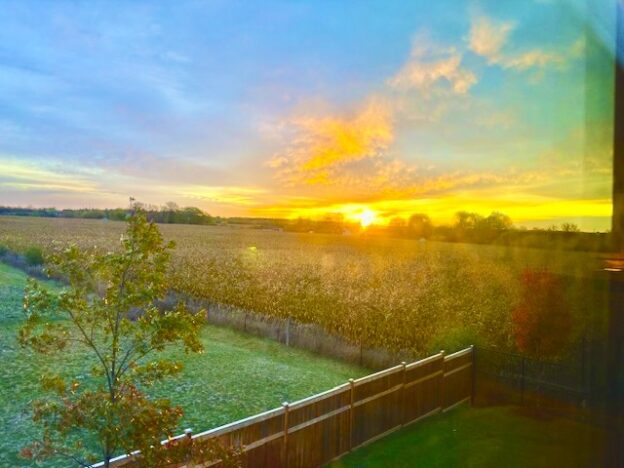
Fifty years ago I graduated from Dalhousie Law School and commenced Articles and subsequent employment as a Solicitor with Messrs. Macdonald, Affleck, Barrs. &c. in Ottawa at 100 Sparks Street at the corner of Metcalfe Street bounded by Royal Bank Dominion Securities and Henry Birks & Sons Ltd. Drummond Birks was one of my clients. I lived in the fashionable Mayfair Apartments at the corner of Metcalfe and MacLaren Streets, a short walk to work. At lunch I would go to my nearby health club at the Château Laurier Hotel for a swim and sauna (and sometimes a massage). It was also but a short walk to the House of Parliament, the Supreme Court of Canada (in which I had appeared) and the Rideau Club (when it was on Rideau Street before it tragically burned to the ground). But then things changed. At the instance and urging of Senator George J. McIlraith, PC QC I quit my job and moved to the country where I succeeded to open my own law office and conduct a rural solicitor’s practice for the next 40 years.
The talk about town…
The exceptionally pleasant weather we’ve been having of late once again spirited me early this morning from beneath the feather duvet to get involved with the promising sunshine and blue skies. Even before munching my steel cut oats I hurriedly donned a light jacket and mounted my tricycle for an improving ride about the neighbourhood.
The other side
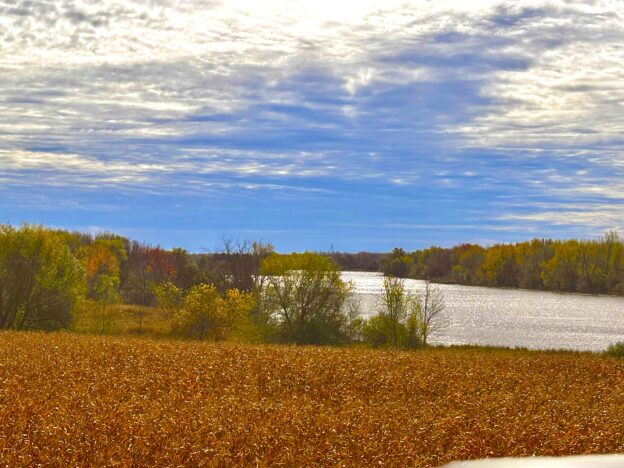
While there is no accounting for outright lies or wilful deceit, I have long held that differences between us are insubstantial or rooted in misunderstanding. Or, frankly, the differences are wholly irrelevant. If you want argument just sit at the bar with a beer. My overall view of society is that we’re all in need of identical governance for our well-being and survival. I’m here talking about fundamentals only – the type required to dissolve differences and to obtain resolution. I recognize that lack of knowledge and education quickly contaminates the topic (but that speaks only to the irrelevance of argument). Acquainting myself with “the other side” is a rhetorical adherence of mine, not especially because I believe I’ll be convinced of the opinions, mostly just out of curiosity, specifically my search for what it is that stimulates them. My news channels for example include FOX NEWS among the others – CBC, CNN, MSNBC, BBC, Al Jazeera. Today I listened at length to Sirius XM Patriot – a channel described as, “Conservative talk and opinion featuring Breitbart News, Andrew Wilkow, Sean Hannity & Mark Levin”. After listening for only a few minutes, it evidently includes “Christianity, flag waving, the military and the family”. There was as well as an unwritten acceptance of white superiority (in spite of token interjections designed to drive a coach and horses through the error). Sometimes you only need to hear or see someone on the other side before sensing their preferences.
Going in reverse
In what now seems to have been an immeasurable second of time the passage of my life is suddenly like that of a rocket that has burned out and precipitously begun to fall back down. From a distance the flagrant spectacle is but an abbreviated recollection of its once atmospheric trajectory. Life’s erstwhile planetary orbit is in a moment reduced to the thrill of a cheap firecracker display. Life has gone from rocket to reverse as it plummets to earth in uncontrollable descent. What remains of the initial ambition is a muted memory of the ascent.
The descent though undaunted is nonetheless mysteriously prolonged, affording an unanticipated journey of reflection and recollection. But the starry gaze is only upon life’s former path, reliving its historic energy and strength. For now the realities of experience are predominantly wistful only; the rest is accommodation only, perhaps relieved by occasional deceit or excuse. The vision of movement is replaced by a sedentary portrait imperiled by the granular immediacy of progressive decomposition. Memento mori sings like an aching hum or a Socratic truth.
Today I seek to cushion the dread of futility by convincing myself of a need for a “day off”, recess from my customary habit which increasingly diminishes in extent and capacity. The jarring fall to earth approaches by repeated intensity and always with the same inevitability. I am not hopeful but instead pragmatic. I have always said life owes me nothing. I am content to recall the vivid moments from my past and to embellish what remains. Granted it is not a particularly buoyant proposition but it captures the blunt but gratifying reality. Meanwhile I remain as frightfully tactile as before – though perhaps vicariously only. Regret replenished by metaphor.
Nice day for a drive!
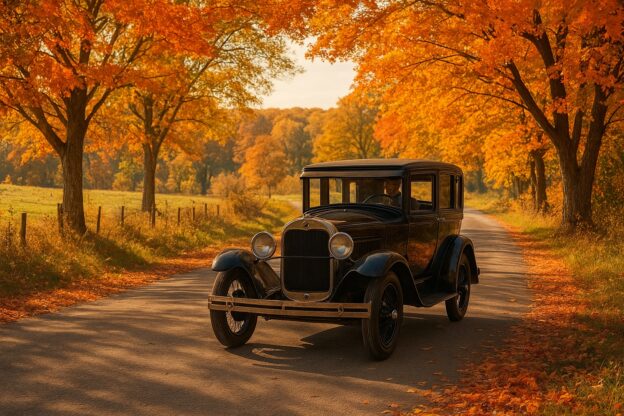
This is NOT a day to buy real estate! The reason? Because things today are unforgivably perfect. The negotiating table would be redundant. The weather is incomparable – sunny, warm and crystal clear. Everywhere I looked, to the right, to the left, straight ahead, all was magnificent. The rolling fields of cornstalks waved in the wind. The burnished trees along the up and down corridors glistened in the slanted sunlight. The distant farm outbuildings and country homes were like oil paintings. There must be something in the air. The soft wind was clear and mellow. Yet it was seemingly loaded with replenishing ointment to assuage the bluntness of reality. And the sunlight! Nonpareil! At this time of year, autumn, the late afternoon glancing beams reflected the crimson blush evident throughout the countryside.
MERA (McDonalds Corners/Elphin Recreation & Arts)
Two tiny communities in Lanark Highlands have a big impact. As I shamefully acknowledged this afternoon to Timothy Booth, the Vice-Chair of MERA (McDonalds Corners/Elphin Recreation & Arts), I am – notwithstanding having practiced law and lived in nearby Almonte for nearly 50 years – only recently acquainted with MERA. In my defence, my ignorance grew not from lack of interest, rather simply from the compelling and restrictive obligations of my career. It is only now, since my retirement in 2014, that by coincidence my partner and I choose no longer to winter in the United States of America. As a result, after completing the usual summer recovery and medical attendances, we are now paying attention to local evolutions and revolutions. Most recently was our introduction to MERA to attend a performance of “My Own Private Shakespeare” by actor/script writer Justin Hay. Its unqualified success prompted today’s attendance.
Elphin and McDonald’s Corners are connected by road and shared community initiatives, primarily through the non-profit MERA (McDonald’s Corners/Elphin Recreation
Arts). This organization operates out of the MERA Schoolhouse, a central hub for arts, crafts, and cultural activities that serves both communities. They are also linked by a rural road (County Road 12, formerly Highway 36) that runs between them.
MERA (McDonalds Corners/Elphin Recreation and Arts) recognizes that artists are essential to the vitality and well-being of the communities in which they live and work.
The MERA Award of Excellence in Fine Arts and Fine Crafts celebrates local artists who demonstrate excellence in their work.
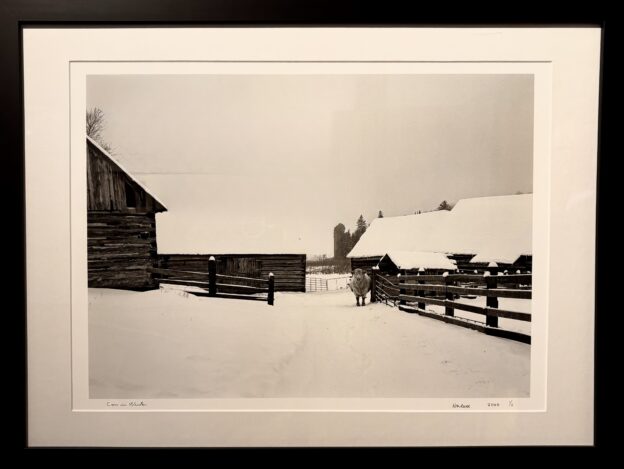
The focus of today’s exhibition at MERA (see link below) was the photography of Hugh McBride.
In an unprecedented favour we were able to chat liberally with both the artist and his wife, connecting dots and background detail to themselves and the photographs on exhibition. The foregathering had all the advantages of a museum recording and a private social convention – distinguished inimitably by its overriding serene rural atmosphere.
I confess that I am chuffed about what I have lately learned of MERA. Once again it makes me proud to live in the country! MERA is one more credential of vital importance to add to the shield of rural accomplishment. I naturally share the support of our local artistic community which repeatedly achieves these heights of success. The continuing efforts of “The Ten Collective” in Almonte (where we live) is but one further example.
Assembly such as promoted by MERA and other local artistic venues constitutes an improving educational outing and a decidedly personable colloquium. This combination of intelligence and sociability is a meaningful contribution to our community, elevating daily life from endurance to refreshment.
Featured image “Cow in Winter” by Hugh McBride
Breakfast
It is unfathomable to me that one can bear the deprivation of breakfast. And yet I have known those who do. Many – including historically my own dear mother – routinely start their day with nothing but a cup of black coffee. The sparsity of the routine perhaps speaks to indulgence the prior evening. On the other hand, many who survive without breakfast are notably thinner than others who do not. This feature identifies what to me is an unexplained restraint when it comes to food. I enjoy eating. A good meal is for me the height of success – reflecting nature’s unbridled relationship with appetite. It is a highly sensual process as significant as that of a former hunter (and here I am going back millennia to the origin of the species).