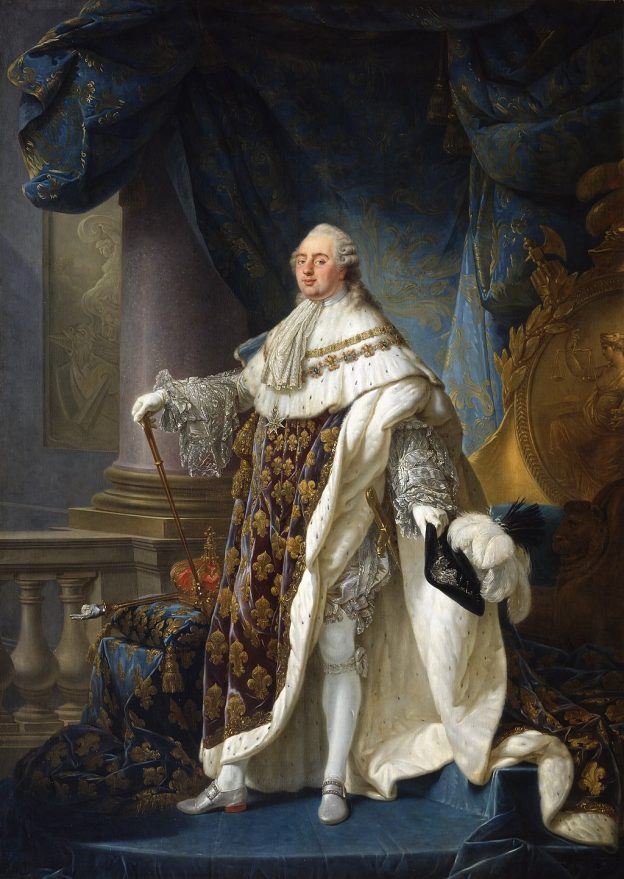
“It will accumulate: moreover, it will reach a head; for the first of all Gospels is this, that a Lie cannot endure for ever.”
Excerpt from:
The French Revolution
by Thomas Carlyle
The most spectacular recollection of the French Revolution is the guillotine; and in particular the beheading in 1793 of Marie Antoinette, French Queen and wife of absolute monarch King Louis XVI.
What ensued from the pivotal French Revolution was an awakening to popular government following the end of the divine right monarchy. The historic tyrannical rule was a form of absolutism or autocracy.
Regarding legal order, Napoleon established the Napoleonic Code of Laws, many of which are still in use today. This new code distinguished between various forms of law, such as civil, criminal, family, and property, to name just a few. The Napoleonic Code also promoted equality under the law and also made it so that no “secret” laws could be enforced; the public had to know about what was legal and what was not legal, so transparency was something that he encouraged. This Code was adopted in 1804.
There is much attention currently afforded democracy in America pursuant to the ignominious end in 2020 of government by the Republicans under the authority of D. J. Trump. As recently as two days ago Trump (who has touted he is running for re-election as president) advertised hieroglyphic playing cards of himself as a commercial scheme. It is an embarrassment for the GOP as well as the majority of Americans. In addition to compelling the sad behaviour of Trump it stains political activity as mere entertainment, a posture befitting Trump with his off-centre television roots. It also casts the role of politicians as purely diversionary without any devotion to substance or truth. The alliance of this comedic strain with the canaille is less than complimentary though apparently for some Republicans it secures the promise of re-election. This alone bespeaks the limited pragmatic scope of the GOP.
On Monday next the American congress by way of a select committee with seven Democrats and two Republicans decides what alleged features of criminality and obstruction of justice to level against Trump consequent upon the January 6th, 2021 Insurrection on the United States Capitol building in Washington, DC. Though it is technically a recommendation only to the Justice Department it is a matter to be watched with global interest. It demonstrates the rule of law by general application. It is also seen as the first step towards preservation of democracy; that is, government by the people for the people. The contrary theme of rejection of majority rule and the advancement of selfish means and ends is at stake. Indeed democracy is acknowledged to be ascendant in the third world. A wrong step at this juncture predicts enormous discredit to the United States of America which increasingly is seen as threatened by autocratic rule, quite apart from the disgrace of its Republican toadies.
If by chance the glare of sunlight upon the erstwhile violent proceedings on the Capitol is insufficient to quell the poisonous eruption of the strain of what is loosely called the Far Right or Conservatism (or whatever is fashioned to “Make America Great Again”) the unsettling sequel could indeed be a predicted civil war and the return to an even more painful method of execution.

The guillotine was invented in order to make capital punishment less painful in accordance with new Enlightenment ideals about human rights. Prior to the guillotine, France had used manual beheading alongside a variety of methods of execution, many of which were more gruesome and required a high level of precision and skill to carry out successfully. After its adoption, the device remained France’s standard method of judicial execution until the abolition of capital punishment in 1981. The last person to be executed in France was Hamida Djandoubi, guillotined on 10 September 1977.
The following text was written on the night of the execution by judge (juge d’instruction) Monique Mabelly.
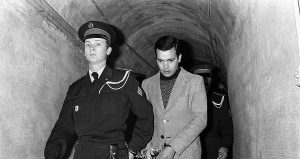
9th of September 1977
Execution of Djandoubi, Tunisian citizen.
At 3:00 p.m., [presiding] judge R. notified me that I had been appointed to assist with the execution. I feel repulsed, but I can’t get out of it. I thought about it all afternoon. My role will consist of taking note of the prisoner’s statements.
At 7:00 p.m., I went to the cinema with B. and B. B., then we had something to eat at her place and watched a late night movie until 1:00 a.m. I went home, I did some chores, then laid down on my bed. Mr. B. L. telephoned me at 3:15 a.m., as I requested. I got ready. A police car came to pick me up at 4:15 a.m. During the journey, no one said a word.
We arrived at Marseilles’ Baumettes prison. Everyone was there. The District Attorney (DA) [avocat général] arrived last. A large group formed. 20 or 30 guards, the ‘officials’. All along the path, brown blankets were spread on the ground to cover the sound of our footsteps. On the path, in three places, tables holding basins of water and towels.
The cell door was opened. I heard someone say that the prisoner was dozing, but not sleeping. He was made to ‘get ready’. It took a long time, since he had an artificial leg and it had to be put on. We waited. No one spoke. I think this silence, and the apparent calmness of the prisoner, relieved those present. No one wouldn’t have wanted to hear crying or protests. The group reformed itself, and we took the path back. The blankets on the ground had been pushed to the side slightly, and we were no longer trying to avoid making too much noise with our steps.
The group stopped beside one of the tables. The prisoner was seated on a chair. His hands were locked behind his back with handcuffs. A guard gave him a filter cigarette. He started smoking without saying a thing. He was young. Very dark hair, neatly styled. His face was rather handsome, with even features, but he was pallid and had dark circles under his eyes. He looked neither stupid nor brutish. Simply a handsome young man. He smoked, and complained immediately that his handcuffs were too tight. A guard approached and tried to loosen them. He complained again. At this moment, I noticed the executioner standing behind him, accompanied by two assistants. He was holding a cord.
Originally, it was intended to replace the handcuffs with the cord, but in the end it was decided to just remove them, and the executioner said something horrible and tragic: ‘See, you’re free!’ It sent a shiver down the spine… The prisoner continued to smoke his cigarette, which was nearly finished, and he was given another. His hands were free and he smoked slowly. I understood then that he was beginning to realize that it was all over – that he could not escape now – that his life would end here, and that the moments that he still had would last as long as that cigarette did.
He requested his lawyers. Mr. P. and Mr. G. approached. He spoke to them as quietly as possible, because the executioner’s two assistants were standing right by him, and it was as if they wanted to steal his last moments as a living man. He gave a piece of paper to Mr. P. who tore it at his request, and he gave an envelope to Mr. G. He spoke to them very little. There was one on either side of him and they did not speak to each other either. The wait continued. He requested the prison director and asked him a question about what would happen to his possessions.
The second cigarette was finished. Quarter of an hour had already passed. A young and friendly guard approached with a bottle of rum and a glass. He asked the prisoner if he wanted a drink and poured him half a glass. The prisoner began to drink slowly. He understood then that his life would end when he had finished drinking. He spoke a little more with his lawyers. He called back the guard who gave him the rum and asked him to gather up the pieces of paper that Mr. P. had torn up and thrown to the ground. The guard bent down, picked up the pieces and gave them back to Mr. P., who put them in his pocket.
It was at that moment that everything became confused. This man is going to die, he knows it; he knows that he can do nothing but delay the end by a few minutes. And he became almost like a child that will do anything to delay bedtime! A child who knows that he will be treated indulgently, and who makes use of it. The prisoner continued to drink his rum, slowly, in little sips. He called the Imam who came over and spoke to him in Arabic. He responded with a few words, also in Arabic.
The glass was nearly empty and, in a last attempt, he requested another cigarette: a Gauloise or a Gitane [unfiltered cigarettes made with strong, dark tobacco], because he didn’t like the brand that he had been given. The request was made calmly, almost with dignity. But the executioner, who was becoming impatient, interrupted: “We’ve already been nice with him – very humane – we have to get this over and done with.” In turn, the DA intervened to deny the cigarette, despite the prisoner repeating the request and adding very opportunely: “It will be the last.” A sort of embarrassment came over the assistants. About 20 minutes had passed since the prisoner sat down on his chair. 20 minutes, so long and yet so short.
The request for this last cigarette brought back the reality, the ‘identity’ of the time which had just passed. We had been patient, we had stood waiting for 20 minutes while the prisoner, seated, expressed wishes which we immediately granted. We had allowed him to be the master of that time. It was his possession. Now, another reality was appearing. That time was being taken back from him. The last cigarette was denied, and to get it over and done with, he was hurried to finish his glass. He drank the last sip. Passed the glass to the guard. Immediately, one of the executioner’s assistants took a pair of scissors from his shirt pocket and began to cut off the collar of the prisoner’s blue shirt. The executioner signaled that the cut was not large enough. So, to simplify things, the assistant made two big cuts to the shoulders of the shirt and removed the entire shoulder section.
Quickly (before cutting the collar), his hands were tied behind his back with the cord. He was helped up. The guards opened a door in the corridor. The guillotine appeared, opposite the door. Almost without hesitating, I followed the guards who were pushing the prisoner and I entered the room (or, rather, a courtyard?) where the ‘machine’ stood. Beside it was an open brown wicker basket. Everything went very quickly. His body was practically thrown down but, at that moment, I turned away. Not out of fear, but by a sort of instinctive and deep-rooted modesty (I can’t find another word).
I heard a dull sound. I turned round – blood, lots of blood, very red blood – the body had toppled into the basket. In a second, a life had been cut. The man who had spoken less than a minute earlier was nothing more than blue pyjamas in a basket. A guard took out a hose. One has to erase the evidence of a crime quickly… I felt nauseous but I controlled myself. I had a feeling of cold indignation.
We went into the office where the DA was childishly fussing around to prepare the official report. D. carefully verified every part. It’s very important, the official report of an execution! At 5:10 a.m. I went home.
Monique Mabelly (Juge d’instruction)