
Rosh Hashanah marks the beginning of the civil year, according to the teachings of Judaism, and is the traditional anniversary of the creation of Adam and Eve, the first man and woman according to the Hebrew Bible, as well as the initiation of humanity’s role in God’s world.
Rosh Hashanah customs include sounding the shofar (a hollowed-out ram’s horn), as prescribed in the Torah, following the prescription of the Hebrew Bible to “raise a noise” on Yom Teruah. Its rabbinical customs include attending synagogue services and reciting special liturgy about teshuva, as well as enjoying festive meals. Eating symbolic foods, such as apples dipped in honey, hoping to evoke a sweet new year, is an ancient tradition recorded in the Talmud.
It constitutes a remarkable disgrace that I know so little about Judaism, one of the two oldest Abrahamic religions and a seminal role in the formation of Western civilization through its impact as a core background element of early Christianity.
Jews are an ethnoreligious group ncluding those born Jewish (or “ethnic Jews”) in addition to converts to Judaism. In 2021, the world Jewish population was estimated at 15.2 million, or roughly 0.195% of the total world population, although religious observance varies from strict to none. In 2021, about 45.6% of all Jews resided in Israel and another 42.1% resided in the United States and Canada, with most of the remainder living in Europe, and other groups spread throughout Latin America, Asia, Africa, and Australia.
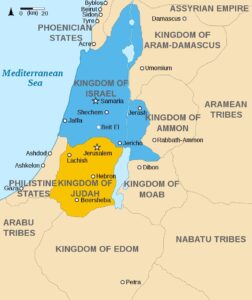
My awakening to religion began when I attended Sunday School at about age nine or ten years. The only thing I recollect about that venture was that our Sunday School teacher, who was a mild manned man with a soft voice, appeared one Sunday morning with a black eye. He reported that he had had a fight with his son. This was a candid revelation of astronomic import to me. I could never imagined having engaged in fisticuffs with my father. For me it all spoke to the domesticity of religion, the weight of family (notwithstanding this particular violation).
From that significant beginning I graduated to a more formal exercise at boarding school at age 14 years when I attended St. Andrew’s College. I studied for my first formal communion in the Anglican Church of Canada which I understood to be the Church of England. At boarding school we literally went to chapel every day of the week and twice on Sundays. The matins undertaking was primarily a congregation to sign songs then go to classes. On Sunday evenings the vesper service included a sermon. What I recall, apart from singing “And did those feet in ancient time Walk upon England’s mountains green” was the presence of Paul Rubin in our midst. Though then as now I knew little if nothing about Judaism, I knew that Paul was a Jew. His presence among so-called Christians represented to me the unity of the school and the openness of Paul to the involvement. He was of course young like the rest of us. I never asked Paul about his religious beliefs or whether he even had any. He sang with the rest of us and that was all there was to be said. I remember he cried openly in chapel on the day the Headmaster summoned us to advise of the assassination of John F. Kennedy.
And did those feet in ancient time” is a poem by William Blake from the preface to his epic Milton: A Poem in Two Books, one of a collection of writings known as the Prophetic Books. The date of 1804 on the title page is probably when the plates were begun, but the poem was printed c. 1808. Today it is best known as the hymn “Jerusalem“, with music written by Sir Hubert Parry in 1916. The famous orchestration was written by Sir Edward Elgar.
When I arrived in Almonte at age 28 years I later became a Warden of St. Paul’s Anglican Church. I regularly attended Sunday matins there until about 1990 when I could no longer tolerate the mysticism and orthodoxy of religion. Instead I became a follower of Thomas Paine and specifically his Age of Reason. I have since struggled with the legitimacy of religion but I continue to be overtaken by what I have learned to accept as logic notwithstanding its possibility of error.
I do however preserve a respect for those who for whatever reason have religious belief. In that spirit, and for those who consider it part of their vernacular, I say “Happy New Year!”
Blake’s poem
And did those feet in ancient time,
Walk upon Englands mountains green:
And was the holy Lamb of God,
On Englands pleasant pastures seen!
And did the Countenance Divine,
Shine forth upon our clouded hills?
And was Jerusalem builded here,
Among these dark Satanic Mills?
Bring me my Bow of burning gold:
Bring me my Arrows of desire:
Bring me my Spear: O clouds unfold:
Bring me my Chariot of fire!
I will not cease from Mental Fight,
Nor shall my Sword sleep in my hand:
Till we have built Jerusalem,
In Englands green & pleasant Land.
Beneath the poem Blake inscribed a quotation from the Bible:
“Would to God that all the Lords people were Prophets”
Numbers XI. Ch 29.v