Chapter XII, p. 192
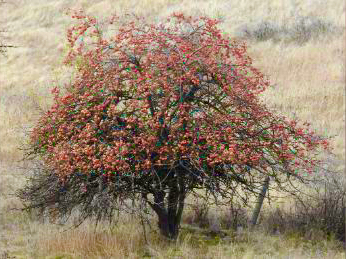
“A minute account of what passed in one district at this time has come down to us, and well illustrates the general state of the kingdom. The south-western part of Kerry is now well known as the most beautiful tract in the British isles. The mountains, the glens, the capes stretching far into the Atlantic, the crags on which the eagles build, the rivulets brawling down rocky passes, the lakes overhung by groves in which the wild deer find covert, attract every summer crowds of wanderers sated with the business and the pleasures of great cities. The beauties of that country are indeed too often hidden in the mist and rain which the west wind brings up from a boundless ocean. But, on the rare days when the sun shines out in all his glory, the landscape has a freshness and a warmth of colouring seldom found in our latitude. The myrtle loves the soil. The arbutus thrives better than even on the sunny shore of Calabria, The turf is of livelier hue than elsewhere: the hills glow with a richer purple: the varnish of the holly and ivy is more glossy; and berries of a brighter red peep through foliage of a brighter green. But during the greater part of the seventeenth century, this paradise was as little known to the civilised world as Spitzbergen or Greenland. If ever it was mentioned, it was mentioned as a horrible desert, a chaos of bogs, thickets, and precipices, where the she wolf still littered, and where some half naked savages, who could not speak a word of English, made themselves burrows in the mud, and lived on roots and sour milk.”
The History of England, from the Accession of James II — Volume 3
Thomas Babington Macaulay
Continue reading →