Author Archives: L. G. William Chapman, B.A., LL.B.

About L. G. William Chapman, B.A., LL.B.

Past President, Mississippi Masonic Hall Inc.; Past Master (by demit) of Mississippi Lodge No. 147, A.F. and A.M., G.R.C. (in Ontario) Chartered by the Grand Lodge of Canada July 20, 1861; Don, Devonshire House, University of Toronto, Toronto, Ontario; Juris Doctor, Dalhousie Law School, Halifax, Nova Scotia; Bachelor of Arts (Philosophy), Glendon Hall, York University, Toronto, Ontario; Old Boy (House Captain, Regimental Sgt. Major, Prefect and Head Boy), St. Andrew's College, Aurora, Ontario.

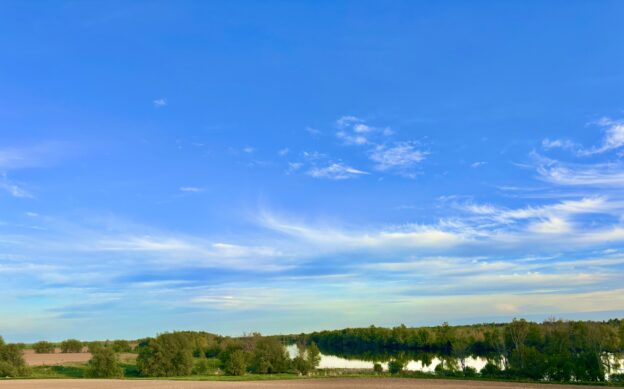
Blue Ridge Mountains

We departed South Carolina promptly at 7:00 am this morning on the heels of an even earlier breakfast at the hotel.  For me the repast was oatmeal and an English muffin slathered in butter and Jiffy peanut butter. My partner opted for more traditional fare of scrambled eggs, sausage patties and an English muffin.

The highway connection from the hotel to Interstate 95 was exceedingly convenient. We were en route and in full gear within moments of leaving the hotel parking lot. Everything about our stay in Lumberton, SC had been ideal. The positivity was reflected in the drive that followed.

Passing northward through North Carolina and Virginia (pointing directly through Maryland, Pennsylvania and New York to Ottawa), it is soon evident that one traverses a stunning mountain range and picturesque valley. It is the Blue Ridge Mountains in the Shenandoah Valley. In springtime the vistas are delightful, a warming pulse in an erstwhile chilly season. Perhaps because today was a Sunday we seemed to escape the usual congestion of vehicular and commercial traffic through the Shenandoah Valley.

Getting here to Harrisonburg, Virginia from Interstate 95 across Interstate 64 to Interstate 81 one encounters names such as Myrtle Beach, Fayetteville, Raleigh, Roanoke, Lynchburg and Richmond. The atmosphere is fraught with colonial history. We favourably recalled our stay years ago at the Jefferson Hotel and our afternoon amble about the neighbourhood on a magnificent autumn day.

Because we arrived at the hotel desk so early in the afternoon today, we were obliged to linger in the lobby lounge for a  while before our suite was ready. A group of elderly women was congregated nearby, snacking and drinking. We never did determine what they were about.

This evening is dinner at the Ridge Room, the hotel’s rooftop bar and lounge.  It’s a spot we’ve regularly frequented. Another day of focus has been accomplished. Our pathway to home gradually decreases.

The Blue Ridge Mountains are part of the Appalachian Mountain range. The Shenandoah Valley is a geographic valley and cultural region of western Virginia and the eastern panhandle of West Virginia in the United States. The Valley is bounded to the east by the Blue Ridge Mountains.

First Stop – Lumberton, North Carolina

At about 8:30 am this morning as planned we left Hilton Head Island for the last time. Packed and ready to go.  We had even organized far enough in advance to allow for a ritual breakfast of steel cut oats and fruit before departure. But then it was into the pollen-covered Cadillac and headed north, consumed by an unusual spirit and moderate trepidation concerning both what we were leaving behind and where we were going.  We were to a degree in limbo; there were matters yet unresolved, pending and in suspension.

Continue reading

Counting down,,,

The morning, though extended by a relatively early beginning, has already slipped away. I preoccupied myself with breakfast, answering and dealing with emails, and instructing ChatGPT concerning the composition of a familial tale and the creation of related images. As we approach our late afternoon dining experience at nearby Salty Dog Café we amuse ourselves by completing whatever possible to engineer a prompt departure tomorrow morning at nine o’clock.  We have for example done all the packing possible.

Continue reading

Changing costumes

It wasn’t until I graduated from law school and began my Bar Admission Articles with Messrs. Macdonald, Affleck Barrs &c that I recall having taken any particular notice of or interest in apparel.  The one exception of memory is at law school when I purchased a light cotton shirt known popularly as a Joe Cocker shirt – long sleeved, collarless neck, 3-button. Other than that modest focus (and the full-length racoon coat my mother gave me), clothing was then strictly utilitarian. Like most students I hadn’t the money or time to preoccupy myself with costume of any description.

But the practice of law changed that.  At the law firm on Sparks Street I was acquainted with Palette Taylor, a mom-and-pop business conveniently located nearby on the 2nd floor of a narrow red brick building on Sparks Street adjacent the Royal Bank of Canada. Palette (I believe that was his family name) was of East European heritage.  He and his wife worked together, assiduously performing their art of tailoring and sewing. Within a short time I was wearing 3-piece suits of soft woollen fabric, dark blue or charcoal grey.  My father gave me his late father’s Ponchelon & Frères gold pocket watch and chain with Masonic fob attached.  I subsequently changed the fob to a gold rotating clasp of semi-precious stones (probably bloodstone and amber).  I ultimately gave the watch and chain to my niece and goddaughter when, not long after retirement, I began my precipitous descent from formal apparel. No more tailored suits or custom ordered shirts.  Everything was back to cheap and comfortable.

What did survive was collateral apparel; that is, stuff that was appropriate to the climate. For ten years after my retirement (my partner had already retired years before) we wintered in sub-tropical climes.  Accordingly we of necessity learned to alter our costumes from snowbound climes to Palmetto ferns and palm trees.  So particular were we in this alteration that we learned to develop routines appropriate for the extremes (cold and heat) and in-between (moderate compromise). Because we have always driven to and from our destination by automobile, this meant, for example, when returning home, we translated from shorts and short-sleeved shirts to long pants (or sweatpants) and long-sleeved shirts with sweater (cardigan or jersey).

If I am completely honest about this sartorial transformation, much of it was accelerated by my commensurate enlargement. Part of my retirement routine had been driving my automobile about the countryside.  During that convention I unwittingly discovered Antrim Truck Stop. There I unearthed carrot cake, lathered with thick, sweet vanilla icing.  As I like to quip, “One’s teeth began to rot when the fork was about here…!”

The corollary of this indulgence was the indisputable irrelevance of my remaining formal wardrobe. The cashmere sports jackets and matching flannel trousers were utterly useless. Sweaters which were less than XL (or progressively XXL) were history.  So-called dress shoes were redundant, as were dress socks, dress shirts and suspenders.  All of it went to the local thrift shop. There was no point imagining that “one day” (such as for funerals or weddings) I might have need of such apparel (which in any case would never fit).

By design I am now reduced to wearing almost the same thing every day.  I have adopted a routine wash cycle to keep things rotating until they dissolve. Everything I have looks the same, basically white or black. Whatever shoes I prefer have also been duplicated for similar convenience; as have my pullovers, smalls, socks and spectacles. The motivation is transparency and comfort.

Surrounding the alteration was the effect of downsizing from a large home to a small apartment.  Choice became the critical factor, affecting everything, not only furnishings, accessories and artwork but also jewellery. It was a metaphorical return to the womb; the remodelling of erstwhile complication to current simplicity. In the process the synthesis of agreeability insinuated the whole; namely, whatever was no longer compatible with the rest was abandoned. Cuff links for example. Or ostentatious rings. Or long-forgotten ornaments in that drawer that I never opened. I literally boiled down some materials to a new expression, removing myself from the disturbing to the reconcilable.

In every respect this diminished, sterilized  state of possessions identified the currency of my being.  So many things were now beyond interest or necessity. Commensurately insurance premiums plummeted. The entire retail facade evaporated. Shopping and malls were a thing of the past. Meanwhile on-line purchases replaced the now foreign exigencies. We had even commissioned the construction and installation of a tombstone at Auld Kirk cemetery! All was now in readiness for departure. Superfluity had been reduced to commonality. All that remained of my former extravagance was a possible hint of piercing of my left earlobe when I was 21 years old. I had instructed that the rings and gold chain were to be removed before my incineration. Dressing for the occasion is thus superfluous.


Afternoon space

Shortly after noon, having seated myself on a deck chair overlooking Braddock Cove,  it was a flawless drift into a spellbound state of languor. Nothing but a blue sky and the occasional squawk of a Great egret or a Laughing gull. The breeze from the south immersed me in a blissful lapse of vanished thought. By design I propelled the expansion of my wandering diversion, confusing the immediacy of the moment with the rapture of the balmy air. At last I faded entirely, carried away into a dreamy sleep, unperturbed, inviolate and remote.

The studied capitulation to this backyard amusement is without parallel here on Hilton Head Island where historically my dedication has been unrelentingly to the beach and the sea. But a combination of factors – primarily having returned my tricycle yesterday to the proprietor – plus the irreversible collapse of my erstwhile physical mobility, have contributed to this new scheme of retreat on the island. While I won’t say that today marked the first instance of having cultivated this particular merriment; somehow its gusto and relevancy were heightened today.  Perhaps it is the acceptance of its novelty; or, the uninhibited communication with the distant oyster beds or the sight of a random launch upon the water. Retreating to this private arena has isolated me from the sea though it is only as close as across the park and along the boardwalk to the shore.  Nonetheless the paramountcy of my physical decline has succeeded to defeat even those proximate ambitions.

Conflicting with this seeming disparity is the belief that paradoxically part of my physical complaint is the consequence of having overexerted my limbs by repeated application on the tricycle (and – I accept – without the benefit of stretching). As you might guess, I am seeking to palliate the abuse by uncompromising resilience in a state of idleness. It is for the moment as close as I shall get to massage; that is, allowing the tightened muscles of my thighs and lower legs to expand and recover some of their former ambivalence. Already for example I sense that the former constraint of my cycling exertion has diminished. Though I acknowledge the imperative and utility of exercise, I think too there is a time when relaxation is in order. I have accordingly chosen to do so in the remaining several days here.

Normally getting me to retire to the subdued atmosphere of a backyard deck would have been unheard of. It is not frankly a posture I have regularly assumed in the past on Hilton Head Island or elsewhere. But admittedly it is an incremental alliance, one in fact which I have already begun at home by sitting on the balcony looking upriver in the late afternoon when the sunshine glistens across the placid waterway. It is an abbreviation and consolidation of old age. I compliment myself for having recognized the dominion of nature as it inescapably broadens its measure upon my confined state of being. Confessing the preoccupation with decomposition by any retail is hardly something to proclaim; but nonetheless it is not fiction and as such it is all the more worthy of at least some attention and attempted adaptation.

Therein lies the genesis of my own enchantment; the North American passenger automobile. As chance would have it, the vehicle figures by no small account among my ancestors on both sides of the familial fence.  For example one of the earliest recollections I have of my late mother’s brother Larry (my favourite uncle) was his red convertible Bonneville Pontiac, a monstrous car by today’s standards.  On my father’s side, his father drove a V12 Cadillac sedan. My own father perpetuated the inherited animation by driving his 8-cylinder Buick Riviera to and from New Brunswick to enjoy his 200-acre parcel of land there. I recall too my father having told me that, prior to marriage, he owned a Studebaker convertible automobile with power windows. He latterly continued (while resident in Stockholm) to fuel his appetite for sedans by dealing directly with the Ford Motor Company to arrange the overseas transport of a number of cars including a Ford XL convertible which I remember having collected with my father in Rotterdam during one of my summer visits from boarding school. I recall too that when driving the car throughout Europe I regularly heard disparaging remarks from other drivers, “Votre camion!“; but on the French and Italian riviera it was an entire success.

For now I have chosen to punctuate my own mechanical divertissement with a fully-electric automobile (Cadillac Optiq). The allusion (yes, that’s the intended spelling) is promoted by inevitability on all sides. I am certainly not the first in our apartment building to have a fully electric automobile but for me it constitutes a noticeable switch.  The car I have selected is being manufactured for the first time in North America this year; so, we’ve decided to wait until August to order a 2026 model. Already I am calculating the expanse of my travel in the new vehicle, partly as occasion to test the boundary of the battery when fully charged (which I believe is about 300 miles). Naturally the customary Petro-Canada wash card will prevail unobstructed by this internal modification.

Sitting on the dock of the bay…

We punctuated our start of packing things up in preparation for our upcoming departure from Hilton Head Island on the weekend by hosting our neighbour “Carolina of South Carolina” late morning. She was interested to take a gander at our cottage with a view to renting it in the future. She was familiar with our inexpressible approval of our estate agency. Carolina treated us to a plate of succulent homemade brownies, a generosity which illustrates her general mien of beneficence previously signalled by the gift of a judicious collection of greens in a glass jar formerly used to transport pickled beets. We spent a congenial hour-long tongue wag together, chatting about the real estate naturally, but aimlessly venturing into that unpredicted catalogue of shoreline banter characteristic of people such as we who so clearly enjoy profitless socializing. She did however remove herself to attend to the superior interests of her visiting 16 year old grandson who has recently qualified himself for a driver’s licence; and also her 12 year old granddaughter (a dedicated hockey player reputedly of singular purpose) who recently distinguished herself by an appearance on-ice with the Chicago Blackhawks.

As though by serendipity we afterwards received a telephone call from our friend Jay in Nova Scotia. I refer to the call as a happy chance because, in the context of our upcoming travel plans, it is very much on our horizon to travel to Nova Scotia to see the improvements being undertaken by Jay (with the support of his wife Alana) to the three properties they have lately acquired on a lake, another nearby in metropolitan Halifax, and a third on the ocean. As we stressed to Jay during our fruitful conference, our ambition is to visit Peggy’s Cove (a mere 20-minute drive from the lake property), Lunenberg County and Chester (close to the large ocean property). By further coincidence we related to Jay that only moments earlier the property manager of our apartment building in Canada confirmed that the 240v outlet had been installed in the pillar adjacent our parking space to accommodate the charging of the new fully-electric automobile we intend to order upon our return.

The happy confluence of these crucial matters cannot be understated. As I told Jay during our chat, I am thrilled that he and Alana have adjusted so pleasingly to their new environment in Nova Scotia.  I recall by contrast that when I left Upper Canada in 1970 after completion of undergraduate studies at Glendon Hall to attend law school in Halifax, my initial reaction to Nova Scotia, though brookable, had not been as embracing.  As as result, I reapplied to Osgoode Hall for admission and was again accepted; but fortunately for me I was persuaded by the Dean of Dalhousie Law School in Halifax to remain on board instead of transferring to Osgoode Hall. Since that time, even though I returned to rural Ontario to practice law, I have never forgotten the integrity and flavour of life on the South Shore of Nova Scotia along the North Atlantic Ocean. Matters maritime have forever been embedded within my soul (and admittedly in my imagination).  Though I acknowledge at my late stage of life that I shall never compete with my beloved home in Almonte, neither can I deny that I am filled with vitality to contemplate an excursion in the new electric vehicle to that dreamlike memory. Already I am listing my intentions, each mystified by the ocean breeze.

It was in this contented and contemplative frame of mind that, in lieu of repeating my now evaporated visits to Zips car wash this afternoon, instead I positioned myself in the beaming sunshine on the deck at the back of the cottage overlooking the oyster beds arisen at low tide on Braddock Cove. As though by supernatural forces, the elements had combined to perfect the achievement of this latest (and possibly last) sojourn on Hilton Head Island. There was not another feature of the venture overlooked or missing. We have correspondingly conformed the remaining provisions in the larder to withstand the last several remaining days here.  As though reading from a script, we paused to ask ourselves whether we were ready to leave; and, together we agreed that we are.

It is an indefinable and maudlin occasion; relishing all that we have enjoyed here, the crashing ocean, the vast beach, the verdant Sea Pines corridors, the people, the memories. And at the same time we have the unanticipated vicarious invigoration of our dear friends in Nova Scotia with whom we share the glee of growth and change. Already I am awakening to the possibilities, maritime ventures, including the visceral pleasures of the table (we’re all seafood lovers).

In 1755, after the expulsion of the Acadians, the British needed to repopulate vacated lands. It offered generous land grants to colonists from New England, which was experiencing a severe shortage in land. Today these immigrants are referred to as the New England Planters. Lunenburg was raided in 1756 by a mixed group of Mi’kmaq and Maliseet raiders, devastating the town. The attacks continued on the British with the Lunenburg Campaign of 1758. Hostilities with Mi’kmaq ended around 1760.

During the American Revolution, privateers from the rebelling colonies raided Lunenburg, including the 1782 raid, devastating the town once again. The town was fortified at the beginning of the War of 1812. The British officials authourised the privateer Lunenburg, operated by Lunenburg residents, to raid American shipping.

Over the following years, port activities transitioned from coastal trade and local mixed fisheries,[23]to offshore fisheries. During the Prohibition in the United States between 1920 and 1933, Lunenburg was a base for rum-running to the US.

The Lunenburg Cure was the term for a style of dried and salted cod that the city exported to markets in the Caribbean. Today a large hammered copper cod weather vane is mounted on the spire of St. Andrew’s Presbyterian Church.

The Smith & Rhuland shipyard built many boats, including Bluenose (1921), Flora Alberta (1941), Sherman Zwicker (1942), Bluenose II (1963), Bounty (1961), and the replica HMS Surprise (1970). In 1967 the yard was taken over by Scotia Trawler Equipment Limited. After the end of World War II, shipbuilders switched from producing schooners to trawlers, aided by migrant labour from Newfoundland.

Where to go?

For the past thirty years, I have relied upon my partner to determine how and where to travel.  Previously I had called upon travel agents to fulfill that duty. With Canadians having reacted adversely to the threat of “invasion” by the United States (to make Canada its 51st state of the union), the question of travel within the boundaries of Canada has lately become more intriguing. While there are endless travel opportunities within Canada, the other feature pressing upon the ambition is our own advancing age and commensurate incremental restrictions particularly for me. Because of neuropathy, spinal decomposition and arthritis, my interest in walking or movement of almost any measure has waned to the point of irrelevance. The question therefore is twofold: one, where to go in Canada; and two, how to get there and remain there with the least obstruction of immobility? While I am still capable of riding a tricycle with convenience, it is not a conveyance of desire if the landscape isn’t flat and therefore exacts too much effort. In short, the question is, where does an old fogey go in Canada?

I thought I might ask Gemini.  And here is what I got.

It sounds like you’re looking for accessible and enjoyable Canadian travel destinations that prioritize comfort and minimize strenuous activity. That’s a wonderful goal! Let’s break down some options, focusing on scenic beauty, ease of access, and enjoyment for those with mobility challenges.

Destinations that Prioritize Accessibility and Scenic Beauty:

  • Victoria, British Columbia:
    • Victoria is known for its beautiful gardens (Butchart Gardens are largely wheelchair accessible), scenic waterfront, and charming downtown.
    • The city is relatively flat, and many attractions are easily accessible.
    • There are numerous accessible tour options, including boat tours and bus tours.
    • Consider staying in a hotel near the Inner Harbour for easy access to attractions.
  • Niagara-on-the-Lake, Ontario:
    • This charming town offers a relaxed atmosphere, beautiful scenery, and a rich history.
    • Many of the attractions, including the Shaw Festival theatres, are wheelchair accessible.
    • The town is relatively flat, making it easy to navigate.
    • The Niagara Parkway offers scenic drives with numerous accessible viewpoints.
    • Niagara falls itself is very accessible, with many paved walkways.
  • Prince Edward Island:
    • PEI is known for its gentle landscapes, beautiful beaches, and relaxed pace of life.
    • Many of the attractions, including the Confederation Trail, are wheelchair accessible.
    • The island is relatively flat, making it easy to explore by car or accessible tour.
    • Consider staying in Charlottetown for easy access to amenities and attractions.
  • Quebec City, Quebec:
    • While Quebec City has some hilly areas, the Old City is largely accessible, and there are many accessible tour options.
    • The city offers a unique blend of history, culture, and French charm.
    • Consider staying in a hotel near the Old City for easy access to attractions.
    • Many of the museums and historical sites have elevators and ramps.
  • Banff, Alberta:
    • While Banff is in the mountains, many of the attractions are very accessible.
    • The townsite itself is relatively flat, and there are many paved pathways.
    • The Banff Gondola is wheelchair accessible, offering stunning views of the surrounding mountains.
    • Lake Louise and other scenic spots have accessible viewpoints and pathways.
    • Many of the tour operators in Banff offer accessible tours.

Transportation and Accommodation Considerations:

  • Accessible Transportation:
    • VIA Rail offers accessible train travel across Canada.
    • Many airlines offer wheelchair assistance and accessible seating.
    • Consider renting an accessible vehicle or using accessible taxi services.
    • Look for tour operators that specialize in accessible travel.
  • Accessible Accommodation:
    • Many hotels and resorts offer accessible rooms with roll-in showers, grab bars, and other features.
    • Consider renting a vacation home or condo with accessible features.
    • When booking accommodation, be sure to specify your accessibility needs.
  • Tricycle-Friendly Environments:
    • Look for destinations with paved pathways and flat terrain.
    • Consider destinations with bike paths or multi-use trails.
    • Contact local tourism offices for information on accessible trails and pathways.
  • Cruise options:
    • Cruises that travel the St. Lawrence river, or those that travel the inside passage in British Columbia, offer a great way to see Canada, while offering great accessibility.

Tips for Planning Your Trip:

  • Plan ahead: Book accommodations and transportation well in advance, especially during peak season.
  • Contact local tourism offices: They can provide information on accessible attractions, transportation, and accommodation.
  • Read reviews: Look for reviews from other travelers with mobility challenges.
  • Pack light: Bring only the essentials to make travel easier.
  • Take your time: Don’t try to cram too much into your itinerary.
  • Travel during the shoulder seasons: Spring and fall offer milder weather and fewer crowds.

I hope this helps you plan a wonderful and accessible Canadian adventure!

I then supplemented my enquiry by asking, Can you offer more opportunities along the North Atlantic Ocean? I am big on matters maritime.

Here is the response.

Ah, a fellow maritime enthusiast! The North Atlantic coast of Canada offers some truly spectacular and accessible experiences, especially if you’re looking for that blend of ocean scenery and ease of travel. Here are some more detailed options, keeping your mobility needs in mind:

Focusing on the Maritime Provinces & Newfoundland & Labrador:

  • Halifax, Nova Scotia:
    • Halifax’s waterfront is a gem. It’s largely accessible, with wide, paved promenades perfect for leisurely strolls (or tricycle rides).
    • The Maritime Museum of the Atlantic is a must-see, with many exhibits on ground level and accessible elevators.
    • Consider a harbor cruise for stunning views of the city and its maritime activity. Many tour operators offer accessible vessels.
    • The Halifax Public Gardens, while slightly hilly in some areas, has paved paths and is generally accessible.
    • There are many accessible hotels and restaurants along the waterfront.
  • Lunenburg, Nova Scotia:
    • A UNESCO World Heritage Site, Lunenburg is a picturesque town with a rich shipbuilding history.
    • The waterfront is relatively flat and easy to navigate.
    • The Fisheries Museum of the Atlantic is accessible and offers fascinating insights into the region’s fishing heritage.
    • Consider a scenic drive along the Lighthouse Route, with numerous accessible viewpoints overlooking the ocean.
  • St. John’s, Newfoundland and Labrador:
    • St. John’s has a unique and vibrant maritime culture.
    • The Rooms, a museum and cultural center, is largely accessible and offers exhibits on the province’s history and heritage.
    • A harbor tour provides a great way to see the city from the water and learn about its maritime activity.
    • Signal Hill, while hilly, has accessible viewpoints overlooking the harbor and the Atlantic Ocean.
    • Consider a whale watching tour. Many operators use vessels that can accomodate those with mobility issues.
    • The Geo Centre is modern and very accessible.
  • The Cabot Trail, Cape Breton Island, Nova Scotia:
    • While the Cabot Trail itself has some steep sections, you can enjoy its beauty by focusing on accessible viewpoints and coastal communities.
    • The town of Baddeck, on the shores of Bras d’Or Lake, offers accessible waterfront areas and boat tours.
    • There are numerous accessible picnic areas and rest stops along the trail with stunning ocean views.
    • Consider driving sections of the trail and stopping at accessible attractions.
  • Prince Edward Island’s North Shore:
    • The North Shore of PEI offers stunning coastal scenery and numerous accessible beaches.
    • Cavendish Beach and other national park areas have accessible boardwalks and viewpoints.
    • The Confederation Trail, a paved multi-use trail, runs along the coast and is ideal for leisurely tricycle rides.
    • Many of the fishing villages along the coast offer accessible wharves and harbors.

Maritime Considerations:

  • Whale Watching: Many tour operators in the region offer whale-watching excursions with accessible vessels.
  • Coastal Drives: The Cabot Trail, the Lighthouse Route in Nova Scotia, and the coastal roads of PEI offer stunning scenic drives with numerous accessible viewpoints.
  • Ferry Travel: Marine Atlantic ferries provide accessible transportation between Nova Scotia and Newfoundland and Labrador.
  • Fishing Villages: Many fishing villages along the coast offer accessible wharves and harbors, where you can observe local fishing activity.

Accessibility Tips:

  • Always contact attractions and tour operators in advance to confirm accessibility.
  • Inquire about accessible parking, restrooms, and other amenities.
  • Consider traveling during the shoulder seasons (spring or fall) to avoid crowds.

I hope this expanded list provides you with some excellent options for your maritime adventures in Atlantic Canada!

Can you add any suggestion about the manner of travel in particular, such as the trans-Canada automobile or train route?

Absolutely! Let’s delve into the specifics of travel methods within Canada, especially considering your mobility needs and desire for maritime experiences.

Trans-Canada Highway:

  • Pros:
    • Flexibility: Allows you to set your own pace and explore at your leisure.
    • Scenic Stops: Numerous accessible viewpoints and rest areas along the route.
    • Access to Coastal Areas: You can easily detour to coastal towns and attractions.
    • Control: The ability to stop when needed.
  • Cons:
    • Long Distances: Requires significant driving, which can be tiring.
    • Potential for Traffic: Especially during peak season.
    • Variable Road Conditions: Depending on the time of year and location.
  • Tips:
    • Plan frequent stops: Break up long drives into shorter segments.
    • Use accessible GPS apps: To find accessible rest stops and attractions.
    • Consider renting an accessible vehicle: If you don’t have one.
    • Book accommodations in advance: Especially during peak season.
    • Travel during the shoulder seasons: Spring and fall offer milder weather and fewer crowds.
    • Consider a recreational vehicle. Many modern RV’s are very accessible, and allow you to bring your own accessible accomodations with you.

VIA Rail’s The Canadian (Toronto to Vancouver):

  • Pros:
    • Relaxing and Scenic: Allows you to enjoy the scenery without the stress of driving.
    • Accessible Accommodations: VIA Rail offers accessible sleeping cars and amenities.
    • Onboard Dining: Reduces the need to find accessible restaurants along the way.
    • Social Interaction: Opportunity to meet other travelers.
  • Cons:
    • Limited Stops: May not allow for as much flexibility as driving.
    • Long Travel Time: The journey takes several days.
    • Higher Cost: Compared to driving.
    • Coastal connections: VIA rail does offer services to the maritime provinces, but they do not follow the coastline as closely as roads do.
  • Tips:
    • Book accessible accommodations well in advance.
    • Request assistance with boarding and disembarking.
    • Pack light: As space in sleeping cars is limited.
    • Enjoy the onboard amenities and activities.

VIA Rail’s Ocean (Montreal to Halifax):

  • Pros:
    • Travel to the maritime provinces without needing to drive the entire way.
    • Very relaxing.
    • Accessible accommodations.
  • Cons:
    • Does not follow the coastline as closely as the road system.
    • Travel times can be long.
    • Limited stops.

Cruise Options:

  • Pros:
    • Accessible accommodations and amenities.
    • Onboard dining and entertainment.
    • Scenic coastal views.
    • Reduced need for extensive walking or driving.
    • Excellent for viewing coastal areas.
  • Cons:
    • Limited time in each port of call.
    • May not allow for as much in-depth exploration.
    • Can be expensive.
  • Tips:
    • Choose a cruise line that specializes in accessible travel.
    • Book accessible cabins and shore excursions in advance.
    • Inquire about the ship’s accessibility features.
    • Consider cruises that focus on the St. Lawrence river, or the inside passage of British Columbia.

General Travel Considerations:

  • Travel Insurance: Ensure you have adequate travel insurance that covers any medical needs.
  • Medical Supplies: Bring any necessary medical supplies and medications.
  • Assistive Devices: Bring any assistive devices you use, such as a wheelchair, walker, or tricycle.
  • Travel Companions: Consider traveling with a companion who can assist you.
  • Local Tourism Offices: Contact local tourism offices for information on accessible attractions and services.

By carefully considering your travel preferences and needs, you can plan a memorable and accessible Canadian adventure.

Finally where and when are the best places in Canada to visit without having to endure snow?

It’s true that much of Canada experiences significant snowfall, but there are definitely regions where you can find milder winters. Here’s a breakdown of the best places to visit if you want to minimize snow exposure:

Vancouver Island, British Columbia:

  • Victoria:
    • This city consistently ranks as the warmest in Canada.
    • It experiences very mild winters with minimal snowfall.
    • The climate is influenced by the Pacific Ocean, resulting in moderate temperatures year-round.
    • You can enjoy outdoor activities and beautiful gardens even in the winter months.
  • General Vancouver Island:
    • The entire island benefits from a relatively temperate climate.
    • Coastal areas tend to have less snow than inland regions.
    • This area is excellent for those who wish to experience the Canadian winter, without the extreme cold and snow that other Canadian locations have.

The Southern Okanagan Valley, British Columbia:

  • Osoyoos:
    • This region is known for having Canada’s warmest average annual temperature.
    • It has a desert-like climate with relatively dry and mild winters.
    • While it can still get cold, snowfall is typically less frequent and less intense than in other parts of Canada.

Key Considerations:

  • Timing:
    • To completely avoid snow, the best time to visit these regions is during the summer months (June to August).
    • However, even in the winter, these areas offer a much milder experience than the rest of Canada.
  • Microclimates:
    • It’s important to remember that even within these regions, microclimates can exist.
    • Higher elevations may experience more snowfall than coastal or valley areas.
  • “Mild” is relative:
    • Even the mildest Canadian winters will still have cold days, and potential for some snow. So packing warm clothing is still important.

I hope this helps!

Go with your first choice

Today we lunched at Gruby’s New York Deli on William Hilton Parkway. Its venue is perhaps best known as located in the Fresh Market shopping mall where in fact we likely first encountered the deli years ago. Our venture there today was the product of a number of things.  First, we wanted to perform our final visit to Zips car wash (also on William Hilton Parkway) before our ticket expires tomorrow. Second, we planned to fill the gas tank of the car before our departure from the island on Saturday next.  And finally, as our own larder provisions methodically dwindle, we proposed to profit by the occasions in the neighbourhood to exhaust our daily appetites at Gruby’s.

We have lately (that is, within the past two years or so) learned that the most we require for nutrition is two meals/day (normally breakfast and dinner); but, if we have a substantial mid-day luncheon, we’re assured not to have an evening appetite (except perhaps for a healthful fruit dessert).  This morning we avoided the customary breakfast tray as well; so once seated at the restaurant our interest in the menu was beyond acute.

This – as I am certain you know – is a moment when the spirit is elevated often in excess of capacity.  A lively appetite is a yearning replete with a mendacity of its own peculiar nature.  Not only is the dimension of the craving far out of proportion to the cavity within which it is destined; but also is the colour and flavour of the project is soon diminished by equal share.  The result is lack of contentment on all sides; viz., appeal and taste, both of which uniquely collide in a manner not anticipated.  It is the this reason that, when considering the items on the menu (wherein the clever merchant has expanded the literary rendition to the point of alluring folklore), one must step back and recall, “What was my first choice?”  Chances are, if (as we had done) the meal was pre-planned, you had already formulated within your noggin what it was you intended to have at Gruby’s New York Deli. The native gastronomic mind tends in these circumstances to have elected a traditional fare; or, at the very least, one with which one is accustomed by prior consumption.  If so, my point is this: stick with it!  Do not be persuaded to combine the Dickensian talent of communication with its several items on the now much-expanded menu of alternatives; instead hold fast to your initial suggestion (perhaps the one which modestly arose at table after dinner last evening – and, pointedly, after having eaten dinner last evening.

It was with these diminishing segments in mind that, after perusing the entire menu with more than a little culinary ambition, I thankfully relented to my initial (and comparatively modest) choice; namely, chicken soup to start followed by a chopped liver sandwich. I confess to having embellished the chicken soup with a Matzah ball; and satisfied myself that the sandwich included a side of Cole slaw and a dill pickle.  To start things off, I ordered a lemonade which, when it arrived, a small young girl happened to be passing by our table and she noted with extraordinary envy that my ample glass of lemonade was pink.  And – what she didn’t know but which I soon discovered by an appropriately polite sip through my plastic straw – it was sweetened with sugar.  The addiction had been nurtured!  If formed a superb start to what followed.

I shall as always spare you, Dear Reader, the frivolous details of the soup and sandwich except to observe that all was ideal.  I could not have been more satisfied, including the lingering appetite for more (all the while knowing nothing of the kind was either appropriate or necessary).  We did however stop by a nearby sweet shop upon our retirement from Gruby’s to have a small cup of ice cream as a compliment to the exceedingly delicious luncheon.

You may laugh at the proposed intelligence of this trifling philosophic and pyschical assertion.  Yet is succeeds to accomplish the very rare attribute of selectivity and moderation, neither of which if once trespassed outside the range of its reasonable boundaries will be forgotten as a, “I knew I shouldn’t have…” introduction.

Post Scriptum:

For the record – and in the interest of full and complete disclosure – my partner was similarly content with his first choice, an open hot brisket sandwich.  Accordingly, based upon empirical evidence supported by complimentary deductive logic, I rest my case!

Gruby’s Deli Hilton Head Island

The Desolation of the Republic

It began as all great declines do—not with a sudden rupture, but with a slow poisoning of the soul.

The leader, Magnus Caine, was a man who did not so much seize power as he was lifted into it by a people who saw in him their own reflections. They did not choose him despite his faults, but because of them. His weaknesses, his hatreds, his vulgarities—they were the very things that had festered in the hearts of his followers for generations. His ascent was not a rejection of their moral code, but the unveiling of it.

Caine was not a man of brilliance, nor of principle. His greatness lay in his ability to sniff the basest instincts of the people and wrap them in the banner of righteousness. He lied with the confidence of a prophet and stole with the entitlement of a king. His indiscretions—his defilement of the young, his plundering of wealth, his unrelenting deceit—were not hidden, but paraded. “All men do these things,” he declared. “I am simply honest about it.” And they cheered.

His followers, the devoted millions, saw his every crime as a virtue. When he was caught evading the taxes that others dutifully paid, they called him clever. When he defrauded the weak, they called him shrewd. When he took what he wanted, they called him strong. His cruelty was their vengeance; his lies, their liberation from truth.

With each passing year, the decay deepened. Science was mocked. History was rewritten. Reality itself became a shifting thing, molded by Caine’s words. “The truth,” he said, “is what we make it.” His followers nodded, eager to be unshackled from the burden of thinking.

Laws bent to his will. Judges, once impartial, learned to bow. The press, once a check upon power, became its megaphone. Dissent was treason, and treason was punishable not by trial, but by annihilation.

Outside the republic, the world recoiled. Where once travelers and thinkers had flocked to its borders, now they turned away in disgust or fear. Once a beacon of strength, the nation was now a prison of its own making, surrounded not by walls of stone, but by the walls of its own shrinking mind.

And yet, Caine’s people saw none of it. Even as their cities crumbled, even as their coffers emptied, even as their children grew weak and hungry, they still cheered. The suffering was not the fault of their leader, they said, but of the enemy—whoever that enemy was today.

But no empire, no illusion, lasts forever. Eventually, even the most fervent believers saw that their world had shrunk to a shadow of its former self. The rivers dried, the roads cracked, the towers leaned. The nation, once a colossus, had rotted from within.

Caine, bloated and aging, raged against the dying light of his dominion. He called for war, but his soldiers were ghosts. He called for loyalty, but his people were too hungry to listen. He called for faith, but even faith needs something to stand upon.

And so, as all great declines do, it ended—not with a revolution, not with a sudden fall, but with a nation staring into the abyss and realizing, too late, that the abyss stared back.

The Betrayal of the Republic

By the time the nation crumbled, only the most foolish or the most desperate still believed in Magnus Caine. For years, he had woven an empire of deception, a kingdom built not on stone but on the shifting sands of resentment and delusion. But the truth, like water, had a way of seeping through even the thickest walls of lies.

It was never about them. Not the people, not the nation, not the so-called sacred traditions he claimed to defend. It had only ever been about him.

Caine had never sought power to lead. He had sought it to protect himself. He had committed too many crimes, cheated too many people, broken too many laws. The moment he lost control, he knew, the walls of justice—long held back by his influence—would come crashing down upon him.

His strategy had been simple: corrupt the legal system before it could reach him. He appointed judges who owed him their robes, dismantled agencies that could investigate him, replaced laws with ones that shielded the powerful. Every indictment that threatened to rise against him was met with outrage, every conviction dismissed as the plot of unseen enemies. “They’re not coming for me,” he told his followers. “They’re coming for you, and I’m just in the way.”

For years, they believed him. They rallied behind him as he cast doubt on courts, discredited juries, and dismantled the very institutions that had once protected them. They did not see that while they were busy defending him, he was plundering the last remnants of their nation’s dignity.

But decay does not stop at the city gates. One by one, cracks appeared. The financial backers who had once championed him grew uneasy as the country’s economy withered. Foreign allies withdrew, refusing to engage with a government that had made itself a pariah. The once-loyal generals, seeing the state teeter on the edge of collapse, began questioning whether their devotion was worth the ruin.

And then, at the final hour—when the nation was weakest, when the people who had given him everything needed him most—Caine did what he had always planned to do.

He fled.

His escape was not an act of desperation, but of calculation. The private jet had been waiting for years, its flight plan meticulously arranged. The offshore accounts, once a paranoid precaution, were now his salvation. As his followers rioted in the streets, crying out for their leader to save them, he watched from a gilded villa in a country with no extradition treaties.

The people, betrayed and abandoned, were left with the ruins of what they had once believed. The courts, gutted and corrupted, were useless to restore order. The government, hollowed out by his greed, could not sustain itself. And so, the nation collapsed—not with an invasion, not with a grand rebellion, but with a slow and pitiful disintegration.

And Caine? He lived out his days in grotesque luxury, surrounded by wealth he had stolen from the very people who had worshiped him. He did not think of them. He had never thought of them. They had only ever been his shield, his pawns, his disposable army of the deceived.

The republic did not fall because of an enemy at the gates. It fell because it handed itself over to a man who had never loved it, never served it, and never cared for anything but his own escape.

And in the end, no one came for him. The world had moved on, disgusted but indifferent. He had fled accountability, but he had also fled relevance.

There was no statue to his name. No city bore his legacy. No history book spoke of him with reverence.

His greatest fear had come true.

He was forgotten.

List of Aliens

Residing in Thurlow, Murray, Ameliasburgh, Hallowell and Sophiasburgh Townships

November 1815

Home Page My database at Rootsweb Contact Me
Records of the Bay of Quinte

The lists below of “aliens” living in these 5 townships in 1815 name men denied the right to take the oath of allegiance because they have arrived from the United States after the end of the War of 1812. Loyalty was a concern in the decade following the War of 1812 and these lists are an example of the tension and the actions taken by the Lt. Governor. Thanks to Guylaine Petrin for sending me a copy of the Thurlow list and getting me started on this little story.

Use these links to jump up and down this lengthy web page.
1. “The Alien Question”
2. Thurlow Alien list
3. Murray and Ameliasburgh Alien list
4. Hallowell and Sophiasburgh Alien list

1. “The Alien Question”
The leadership of Upper Canada was very concerned about the number of settlers living in the province who were born in America due to suspicion of their fondness for American republicanism. The War of 1812 had shown Upper Canada how important it was to hold strong ties to Britain for protection from the “treacherous enemy”.Lt Governor Francis Gore, arriving in Sept 1815, found that Americans were still “pouring across the border” and he ordered the Magistrates in the province not “to administer the Oath of Allegiance to any person not holding Office in the Province, or being the son of a UE Loyalist, without a special authority in such case”. Thus American citizens arriving in the province would not be able to secure title to land without the oath and this, it was hoped, would discourage settlement. The issue of “Aliens” continued with much acrimony, well into the late 1820’s and was one of the factors in the rise of the Reform Movement.The list below is a clear response to the order from Gore. There are a number of similar alien lists for other townships into 1816.Source: The above is paraphrased from Upper Canada, The Formative Years, 1784-1841, Gerald M. Craig, McClelland and Stewart, 1963. Chapters 5 and 6 give an excellent account of the alien issue. Craig gives this citation for the order C.O. 42/356, p. 123, Gore to Bathurst, 17 Oct 1815; U.C. State Papers, I, 149Another excellent book that sets the alien question in the context of the aftermath of the War of 1812 is, Plunder, Profit, and Paroles, A Social History of the War of 1812 in Upper Canada, George Sheppard, McGill, Queen’s Univ. Press, 1994
2. Thurlow Alien list

Midland District
Thurlow, 24th Novr 1815
Sir
Agreeable to His Excellency the Lieutenant Governors commands I herewith transmit to you for his information the names of all such as to my knowledge, have come to this place from the United States or elsewhere since the conclusion of the late American War. Some of whom I believe intend returning to the United States again shortly.
I shall strictly adhere to the command of the Lieutenant Governor also in not administering the oath of Allegiance hereafter – except in cases you mention.

I have the honor to be, Sir
Your most obedient and Humble Servant
[signed] James McNabb
To William Halton Esquire
Secretary to the Lt Governor
York

Report of the Number of Aliens, now residing in the County of Hastings, near the River Moira, Midland District.
Names Occupation Where from
Thomas Palmer Pedlar United States
Chauncy Palmer Ditto US
Franklin Elsworth Shoemaker US
Wadsworth Brown Ditto US
George Townsend Labourer US
James Foster Ditto US
George H Manther Carpenter US
Stephen Blanchard Mill Wright US
Reuben Potter School master US
Phineaus Byam? Brick Maker US
Alva Gates Hatter US
John Cuzzens [Cousins] Taylor US
William Slack Labourer US
John Whitney Hatter US
Benjamin Demell [Demill] Labourer US
Thurlow, 24th November 1815
James McNabb J.P.Source: Civil Secretary’s Correspondence, Upper Canada Sundries, 1766-1841, RG5 A1, LAC, film also at AO, Vol 25, C-4545, pp. 11039-42
Back to top
3. Murray and Ameliasburgh Alien list

Carrying Place
27 Nov 1815

Sir
I have the honor of acknowledging the Recpt? of yours, but sickness has prevented my sending a return of the aliens sooner – the included is a list of the aliens, now residing in the Township of Ameliasburgh and Murray, which I now forward for the information of his Excellency the Lieutenant Governor . I shall take the earliest opportunity of forwarding  to your office a List of those who may hereafter come into the Province who may come within the limits of my knowledge.
I have the honor to be, Sir, your most obedient  Humble Servant
James Young JP
[addressed to]
Wm Halton Esquire
Secrety etc etc

District of Newcastle, Township of Murray
Hiram Murray, labourer from the United States
Archibald Wilcocks   Do   Do
Joseph Smith   Do   Do

Midland District, Township of Ameliasburgh
Ebenezer Sloan, labourer from the United States
James Sweet   Do   Do
William Cumpton   Do   Do

[Signed] J Young JP
November 27th 1815

Source: Civil Secretary’s Correspondence, Upper Canada Sundries, 1766-1841, RG5 A1, LAC, film also at AO, Vol 25, C-4545, pp. 11094-96

Back to top

4. Hallowell and Sophiasburgh Alien list

Hallowell
1st December 1815

Dear Sir
We have duly received your Circular letter of the 14th October last, respecting a return of Aliens and now enclose to you the number at present Residing in the Townships of Hallowell and Sophiasburgh, as you will Observe your said return, and then several Occupations Together with their Designations assign as we have been able to Determine in that case, and agreably to his Excellency commands shall from time to time make known to you any of that Description which may hereafter come to reside within our knowledge.
James Cotter
John Stinson
Stephen Conger
Barret Dyer [all] Esquires
[signed]
Ebenezer Wash[burn – torn off]

[Addressed to]
On His Majestys Service
William Halton Esq
Secretary to his Excellency the Governor
York

Return of Aliens now in the Townships of Hallowell and Sophiasburgh in the County of Prince Edward of Upper Canada, having Emigrated there since the Conclusion of the late war with the United States of America and all from said States
Names No Occupation Remarks
Joel Carpenter 1 A stone mason Has a family, probably would wish to remain here, having married in this place.
Benjamin Raney 2 A labourer Wishes much to become a settler, and subject, here and take the oath of Allegiance, if Permitted so to do, having married in this place.
Abel Clarey 3 A schoolmaster Only intends remaining here while employed to his benefit.
Alan Shearman 4 Ditto Ditto
Conelous Phelphs 5 A labourer Will remain here no longer than he can benefit himself by his labour, etc
Solomon Duey 6 Ditto Ditto
William Taylor 7 Ditto Ditto
Michael Dockerty 8 A blacksmith Brought his family with him, and wishes to remain here if permitted & become a subject
Anson Bruster 9 A saddler Wishes to become a settler here and bring in his Family from the States if permitted so to do.
Gilbert Armstrong 10 A labourer Expresses a desire to become a settler here if permitted
Samuel Hunt 11 Ditto Will probably only remain here, while employed to his benefit
John Caster 12 A tanner Wishes to become a settler here if permitted
Consider Wellester 13 A saddler Ditto
Enos Burchet 14 A mill wright Ditto
John Allen 15 A stone mason Will probably only remain here, while employed to his benefit
Heman Rice 16  A schoolmaster Will remain here while employed to his satisfaction
Simon Corey 17 Ditto Ditto
Galvin Rossen 18 A carpenter Ditto
For James Cotter
John Stinson
Stephen Conger
Barret Dyer [all] Esquires[signed] Ebenezer Washburn JP
Hallowell 1st December 1815To William Halton Esq
Secretary to his Excellency the Lt Governor
Source: Civil Secretary’s Correspondence, Upper Canada Sundries, 1766-1841, RG5 A1, LAC, film also at AO, Vol 25, C-4545, pp. 11128-31

The War of 1812 was fought by the United States and its allies against the United Kingdom and its allies in North America. It began when the United States declared war on Britainon 18 June 1812. Although peace terms were agreed upon in the December 1814 Treaty of Ghent, the war did not officially end until the peace treaty was ratified by the United States Congress on 17 February 1815.