As much as I like to dwell upon life’s random inadequacies, there are too by equal proportion moments of victory which stand out to attention.
Golf Club Pro
This incident has nothing to do with golf. In fact I am not sure what it had to do with. But I remember it provoked me. I had been employed by a golf club to be the lifeguard of the swimming pool. The golf professional, like so many others in his line of work, also ran a sporting goods store wherein his particular line of apparel was locally well known. For reasons I cannot recall (I think it had something to do with clothes but maybe not), I had a disagreement with the chap. Honestly I cannot imagine to what the argument may have pertained. Whatever it was, we got into disagreement. My written response to his invasion (whatever it was) reeked of all the usual gambits in a debating society, with violent assertions followed by revelations of contradictions and ensuing accusations. Clearly the recipient was unaccustomed to formal debate. Perhaps he dismissed me as erratic and unwell. In any event he chose not to contradict me further; instead, he chose to abandon the trifling matter before dignifying it further with a response which was assured to precipitate a rebuttal. This event took place when I was about 18 years of age. In retrospect it marked the beginning of a career of commitment to accuracy and intolerance of unmerited assault. Of course the ups and downs of life have never stopped. Such is life, always something. Hence this column of incidents, wreathed with its laurels of real, imagined and pyrrhic victories. And of course defeat.
Charitable Contribution
While working one summer for the Judge Advocate General during law school, the four students in the office were herded one day to a central government office for an untitled meeting. The room was full of other people, most of whom were young. It unfolded that all the summer students within a number of government offices were sent to attend a fundraising call from a local charity. I was revolted by the design and compulsion. After having endured the majority of a typical lecture, I stood up and removed myself from the room. I walked back to the JAG office. Not long afterwards I was summonsed to the office of the JAG himself, General Simpson. To my astonishment he apologized to me for having enforced my attendance at the charitable gathering. Furthermore he informed me that the agenda for similar use throughout the Public Service had been disbanded.
The Secretary
Though I am blessed to have employed the finest legal assistants throughout my career, there was once a temporary secretary hired during the summer months to allow one of my staff time off. I can’t remember the name of the temporary employment agency (I never had need of it again) but I do recollect the person whom they sent. She was not someone who was easily amused. When I said to her something resembling in her mind a slight regarding the quality of her work (she had probably been inaccurate about a client’s affairs) she threatened to sue me for office misbehaviour. Naturally nothing came of it. She proved to be simply inadequate and nothing further transpired apart from my having to crawl for supplication.
The Illegal Will
A client came to my office one day to instruct me about his last will and testament. He had lately split from his spouse. I drew his will as instructed (with the caveat included in the document that his ex-wife may have a claim against his estate for support and proprietary interests). It wasn’t until months later that the client called to arrange to sign the will. He was in the hospital suffering from acute liver decomposition. In spite of his horrible state, he recalled the terms of the will he had instructed and reiterated his intention to sign it. My secretary and I witnessed him do so. He died days afterwards. His estranged spouse challenged the will (because she would get more if he had died intestate). Her claim was I believe that her deceased husband was alcoholic and hadn’t a clue what he was doing with the disposition of his estate. We went to court. My secretary and I were examined independently in open court before a Judge of the Superior Court of Justice. The claim failed.
I could have done it for less
As you may have gathered by now, this was not the first time I was threatened by formal law suit. In fact I have been sued a number of times – though I am quick to add that none of them related to professional liability in the performance of my duties for my clients. Instead the suits were always personal or monetary. In this instance a well-to-do client sued me with the allegation that my retainer amounted to more than the going rate. In court I explained to the presiding judge that the transaction involved not one but fifteen properties (all of which the client was purchasing but each of which, though physically adjoining one another, required independent investigation). In addition my time involved had been precisely documented. The judge not only agreed but added 50% to the bill as compensation for my inconvenience. The suit so angered me that after the judgement I sent a letter to counsel for the claimant advising that if payment were not immediately remitted I would instruct the Sheriff of the County of Lanark to auction the client’s magnificent house. I got paid.
Copyright
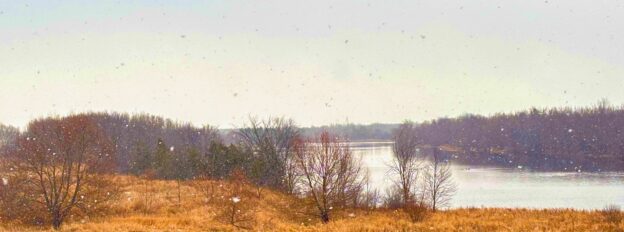
Not so long ago I made the mistake of using a photograph a woman had emailed to me. What I thought was a casual contribution turned out to be a limiting venture. The photograph was one the woman had taken of the nearby river. I was writing something which involved the river and I added the photograph to the composition (which I then shared with the woman, thinking she would be pleased). Instantly I was hit with the accusation of appropriation without consent. On the one hand I was flattered that the photographer felt my audience was large enough to constitute publication within the definition of copyright infringement. What upset though was the violent reaction of the woman. If I had known of her attitude, if I had imagined that the original email of the photograph was subject to such broad limitation, I would readily have given her all the attribution for which she so deservedly opined. Instead I simply removed the photograph and reported to her, “Done!” This was an uncomfortable result. It succeeded to distance me forever from the woman. But it taught me not to use another’s photograph without prior consent or acknowledgment under any circumstances howsoever casual or friendly. A similar contest arose when I used a photograph (taken from a public site and advertisement on the internet) because it apparently contravened a privacy right. This conflict has also succeeded to distance me irretrievably from the complainant.
Conclusion
There are many other accounts of argument and disapproval which have arisen in my lifetime and scope of experience. Some though not all have afforded a happy outcome. One former friend for example has decided because I shared with him my late father’s quip, “You can’t have money and things!” that we shall never talk again. My friend inherited an exceedingly large estate and he is a spendthrift. Apparently he didn’t like the insinuation. We have yet to determine whether my late father’s intelligence is of any application.
Another former acquaintance who lately and inexplicably routinely avoided my telephone calls and emails has only today called to express concern for my well-being and hope to reunite in the near future. I thanked him for the call.
Amorous relationships are normally fodder for controversy. Though my youthful romantic associations have not prospered, none is with regret or lingering hardship. For the past thirty years I have been spared the complications of loneliness and mismanagement. Having an uncommonly close relationship, we find that we survive most happily within our own and limited sphere. Not all familial relationships are the same. Infection by those to whom one is close is a singular punishment. While its result is not the proclamation of victory, its defeat leaves an unending and often irredeemable sting.
The intellectual fabric of these disputes is often marginalized to the point of evaporation. Yet the critical feature of opposition is seldom dissolved. I say this with a portion of regret; but more so with mere admission. It would be irresponsible to overlook the reality of dispute among people (both its existence and its consequence). While I attach no celebration of having tangled with others (whatever their renown or ignominy), I consider it a fallibility to deny its occurrence. I have forgotten the reason, the cause, the name, the parties, the price or the meaning, but the peril of disturbance to the harmony of life is forever there.