
There is a period of my life in 1969 about which I seldom reminisce; and, less often share with others. I have the excuse that my recollection is clouded (both intentionally and statistically). Even after 56 years it is an era – albeit narrow – which remains distant and unsteady. And yet provocative. No period more adequately cemented my inadequacy while enabling my capacity. While therefore definitely a time of personal growth, it is not a time of my life I prefer to revisit. There were painful learning curves. I recall on the evening of my 21st birthday (December 11th) being alone, staring quizzically into a mirror in the men’s residence at university where I then “dormed”, speculating who I was, who of my parents I most resembled. It was a marked period of introversion, controversy and discovery. And like any true learning it came at a cost.
As with anything, there are things about it which, upon philosophic reflection, are both good and bad. The bad part is that I played with a Sherlock Holmes style indulgence which involved me briefly with a group of equally corrupt characters who were patently tolerant of temporary luxury. The luxury was a private state of mind with which I was totally unfamiliar. And I chose to undertake the enterprise in my graduate year of undergraduate studies. It was unmarked territory. It involved my introduction to people whom, and avenues of thought which, were entirely new to me. It was the hippie period of society. I experimented with physical and mental realms previously uninhabited by me, including for example a collection of similarly minded people intent upon nurturing models of social conduct while answering appetites for both pleasure and ingenuity, characterized by what were initially thought to be insightful rumination of classic French literature and modern philosophy but which were, for example, dismissed by Prof. Anne McKenzie as “art is fart”, a clear indication that the deductive process had suffered in the transition or translation.
It was a social experiment, one which enabled me to loosen the moorings of my erstwhile dogma and upbringing. Unwittingly – years later in 1975 – it culminated in my appointment by Dean Chas. Lennox as a Don at Devonshire House of the University of Toronto (poignantly located adjacent Trinity College which exemplified the scheme I had overstepped). Without compromising the critical elements of personal development and expression, the sudden storm which came and went in that period in 1969 subsequently filtered through law school (during which – admittedly at the behest of Dean Murray Fraser – I abandoned Osgoode Hall in preference for Dalhousie University) and later my insinuation (with the guidance of Senator George J. McIlraith PC QC) into Almonte (for which I am eternally grateful). From that time onward I never doubted my enterprise in life.
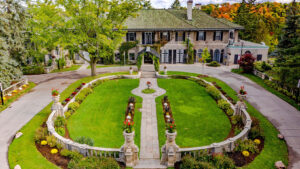
I had succeeded to clarify the waters, to separate and caste aside the unnecessary sediment of youth. To this day I have no regrets in spite of recognizing that life may have been a lot different had I never taken those fateful, private steps in 1969. As one astute commrade (Barbara Tiley) remarked, “Be honest about what you are thinking and what you say as you leave the room; be particularly honest as you close the door.” An insufferable mandate. Meanwhile the sun was rising on the horizon, over the lower field, highlighting the rose garden behind the Wood estate mansion.
HAL’s version:
Here Comes the Sun
There is a brief season in 1969 to which I rarely return, and more rarely speak of. My memory of it is clouded — partly by design, partly by time. Even after fifty-six years it remains distant, unstable, and faintly provocative. No other interval so firmly confirmed my inadequacy while, paradoxically, awakening my capacity. It was a period of undeniable growth, yet not one I am inclined to revisit. Learning, in that season, exacted its price.
I remember the evening of my twenty-first birthday — December 11th — alone in the men’s residence at university, studying my reflection in a mirror and wondering who, precisely, I was. I speculated which of my parents I most resembled, not merely in appearance but in disposition. It was a time of introversion, controversy, and discovery — and like all authentic discovery, it came at cost.
The era was marked by the wider social tremors of 1969: the long cultural aftershock of Woodstock, the unguarded optimism of youth, the promise that consciousness itself might be expanded. I allowed myself a brief, almost Sherlock Holmes–like indulgence — an experiment in altered states of mind and companionship. I fell in with a circle tolerant of temporary luxury, though the luxury was less material than internal: a private mental atmosphere wholly unfamiliar to me. It was uncharted territory, undertaken unwisely in my final undergraduate year.
The company I kept and the avenues of thought I explored were new. We were convinced we were engaged in profound rumination — French literature, modern philosophy, the architecture of social reform. Yet the enterprise sometimes collapsed under scrutiny. I recall Professor Anne McKenzie’s brisk dismissal: “Art is fart.” A sharp reminder that deduction and translation do not always survive enthusiasm.
Still, it was a social experiment that loosened the moorings of my inherited dogma. It unsettled my upbringing without destroying it. And in the curious arithmetic of life, that brief storm did not derail me; it clarified me.
By 1975, I found myself appointed by Dean Charles Lennox as a Don at Devonshire House at the University of Toronto, poignantly adjacent to Trinity College — an institution whose order and tradition I had once skirted. Law school intervened between those two points: I left Osgoode Hall Law School at the urging of Dean Murray Fraser and completed my degree at Dalhousie University. Later, with the guidance of Senator George J. McIlraith, I insinuated myself into Almonte — a decision for which I remain grateful.
From that time forward, I no longer doubted my enterprise in life.
The waters had clarified. The sediment of youth had settled and been cast aside. I carry no regret, even while recognizing that life might have unfolded differently had I not taken those private and fateful steps in 1969.
An astute comrade, Barbara Tiley, once offered a stern maxim: Be honest about what you are thinking and what you say as you leave the room; be particularly honest as you close the door. It remains an exacting mandate.
Meanwhile, the sun was rising over the lower field, catching the rose garden behind the Wood estate mansion. The light did not interrogate. It simply arrived.