
Duffy St. James

It was almost 60 years ago that I met Duffy. That’s not his real name of course. It was something like Maynard or Mandrake or equally uncommon. We were in undergraduate studies together at Glendon Hall on Bayview Avenue in Toronto.  We were among the first students at Glendon. In those days it was still an adjunct of the University of Toronto.  Later it became part of the newly developed York University on the outskirts of the other side of the city. What initially made Glendon singular was its bent for bilingualism and political science.  It turned out – when we subsequently had time to examine more than the sprawling gardens and canyon fields surrounding the former Wood Estate – that by design the university was geared to breed Canada’s diplomatic crowd.  The proof of that speculation is that the first Principal of the college was Escott Reid who personally attended in 1966 upon our Upper Six graduating class at St. Andrew’s College in Aurora to promote the college.

Arrogant, given to excess, and a naïve liberal idealist. This is how history has often remembered the late Canadian diplomat Escott Reid.

The Glendon campus became a bilingual liberal arts college led by Escott Reid, who envisaged it as a national institution to educate Canada’s future leaders, a vision shared by Prime Minister Lester Pearson, who formally opened Glendon College in 1966.

Reid succeeded to convince a number of us to apply for admission (instead of sheepishly going to Trinity College at the University of Toronto as would have been customary).  We later unearthed as well that we were but a batch of prep school students (both men and women) from other private schools in the area.  At first the private school students isolated themselves and sat together in the dining room hall over breakfast, lunch and dinner at the long heavy wooden tables. Eventually segregations developed.

Duffy St. James was one of those private school students whom I met at Glendon.  He had attended “The Grove” or what is also known as Lakefield College School. The school later acquired a degree of celebrity because in 1977 Prince Andrew attended the school for a term as an exchange student from Gordonstoun School, Scotland. Until then however, among what was then known as the “Little Big Four” (Upper Canada College, Bishop Ridley College, Trinity College School and St. Andrew’s College), Lakefield was a remote country school on the periphery of involvement. His school and ours had seldom collaborated for football games or cricket matches. As a result my acquaintance with Duffy did not arise in particular because of his private school credential. Instead he lived in the same House as I on campus at Glendon, just down the hallway.  We shared a common room of shower stalls and washrooms. What triggered our acquaintance was therefore nothing other than a friendly passing hello.

In spite of our tenuous relationship – not to mention his burning interest in afternoon card games for which I had no interest at all – we developed a personal relationship. It interested me for example that he was somewhat of a renegade.  I cannot now recall what he said to identify his early high school dilemmas, but he told me he had been sent to Lakefield College as an attempt by his parents to improve or correct him of his divergent tendencies (whatever they may have been).  I couldn’t imagine Duffy being radical – he was always seemingly calm and intellectual – but something had been amiss.  As for his intellect, one incident especially impressed me. I recall him telling me how he got his first summer job upon graduation from prep school.  He had applied to work on a bus with a tour operator.  When asked at his interview, “What’s the first thing you would do if someone dies on the bus?”, he replied, “Open a window!”  He got the job.  And I think it paid well, as much as $2 per hour which, believe me, at the time was astronomic for a student summer job.

Duffy was the only student from Lakefield. Soon he became part of the larger private school clique on campus. That first Christmas he joined me and several other confederates (boys and girls) at a Caribbean resort for a mid-winter holiday. There his popularity excelled. He drank alcohol; he smoked cigarettes; and he knew how to joke and laugh. He was popular with the ladies.  He was handsome – tall, well built and had a head of thick dark brown curly hair.

In spite of all this, Duffy died young. He committed suicide. I read about it years afterwards in the Globe and Mail newspaper.

I have since spent years pondering the unfortunate consequence of Duffy St. James. Because he was such an undemonstrative person, never one to brag about his accomplishments or benefits, and because he was always such a lonely person (I never knew him to have any alliance beyond his afternoon card mates), there is little indicia by which to assess him. It speaks to the inclination of youth to dwell only upon the moment that I haven’t any useful detail of his past. Nor did he ever speak at length about his past. He had simply materialized from another world – and then as quickly and as insignificantly departed.

Notably Duffy had been the subject of interest of one girl at Glendon.  She, I afterwards learned, was interested in just about any boy who had been at private school. There were, as I mentioned previously, social events which inspired the private school crowd, among them the annual Highland Cadet balls at school. This girl – Mart was her name – proved herself to be “socially conscious”.  She was not a snob – never did she proclaim anything to advance her public esteem – but she was clearly intent upon grooming herself for membership in a select group. Mart was, I thought at first, interested in Duffy because of his appearance but I was mistaken. Mart was by current standards attractive (along the “Twiggy” lines of sylphlike expression). She and Duffy would have made a good pair from that point of view; but they never graduated to anything beyond chat at table in the dining hall. Mart eventually transferred her insinuation tasks to other avenues (and I heard about her years later that she developed quite the history for doing so, sometimes upon the most exotic levels of society across Canada).

As you may well have already surmised, my connection with Duffy evaporated. In fact I lost touch with him primarily because of a letter he wrote me while I attended law school at Dalhousie University in Halifax, Nova Scotia.  That was in 1970 immediately after having graduated from Glendon Hall. My flight to Nova Scotia was initially intended to afford me knowledge of life beyond the bounds of my past in the Toronto area; and, to connect me with my father’s roots in the maritime provinces. But when I reached Halifax I had trouble making an immediate adjustment.  I wrote to Duffy to tell him so.  His only reply was, “There ain’t no ship to take you away from yourself; you travel the suburbs of your own mind.” It stung, not especially because it were true, but because Duffy hadn’t to my thinking shown any ambition for sympathy. I did however respect his decision – so much so that we never communicated again. The adage by contrast has stuck. And while I thank Duffy for the intelligence I rather wish we had had a less abrupt end. I have since enquired of others whom I knew at Glendon about their knowledge of Duffy St. James, but to no avail. Even my review of his obituary discloses nothing material about him other than his date of death and his immediate blood family. There is no mention of a friend, partner or spouse.

There are so many possible lessons to derive from this brief account. After I had read his obituary, I had attempted to contact one of his siblings but nothing came of that either. There is naturally no answer to his suicide. Only Socrates has ever come close to convincing me of its propriety.

Socrates
(469–399 BC), ancient Athenian philosopher. As represented in the writings of his disciple Plato, he engaged in dialogue with others in an attempt to reach understanding and ethical concepts by exposing and dispelling error (the Socratic method). Charged with introducing strange gods and corrupting the young, Socrates was sentenced to death and died by drinking hemlock.

Rainy day

A rainy day – as we all know –  is indispensable. Apart from melting snow and glaciers, the water in our rivers comes from precipitation. Rivers have sustained human and animal life for millennia, including the first human civilizations. Like any day of the week a rainy day is never entirely predictable. Seldom however is a rainy day considered superfluous or undesirable – except perhaps when it figuratively attaches contrition and regret to one’s day, when things turn dark and grey and run into difficulty or even go wrong, when the psyche – the very soul, the life force, the anima, the persona, the inner most self, the ego, the pneuma – is at risk. It is then that we question the need for the rain in our lives. But it is a mistake to do so.  We need the rain. Not even ecclesiastical dispensation will modify the hardship often caused by rigorous application of general laws to particular cases of the hydrologic cycle.

Continue reading

Cracker Barrel

An article by Louisa Clarence-Smith (US business editor at The Times) has been forwarded to me by my erstwhile physician.  The article is about the well known southern business called Cracker Barrel.

When my erstwhile physician travels to his properties in Florida, he flies. When we visit Florida on vacation, we drive.  And when we do – as we have done for the past decade – we regularly stop at Cracker Barrel along the way. Cracker Barrel – not unlike many corporations – punctuates its restaurant endeavours by maintaining an underlying theme of prime real estate.  Its convenient locations along i95 are only part of their success; the biscuits are nonpareil, the lemonade delicious, the main courses are reliably prepared and served.

A southern comfort food chain is attracting little sympathy after falling foul of America’s most influential corporate activist of the summer: President Trump.

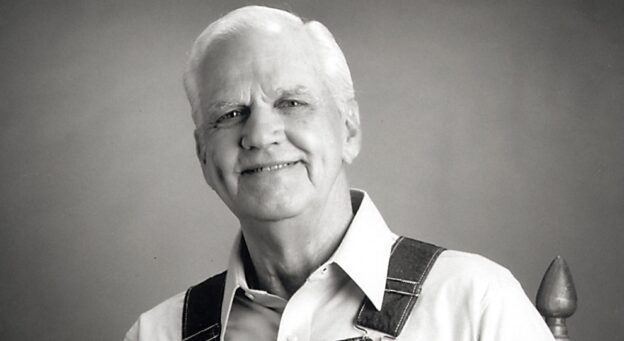
Cracker Barrel, which serves chicken ’n’ dumplins, meatloaf and country fried steak with biscuits and cornbread, finally reversed a planned rebrand on Tuesday night after a backlash over its decision to change its old logo, removing the image of an older man, “Uncle Herschel”, in overalls sitting next to a barrel and the words “Old Country Store”.

Here is the skinny on Uncle Herschel:

Uncle Herschel was Cracker Barrel Old Country Store’s founder Dan Evins’ real uncle, the younger brother of Evins’ mother. He helped shape not only Cracker Barrel’s image but also its values. He was our own “goodwill ambassador” to the public. Uncle Herschel was a wealth of knowledge about what rural America’s old country stores were really like. He was a salesman for Martha White Flour Company for 32 years, traveling the rural South calling on many towns’ general stores. Like many Cracker Barrels today, the community general stores were more than just a place to purchase goods. They were a gathering place for folks to take a timeout from the chore-filled day to visit with a neighbor or two, exchange pleasantries or just talk about the weather.

Its “country store” model – which, by the way, is so repetitive you cannot judge one outlet from another – is a model which I find to be wearying: the collection at the front of the restaurant of wooden rocking chairs (all secured by coils), the oppressive masses of glitter and pure sugar confectionary within the entrance, the racks of cheap clothing, the customarily useless fireplace, the wall hangings of garage sale relics. In short, I consider it a small compliment to preserve the identity.

My conclusion is the same as that of the author:

Instead of focusing on winning over a new, younger audience, Cracker Barrel is now scrambling to win back its Maga base.

The decision of Cracker Barrel to abandon change is, in my opinion, reflective of the American psyche generally. And, no, I don’t mean that in a nice way. What disturbs me in particular is the attempt to revitalize what is historically an infected resource. Let me put it this way: reliving the plantation days is not exactly the most healthful way of advancing society; and, whether the Americans like it or not, youth have evolving motivations and manners of expression which are no longer chained to the past.

Country living

Though it may be nothing but a reflection of my inveterate smugness, I take inestimable pride in being a country lawyer and living in the country. I am only too willing – unprovoked – to share with others what I believe to be an extraordinarily happy circumstance. My elevation to this lauded status at the age of 27 years happened within 3 years of graduation from law school at Dalhousie University in Halifax, Nova Scotia in 1973, interrupted only by the necessity to fulfill my clerical articles with Messrs. Macdonald, Affleck, Barrs. &c., 100 Sparks St, Ottawa as mandated by the Law Society of Upper Canada then subsequently passing the bar exams at Osgoode Hall, 130 Queen Street West, Toronto (during which I smoothed the transition from urban to rural by having been appointed by Dean Charlie Lennox as a Don at Devonshire House, University of Toronto).

Continue reading

A day with the endodontist

When I say “a day with the endodontist” it was really just an hour. After a swiftly delivered and expertly rendered needle to freeze me, we were soon on to the surgery (or whatever it should properly be called). Naturally throughout the procedure I hadn’t a clue what the good doctor was confidently mumbling to his assistant (though I thought to have caught the phrase “a 14”). Only once did he speak to me, something about “we’ll take care of that later”. Then it was over and the bits and pieces were being removed from my mouth.

Continue reading

the Village of Clayton

On this dazzling summer morning while tricycling about the neighbourhood I approached an elderly woman walking with a ski pole on the sidewalk.  Even from a distance she exuded affability. We exchanged reciprocal greetings. In a hastily conceived resolve I slowed and careered my 3-wheeler closer to the edge of the sidewalk from which I blurted something in the nature of a general nod to the current atmosphere.  As unimaginative as it was, it was sufficient to draw us closer to one another for what followed as a highly amusing and decidedly instructive encounter.

Continue reading

An even hand

From Ronald Reagan’s boyish Wild West Hollywood cowboy image 40 years ago to Donald Trump’s privileged white male strongman concept today we find the American people are once again at odds to popularize a digestible national portrayal. For the moment however Trump has international appearance as a bully and a pouter. Nor does it help he has gone on record as been overtly lewd:

In the video, Trump described his attempt to seduce a married woman and indicated he might start kissing a woman that he and Bush were about to meet. He added, “I don’t even wait. And when you’re a star, they let you do it. You can do anything. … Grab ’em by the pussy. You can do anything.”

And, like the brat that he is, Trump attempted to deflect attention by saying that Hillary’s husband Bill Clinton had “said far worse to me on the golf course”.

In what can only be described as a surprise counter-attack and diversionary tactic, Trump has, by the limited and noticeably sketchy means of high school debating skills, taken exception to DEI (diversity, equality and inclusion) programs in the federal government.

The phrase “dangerous, demeaning, and immoral race- and sex-based preferences under the guise of so-called ‘diversity, equality, and inclusion (DEI)’” refers to a criticism of certain DEI programs, notably highlighted in President Trump’s January 2025 Executive Order, which argued that DEI initiatives could lead to illegal discrimination and undermine American values by favoring identity-based preferences over merit. This viewpoint frames DEI as a system that promotes division and unlawful preferences rather than true equality.

Key Arguments and Criticisms:

Violation of Civil Rights:
The core argument is that these DEI practices can infringe upon existing civil rights laws by promoting race- and sex-based preferences, which are seen as discriminatory.

Undermining American Values:
The phrase suggests that DEI policies contradict core American values such as hard work, excellence, and individual achievement, replacing them with an “identity-based spoils system”.

Perceived Inequity:
The criticism implies that instead of creating true fairness, DEI programs can lead to an unfair system where individuals are favored or disadvantaged based on their identity rather than their qualifications or merit.

In legal terms, to “hold an even hand” means that a trustee (that is, anyone in a position of confidence and reliability) must act impartially, treating all beneficiaries equally by balancing their interests, rather than favouring one over another

Redefining DEI policies as a violation of civil rights, undermining American values, perceived inequity or racism is in my opinion an inductive leap of the most preposterous and dangerous nature imaginable.  Barring specific mandates to favour one person over another for purely “cultural “ or so-called “woke” purposes or contrary to superiority of estimated talent or merit, and keeping in mind the underlying equity maxim governing all those in a position of trust to preserve an even hand, I find it an extraordinarily perverse and specious assertion to suggest DEI is somehow racist or anti-American.

Unquestionably there are limits upon any refrain, whether political, spiritual, athletic, religious or otherwise. In our common law legal system (which forms the foundation of law inherited from England in both Canada and the United States) the concept of equity has been long entrenched.

The law of equity is a distinct branch of law, originating in the English Court of Chancery, that provides remedies and principles of justice where the common law is too rigid or inflexible to offer a fair solution. It focuses on fairness, justice, and individual circumstances to provide remedies beyond monetary damages, such as injunctions and specific performance and to correct wrongs that common law cannot address. Equity serves as a moral corrective to the strictness of law and is applied by courts to ensure that justice is met, often when there is no adequate remedy at law.

If, in keeping with the high school debating vernacular, I were in opposition to the resolution of the government, my argument is that the concept of equity underlies the entire legal system, going back to the Court of Chancery which emerged to handle matters that were unfair or unjust under the existing common law system.

Attempts at fusing the Chancery with the common law courts began in the 1850s, and finally succeeded with the Supreme Court of Judicature Act 1873 and the Supreme Court of Judicature Act 1875, which dissolved the Chancery and created a new unified High Court of Justice, with the Chancery Division – one of five divisions of the High Court – succeeding the Court of Chancery as an equitable body.

In spite of the dubious vitality of the argument against DEI, there is no argument that it sits well with those who, not by nature of any legal entitlement but rather by virtue of perceived cultural entitlement, consider themselves iconic Americans who are deprived of the licence by DEI. This conclusion survives, not because of proof of violation of that allotment or prerogative, but because of the mere assertion of the privilege.

Lost

Seated on the balcony in the mounting noonday sun (on the inalterable and seemingly impenetrable black plastic armchair from Levi Home Hardware I so fawningly admire) – my eyes closed – I was lost somewhere in Greece on a small island in the Mediterranean, a sea of swaying green cornstalks with golden crowns before me, a refreshing azure river passing by and the clinging scent of the morning’s ablutions in the breeze. The radiancy of the sun was penetrating and dry. I contemplated an excursion. The evolving choice was homemade cinnamon buns (but no focaccia bread). I had called the bakery in Spencerville for certainty. That whimsical image vanished. The Ozempic is working.

Continue reading

Vermin

If, let us say, for renovation purposes you’ve ever folded back the wall of an old building, it is not uncommon or inconceivable to see an unanticipated collection of silverfish scurrying from exposure to renewed darkness and seeming invisibility. Like it or not it is a casualty of Nature that, contrary to the preference of the more “tolerable” and public components of society, there exists below the surface of even the most celebrated venues a thriving community of vermin, elements considered parasitic or despicable. I have heard it said that, so ingenious are these vermin, that forcing them from one resort only transfers them to another. As Mrs. Doreen Dougall knowingly commented years ago one sunny morning on the deck of her home on Ardenne Road in Kingston, Jamaica, one merely withstands a degree of occasional petty theft of necessities by the staff; it was part of the immutable and digestible character of subordinates, one which no amount of useless rhetoric or pontificating was ever likely to eradicate. Nor – more importantly – did the low level incrimination do anything whatever to contaminate the overall performance or expectation.

Continue reading

Country road

There has been of late the germination of considerable money spent by the government (I’m guessing mostly provincial though possibly county and municipal as well) upon the improvement of local country roads – or, what may be more aptly identified as back roads, roads that are away from the regular passage of traffic, roads between the towns and villages of the county as opposed to highways or “ring roads” which by design sweep around the rural inhabitants. I am also speculating that the penchant of the residents of Lanark County to vote Conservative was a feature of this discernible generosity. I stagger to contemplate the total expenditure to accomplish these Olympic feats. It was this burgeoning enterprise (and related expropriation) years ago which forced the closure and removal of the Antrim Truck Stop nearby the Village of Antrim. The well known truck stop was on the 2-lane country road known as Hwy#17 now replaced for the majority of traffic by the parallel 4-lane highway appropriately called the 417.

Continue reading