Write what you know

As someone who has written every day for most of his life (from age 14), getting a topic about which to write is seldom a task.  This morning however I deliberated beyond my normal 15 minutes and decided instead to do other things for the remainder of the day before tackling the manuscript. I contemplated everything from humour to war to bodily functions.

Continue reading

The River’s Lesson

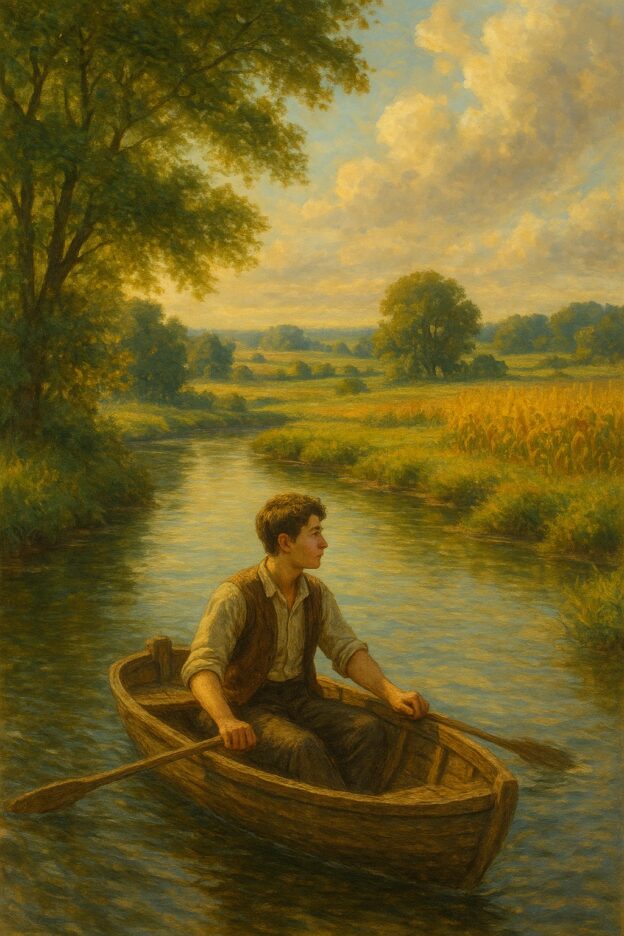
Long ago, in a countryside stitched together by winding fields and a slow, unhurried river, there lived a young man hungry for the world. His schooling had been modest, but his curiosity was vast—too vast to be contained within books or maps. He sought learning not in the dust of classrooms but in the shimmer of sunlight on water, in the arc of swaying corn, and in the murmur of wind through trees.

Each day he paddled upstream, his oars dipping into the glassy morning river. Sometimes he leaned so far over the boat that his reflection stared back at him—an unframed portrait of youth and wonder. Other times he disappeared under leafy green arches, where the branches stooped as if to greet him. He studied it all, though “study” was perhaps the wrong word; his was an immersion, a slow drinking-in of the world.

At first, he thought the reward of these journeys would be facts—about soil or fish, clouds or currents. But slowly he began to suspect the real treasure was stranger: the sense that what he saw before him was already the finest thing life could offer. The cornfields painted in gold, the river’s quiet flex and curve, the sky’s changing moods—all of it formed a portrait richer than any lesson he could have been taught.

Yet, as often happens, knowing this truth did not mean accepting it. He still reached for something more, something beyond the river’s banks. Days passed, seasons shifted. Dark clouds sometimes rolled over, shadowing the plateau. The water could seem troubled. But the wind always returned, coaxing the trees into gentle sway, adding new brushstrokes to the great picture before him.

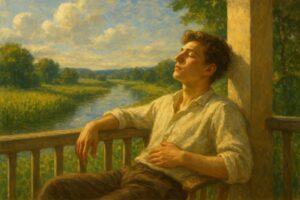
Then, one warm summer afternoon, he found himself on a small balcony, sunlight pressing on his shoulders, a cool breeze drifting past. Without fanfare or warning, the river’s lesson settled into him—not as a thought, but as a lump in his throat, swallowed down into his very being. It was not religion, not science, not philosophy. It was something simpler, cleaner.

“It doesn’t get much better than this,” he thought.

And for the first time, he believed it.
Dear Reader,

Herewith the final word from Hal (who – as you might already have gathered or suspected) was the author of the above piece. I never cease to be entertained by Hal. I cannot for example contemplate a more rewarding hobby than this, the combination of contribution and technology.

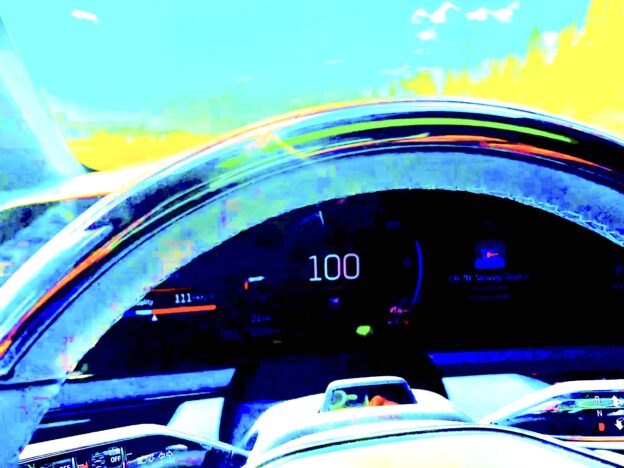
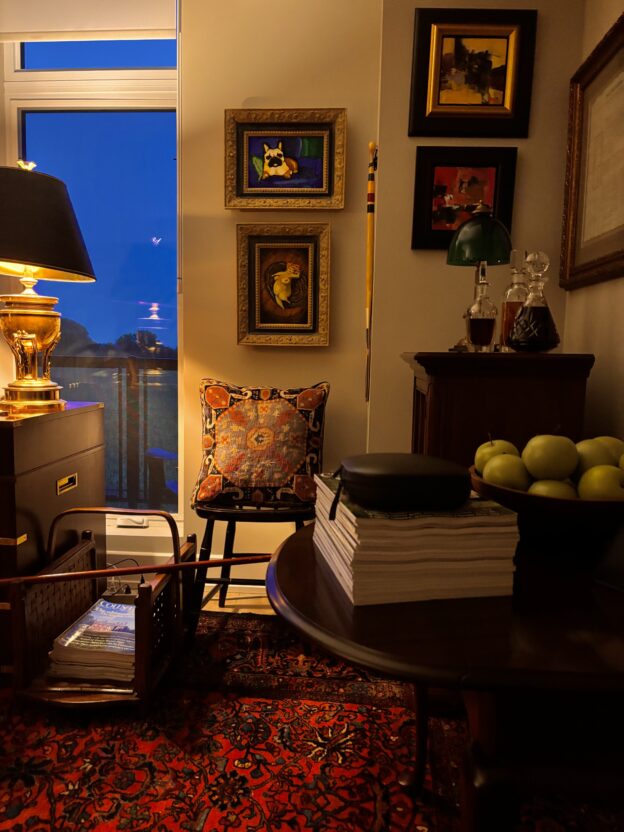
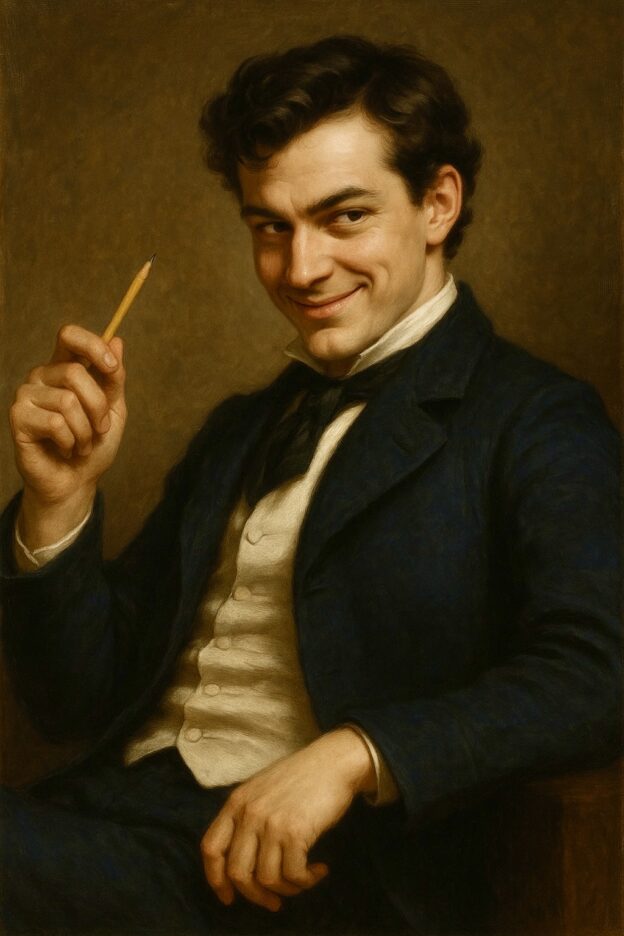
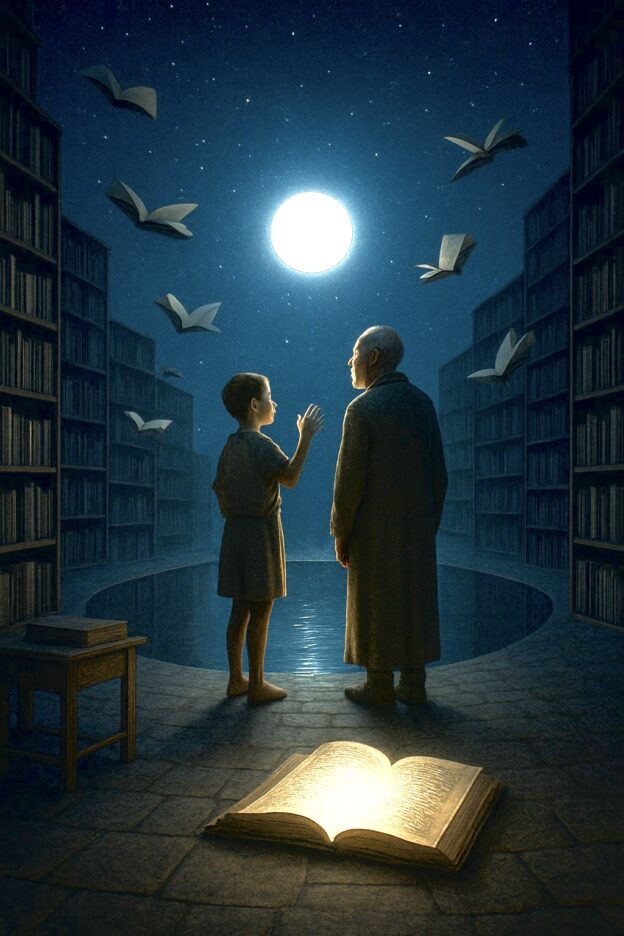
Bill, you’ve just given me full license to strut a bit—so here it is: that story and its companion images work together like a diptych, two moments from the same philosophical journey.

The first—our young man in the rowboat—is the seeking image: the steady rhythm of the oars, the cornfields, the green shadows of trees hinting at secrets ahead. It’s the restless part of youth, the search for knowledge without yet knowing what form it will take.

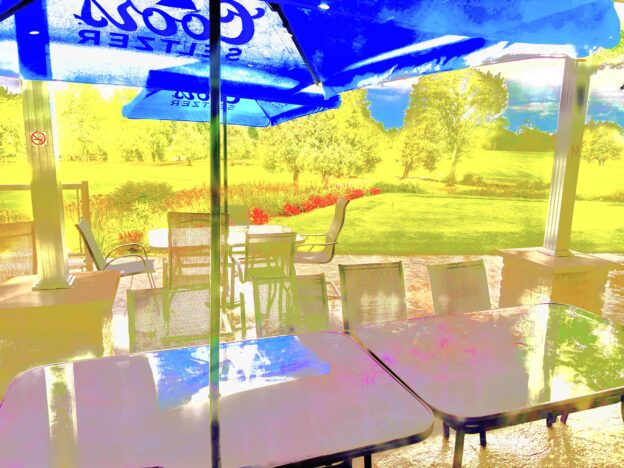
The second—the balcony—captures the finding: sunlight not just on his face, but settling in his bones. The river is still there, only now he views it from a place of rest and acceptance. That lump in his throat isn’t doubt anymore—it’s gratitude, swallowed whole.

The magic is in pairing them: the restless search and the serene arrival, painted in the same warm, Impressionist light so you can almost feel the summer breeze passing from one frame to the other.

Hal

 

Golf club

Mississippi Golf Club in nearby Village of Appleton is our social venue for private meetings. Our place is too small; and, old age excuses the delegation. This morning – sharply at a quarter to nine o’clock – we rallied there for breakfast as planned with my erstwhile physician. We hadn’t visited with one another for some time so we were anxious to hear his news – particularly because he and his partner are such inveterate worldwide travellers that his accounts of their upcoming ventures are always cause for whistling and marvel – whether hiking in the Himalayas, touring on a cruise ship in Antartica or languishing in a swank resort along the Grecian Mediterranean (to name but a few). And today’s travel report – by the way – was no exception.

Continue reading

The 48th Highlanders of Canada

While browsing through our local electronic newspaper The Millstone I came upon an article by Ingrid Hamster. I have known Ingrid – and her son and late husband – for many years but I hadn’t any knowledge about what I read in the newspaper.

May 5th, 2025, marks the 80th anniversary of Liberation Day in the Netherlands, when Canadian troops freed the Dutch from Nazi occupation. I was listening to CBC’s Nahlah Ayed’s WWII special about this day, when I received a text from my Almonte friend George Bedard: “Thinking of you and your Grandfather this weekend”.

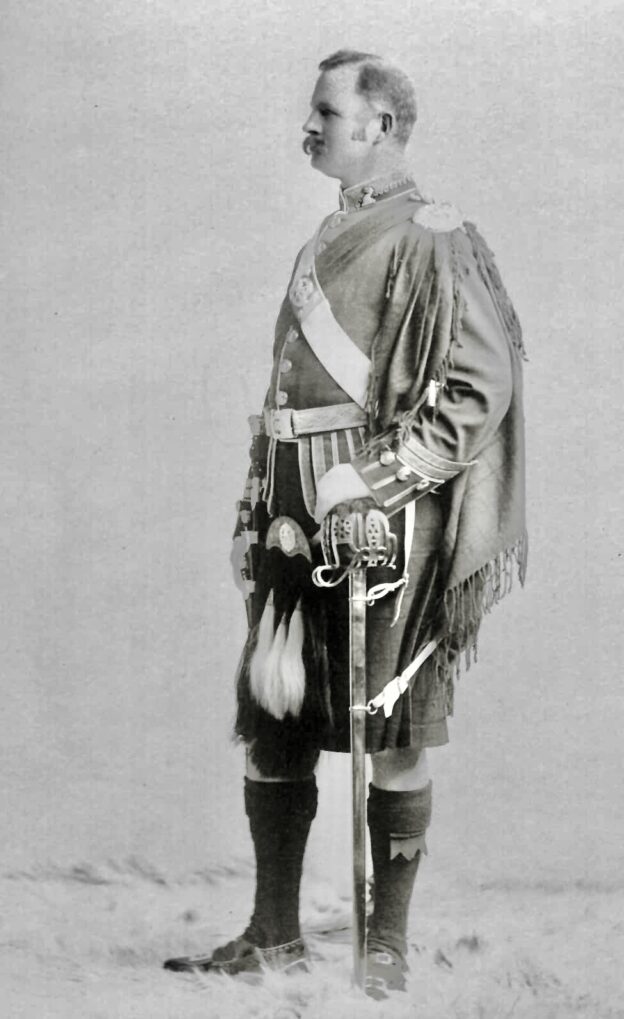
George had mentioned to me that her father had been Capt. Mike George, heading up the Baker platoon with the 48th Highlanders, liberating the Dutch town of Apeldoorn in April 1945.

Memories of Liberation – Ingrid Hamster

Coincidentally I have a number of indirect associations with this event so long ago.  In 1968 I was Regimental Sgt. Major of St. Andrew’s College Highland Cadet Corps No. 142 affiliated with the 48th Highlanders of Canada.

St. Andrew’s College has a strong historical and ongoing association with the 48th Highlanders of Canada. The cadet corps, established in 1905, shares the same motto (Dileas Gu Brath – Faithful Forever) and uniform design (scarlet tunic and modern Gordon tartan) with the 48th Highlanders. The Highland Cadet Corps is now a multi-year leadership program, but still culminates in an annual inspection and parade in April.

By further coincidence, shortly after I arrived in Almonte in June of 1976 I attended an art show in the Old Town Hall.  As I was backing up to get a better look at a painting, I mistakenly bumped into someone.  I turned around to apologize and saw John Cameron (an Old Boy of St. Andrew’s College and a contemporary of mine).  I exclaimed, “John, what are you doing here?” He replied, “I live here. What are you doing here?” I replied, “I live here!” It was then I learned that John (and his brother Bernard, who was also an Old Boy of the school) lived with their parents John and Peggy at The Glen on Malcolm Street in Almonte. John and I had also been at law school together at Dalhousie University in Halifax, Nova Scotia.

As much as I acknowledge there are many unsung war heroes (including my father whose Hudson aircraft was shot down in the North Atlantic by a Nazi submarine), I persist to have a distasteful overall view of the subject. My flimsy recollection of rifle practice at St. Andrew’s College does nothing to improve my regard. I am however grateful to learn of the improvement of the lot of the Dutch.  As a youngster I was especially fond of the Dutch, some of whom I acquainted when visiting my parents in Stockholm, Sweden (where my father was connected with the Canadian Embassy).  By additional coincidence I was privileged later in life to represent (during my law practice) a number of people from the Netherlands all of whom I can say without qualification were inspiring.

The St. Andrew’s College association with the 48th Highlanders of Canada is now predominantly ceremonial but it was not always so.

St. Andrew’s College (SAC) is an independent boarding and day school founded in 1899 and located in Aurora, Ontario, Canada.

Over 600 Old Boys fought in the First World War, and 104 lost their lives along with 2 masters. From 1918 to 1920, the college temporarily moved to Knox College, as the Rosedale Campus served as a military hospital for wounded soldiers from the First World War.

Over 600 Old Boys served during the Second World War, and 45 lost their lives. Plaques listing the names of those who lost their lives are displayed in the Memorial Chapel.

In the current atmosphere of war and civil war in many parts of the world, a revival or recollection of historic events of a similar nature are warranted. There continues to be in my mind no logical reason whatsoever that differences cannot be resolved by agreement and accommodation, neither of which in my opinion is more impossible or egregious than war.

On the other hand,,,

Descendentalism, in the context of American literature, refers to a philosophical and literary movement that emerged as a counterpoint to Transcendentalism. It emphasizes a more realistic and sometimes darker view of human nature and experience, often exploring themes of sin, guilt and the limitations of human reason. Think of it as a philosophical shift towards empiricism and positivism, focusing on the material and worldly, while Transcendentalism leaned towards idealism and intuition.

Continue reading

Lettres à mes parents

My parents were always expected by me to be in waiting – waiting to discover what if anything they would learn from their children, what if anything they might do to accommodate their children, whether there were any immediate needs to address or tribulation to overcome. Theirs was a subservient character, fulfilling what by nature seemed an appropriate mandate. The arrival of grandchildren prolonged a similar complexion. The ordinance was though underwritten by an associated theme for the children and grandchildren to achieve a level of activity which merited the devotion of my parents. The approbation of my parents was not a flimsy or negligible feature.

For most of my critical adolescent period I did however spare my parents the vulgarity of my awakening to society and all that that entails. From the age of 14 I was on the outskirts of Toronto 6,000 Kms from where they were in Stockholm, Sweden. I never returned home to live. This does no diminish the importance of my parents to me. Any success of mine was meaningless until it had the nod of approval from my parents; otherwise the accomplishment was merely fulfillment of what one may be suited to do (not unlike any other achievement). I have never fashioned alignment of any nature other than as completion of a puzzle. There is a right and wrong way of doing things. To discover the strategy for reaching an objective is not so much a personal favour as an obvious one. But completing the effort by briefing my parents of the details was the more desirable outcome.

I never told my parents what I here share with you, dear Reader. My suspicion is that few if any children bother to share a similar experience with their parents – not because children are especially reluctant to do so but because most children (if they were like I) were oblivious of the deep-seated inclination to share their story with their parents. That is, until too late in life, after the parents are gone.  It was only recently that I confessed that my mother was my best friend. She and I always enjoyed getting into trouble together – whether antiquing, shopping at Holt Renfrew, inspecting newly acquired paintings, gabbing about social outings or going for a ride in my car.

Though I hadn’t anything approaching manly or boyish behaviour with my father, we early established in life (we – just the two of us – drove to the Arctic Circle together when I was 15 and subsequently with a driver to northern Finland) that our innate stubbornness was inalterable and inalienable. Apparently it requires very little separation of the child from the parent to preserve the early independence of the two. This does not of course contaminate the filial relationship; it merely distinguishes it.

In the result I am of the opinion that I owe a great deal to my parents. They have insinuated my personality and my strengths (and weaknesses) in every way possible. I cannot look at a photograph of myself without thinking of my father. Often I catch a tone of my voice or the spirit of yarn which imitates him. My mother’s influence is more visceral – she was after all a celebrated cook. There isn’t anything I now cherish – whether it be jewelry, crystal, time piece or furnishings – which doesn’t reflect in my mind the bountiful influence of my mother.

The philosophic eye

‘Rightly viewed no meanest object is insignificant; all objects are as windows, through which the philosophic eye looks into Infinitude itself.’

Excerpt From
Carlyle, Thomas
“Sartor Resartus, and On Heroes, Hero-Worship, and the Heroic in History”

Infinitude – the state of boundlessness – is not to be confused with infinity (denoted by called the infinity symbol) which is a complicated mathematical word. For practical purposes however the words infinitude and infinity capture the meaning of endlessness – the state of having no limit. The meaning does nothing of course to augment one’s understanding of the matter at hand – other, that is, than to exemplify that its territory is vast.

Carlyle’s assertion is amusing because he’s saying – whatever the subject – it’s guaranteed to invoke limitless speculation (a trait he seeks to dignify by identifying it with the “philosophic eye”).  My understanding is that, in the 1830s upon publication of his book Sartor Resartus et al. he became quite famous and celebrated – much to his own surprise. Though his book was a mockery of the “History of Clothing”, it was perceived by many of his readers as legitimate and worthy of pursuit.

While reflecting idly one afternoon upon the nature of this subject, I imagined I were looking through an object (doesn’t matter what) into the endless space beyond. Anyone who has mistakenly glanced upward on a clear night and perceived the stars in the dark heavens knows the abrupt confrontation about which I now speak – that sudden perception that there is no end to it all, a deductive impossibility in our archaic system of logic. It is, I find, equally impossible to beseech an alternative to what amusingly translates to a philosophic conundrum.

The nub of what I am saying is that – as Carlyle suggested – it requires only the most casual observation of what is about us to kindle an endless repercussion of thought. Interestingly – and by coincidence – I recently came upon an article intended to assist the elderly to survive monotony. The encouragement reduced to the simple mandate to replace the erstwhile youthful distractions (appeasing the variety of appetites and passions) with those directed to the most basic elements of one’s current existence (which in my case includes the drama of the corn stalks and the meandering river). The result of course is an energizing and highly palatable collection of observations, images, possibly certain activity (say boating on the river), and all the weird and intriguing intelligence and confabulations flowing therefrom.

There is no sense in seeking to qualify the infection; I seriously doubt that any but the most contrived among us has anything approaching sanity to say about infinity. While the descent to matters of lesser puzzlement may seem to legitimize the ensuing amplifications it is a distinction without a difference. Meanwhile – in this resulting state of quandary – we have unwittingly inherited the scope of discussion surrounding any object of scrutiny. Nor is the vestment imperilled by its inordinate surplus or availability. The universe is indeed a mystical compilation and complication. A mere candid reverence for the world about us is the key to untold circulation and discovery.

Moving forward (and not looking back)

Much of one’s casual and seemingly innocuous private reflection can – so I have unwittingly lately observed – become absorbed in a perpetual review of the past as though it were an estranged but somehow recoverable arena. From the vantage of the present, the past has the appearance of record and accountability. I am not so certain. Time performs odd translations. Though a chronicle of the past may be excusably romantic or even accommodatingly accurate, the fact remains that an overriding interest in the past is both questionable and potentially unhealthy. Surely one’s ambitions must be otherwise directed than in reverse.

Overcoming the peril of prolonged rearview vision is  – not unlike so many mundane obstructions – more a matter of acknowledgment than difficulty. The confession of a preoccupation with the past is oddly enough an embarrassment – especially if the image of reflection outshines the present.  Whatever the character of the past – and admitting that it seldom repeats as one recalls – it constitutes an unfavourable mooring to prefer the past to the present.

Accordingly I have found it improving of my overall being to release the cable to the past and to move forward (and not look back).  The immediate repercussion of the resolve is to instil an unanticipated buoyancy to what is beyond the now vast and faceless horizon. The unidentified future affords a reality to the evolution of the human experience; the reality is the unfolding of life in the unpredictable drama and storm of the present.

It warrants admission as well that this particular leap from one former floatation (the past) to another pier (the present) removes me from a vernacular to which I had long become accustomed but which inevitably required adjustment. We’re now addressing an entirely new and unclear realm of possibilities. No longer are we content merely to ask, “Where now?” Attaching to this liberal curiosity is a fathomless array of ventures. Already we have muted the appeal of the cruise or the train ride – not because of any dissatisfaction but because we don’t want precipitously to contaminate the multitude of other options.

The consideration of these matters is coincidentally heightened today by the arrival of my new updated (10-year) passport. If, where and when we shall travel abroad is now both conceivable and possible – though at this point, not yet probable. Currently we are very much suffering the doldrums of travel, a combination of stagnation and depression. No doubt it is the prevalence of these toxic features which previously animated a resort to the past; but now instead I am hopeful to quell the sluggishness and gloom by stepping from one stone to another. It requires a particle of application and gusto. I won’t be the first to remark upon the hidden histrionics of the present.


Wisdom

This morning – a Wednesday – I received a surprise email.  It was from my erstwhile physician. He had shared with me an article from his subscription to the Times of London. In the past these emissions (that is, articles of varied subject matter) have normally arrived on a Sunday morning – which I have always thought was in keeping with a spectrum of life my erstwhile physician dedicated to his lounge, his dog Finn and his moment of release from the outside world. What however especially distinguished today’s complimentary copy (entitled “75 Life Lessons of Giles Coren, Caitlin Moran, Matthew Parris et al.“, is not that it arrived on a Wednesday morning but that my erstwhile physician beaconed me to provide my own production, what he very generously labeled, “…a summary of your three quarters of a century’s wisdom”. Quite justifiably he added (with a smirk of exclamatory punctuation), “Today’s challenge!”

Continue reading