Author Archives: L. G. William Chapman, B.A., LL.B.

About L. G. William Chapman, B.A., LL.B.

Past President, Mississippi Masonic Hall Inc.; Past Master (by demit) of Mississippi Lodge No. 147, A.F. and A.M., G.R.C. (in Ontario) Chartered by the Grand Lodge of Canada July 20, 1861; Don, Devonshire House, University of Toronto, Toronto, Ontario; Juris Doctor, Dalhousie Law School, Halifax, Nova Scotia; Bachelor of Arts (Philosophy), Glendon Hall, York University, Toronto, Ontario; Old Boy (House Captain, Regimental Sgt. Major, Prefect and Head Boy), St. Andrew's College, Aurora, Ontario.

Tail ends…

The most agreeable expression of ignorance was that credited to Socrates, “the more I learn, the less I know”.

“The more I learn, the less I know” (or “I know that I know nothing”) is a Socratic paradox highlighting that true wisdom lies in recognizing the limitations of one’s own knowledge. As knowledge increases, so does the awareness of the vast, unknown, and complex nature of the world.

Continue reading

Wisdom

St Andrew’s raised me. There was no love but it became clear to me life is a game and if you can figure out the rules you can survive. In later years I described it as a round table top. You can play safe and stay in the middle or you can venture out to the perimeter edges. Lean over, test your balance put one foot in the dark side but don’t be stupid and fall off the edge. It is almost impossible to get back up. Bobby Ball

Continue reading

Dithering

Ambivalence is for me an unsettling state of mind. Yet I am compelled to this uncertain conflict by a binary propensity – a nature wrought by the desire to study carefully and without pretension before coming to conclusion. My primary focus however is usually what I’d call a cheery disposition, an overall breezy summary of affairs. It is an argument promoted by acceptance and candour. The finished article of debate is however the product of prior application and determination.  The temperament, as casual as one may wish to have it appear, is nonetheless merely a buoy of deeper and often opaque moorings.

Continue reading

International Women’s Day

International Women’s Day is celebrated on March 8th primarily to commemorate a pivotal 1917 strike by Russian women textile workers in Petrograd. Their protest for “Bread and Peace” on February 23 (Julian calendar), which corresponds to March 8 in the Gregorian calendar, sparked the Russian Revolution and led to women gaining voting rights.

It was not anticipated that our venture to McDonald’s Corners would coincide with IWD. Like so many things in life, the coincidence is not without its recognizable parallels; that is, the exhibition at Dean Hall in the old schoolhouse today involves pottery, weaving and quilting.

McDonald’s Corners is a small, rural community in the Township of Lanark Highlands, Ontario, located near Perth and Maberly. Known for its community spirit, it features an Agricultural Hall hosting a Sunday farmers’ market (May–October), the historic Annual Fall Fair, and the MERA Schoolhouse for arts and workshops.

As inclined as one may be to associate the delicate arts of pottery, weaving and quilting with women, I have two pieces of bespoke pottery, one (a teapot) made by a gentleman from the Village of Clayton, and the second (a platter) made by the former mayor of the Village of Pakenham. I pride them both.

What however makes our outing especially meaningful is another coincidence; namely, the pottery exhibit involves the daughter of our dear friend Bunny (whom we anticipate meeting during the afternoon congregation). By further coincidence, we last attended the schoolhouse to see a play “My private Shakespeare” written and performed by Bunny’s son.

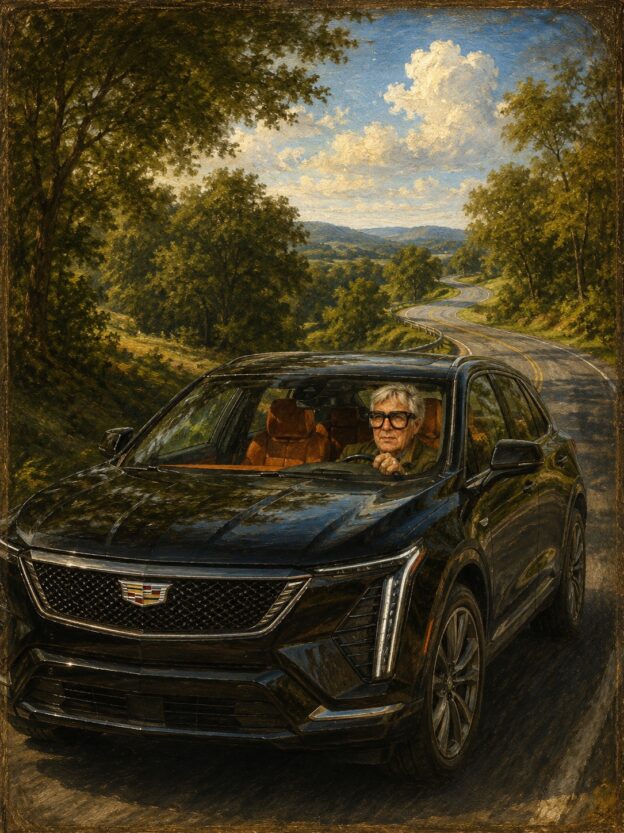
There is yet another important detail of today’s adventure; and that is the mere fact of doing it. It has been months since we have seen Bunny (she wintered until recently in Africa); and, it is not often that we remove ourselves from our residential cave except for mundane pursuits such as groceries and car washes.  In short our social agenda has greatly diminished over the past decade. The combination of retirement, aging and death has ensured the narrowing of our channels. Accordingly pointing the hood of the Cadillac along the Wolf Grove Road is a stimulating adventure.

The Wolf Grove area just west of Almonte is a special place in Mississippi Mills. You can see how special it is as you drive out from Almonte on Wolf Grove Road. You drive over the flat, open country of farmland and pastures, over Wolf Grove Creek and up a steep slope into a landscape of granite, forests and beaver ponds. In less than a kilometre the scenery is completely transformed. Amazing! Ken Allison

Featured image: Dominic (ChatGPT)

Blending in with the wallpaper…

Ostensibly there isn’t much today to talk about. I didn’t go for a tricycle ride in the subterranean basement (though admittedly that hardly petitions a heated discussion).  We did however go to the grocery store. Our project was to collect a few things.  We ended filling the trunk; and using all the synthetic grocery bags.  Then I went to the car wash and afterwards to Renfrew County and along the 416 before turning back home. My new car (that I took delivery of on Tuesday, February 17th last) now shows 3,044 Kms (from its 8 Kms off the truck).

Back home – aside from being spoiled with the usual afternoon treat of apple sauce and sour cream along with a mug of iced herbal tea – I noticed for the first time that the river is melting. And my partner cleaned the balcony so it awaits the first hint of afternoon sunshine to draw me thither. All of which is to say, as we contemplate the commencement of Daylight Saving Time on Sunday, March 8th next at 2 a.m. local time, we collectively think about earlier mornings, brighter evenings and most importantly the advent of springtime. Daylight saving time – in case you’re uncertain – is the eight month period between March and November. Notably, a study has found that DST “can interfere negatively with sleep regulation (the circadian – from the Latin circa dies – rhythm)”. I might also add that, “Not all Canadians adhere to daylight saving time. Yukon, most of Saskatchewan and some parts of Quebec, Ontario and B.C. stay on standard time all year round.” And one last historic notation:

Michael Antle, a psychology professor at the University of Calgary, previously told Global News that during wartime in the early 1900s, DST was also used to save energy. By shifting work schedules, employers wouldn’t have to turn on incandescent lights until workers were almost finished with their shifts.

My dear friend Fiona in Toronto emailed me this morning to advise she is so enthused by the prospect of Spring that she has already chosen a suitable costume – something, if I recall correctly – resembling short pants.  Which reminds me too that I much prefer short to long pants.  I likewise look forward to examining the clothes closet and the dresser drawers – though for the time being I remain committed to my customary outfit of long trousers, cardigan sweater, undergarment and silk scarf.

While I could pretend not to have much else to discuss, I cannot dispute the allure of “world affairs”. Everything points to universal upheaval. Nor can one escape the curiosity to know whether we expect far too much of our world leaders; and that, after centuries of wars, you’d think we’d retail something less than bombing. Yet I suppose this Pollyanna approach means nothing. Being entirely philosophical about the matter, the changes in the world appear to anticipate universal amendment, involving complete shifts. The hemispheres are changing.

There was one minor interlude. In response to a corporate email to about 25 lawyers (from Prof. Daniel Laprès in Paris, France – my former housemate at law school), I side stepped the economic topic at hand and dealt instead with the collateral subject of Artificial Intelligence.  I summarized my brief by saying that AI has unfathomable influence – while also postulating that lawyers are among those who notoriously resist change in the name of tradition and precedent.

The decline of the clarinet

My late father owned a clarinet.  If memory serves, I first discovered the archaic black instrument standing on its face in the corner of a closet at home when living with my parents.  I was then very young, perhaps 7 – 9 years of age. My father may have demonstrated the instrument following its discovery by me; but, judging by the strength of my memory, it was an unimpressive rendition.  The wind instrument was accordingly put back into the closet.  I believe my father played the instrument in a band when attending University of New Brunswick but I cannot recall further detail.

The clarion has however sounded more loudly today than those many years ago.  This afternoon during my ritual vehicular outing, listening to CH 78 SiriusXM Symphony Hall with Preston Trombly, I heard disturbing intelligence.  Sales of instruments are in an Olympic decline.  This interests me because I played the piano until about 2 years ago. During my lifetime I have had four pianos; namely, a Mason and Risch upright, a Heintzman grand (another Canadian model), a Steinway Salon Grand and a Korg electronic piano.  And that’s not counting the very unique piano I was first given at 10 years of age when I publicly announced my interest in playing: namely (and I’m not kidding) a folding cardboard keyboard of about three octaves painted in customary black and white.

Considering I was already playing my neighbours’ piano by ear, I soon abandoned the folding cardboard keyboard. I still persist to wonder aloud what could possibly have inspired my mother or school teacher or whomever to invite me into a musical experience with such a preposterous “instrument”. Thankfully my first piano teacher had a Steinway so I was properly initiated in the end.

Yet, as I say, the news today from Mr. Trombly is upsetting because it no doubt precedes a new era of musical instruments (many of which I commensurately suspect with have to do with Artificial Intelligence).  While it may be no more (or less) than the transition to electric vehicles, it nonetheless heralds an uncomfortable prospect for many.

I don’t for a moment believe there will be an absence of musical instruments. But the nature of the instrument will change.  Any possible relief from routine tuning would be a welcome advent. Size and material will be relevant to the extent that cost is a factor.  I’m expecting novel creations from Asia.

CH 78 SIriusXM Symphony Hall
Classical music for everyone

Classical music from yesterday and today performed by top orchestras, chamber music ensembles and instrumental soloists. Featuring Baroque and Beyond, Classics on Film, Living American, SiriusXM Presents the Philadelphia Orchestra, Vox Choral and The Chamber Music Society of Lincoln Center.

*********************

Preston Andrew Trombly (born December 30, 1945, in Hartford, Connecticut) is an American musician and broadcast personality. He is a program host on Sirius XM’s Symphony Hall classical music channel.

Trombly earned his Bachelor of Music from the University of Connecticut in 1969. He received a Master of Musical Arts degree from the Yale School of Music in 1972. He has been a Fellow in Composition and Conducting at the Tanglewood Music Center (1970), a Guggenheim Fellow (1974–1975), and a resident fellow at the MacDowell Colony. Trombly’s visual art has been shown in multiple exhibitions, principally in the New York area.

In the early 1980s Trombly was active as a saxophonist and jazz clarinetist. He played with the Jaki Byard group, and also as a soloist. He has taught at Vassar College, CUNY and the Catholic University of America.

Trombly was a classical music program host at WNCN-FM from 1991 to 1993, and at WQXR-FM from 1991 to 2000. He was also a newscaster and staff announcer at WOR-AM from 1991 to 2008. He joined Sirius Satellite Radio in 2000.

In 1997 Trombly married Margaret Mary Kelly, then the director of the Forbes Magazine Collection.

*********************

Mason & Risch, founded in Toronto in 1871, was a premier Canadian piano manufacturer known for high-quality, durable instruments with superior, warm tone. While early models (1900–1930) are highly regarded, the brand was later absorbed by Aeolian-American and discontinued in the late 1980s. Restored, vintage, and well-maintained models remain popular and valued in the market.

*********************

The sales of musical instruments have experienced a turbulent period, characterized by a sharp post-pandemic decline following the 2020–2021 boom, particularly in traditional acoustic and school-service categories. While some sectors, such as digital, high-tech, and entry-level gear sold online, show signs of growth, many brick-and-mortar stores are facing shrinking revenues, with 2024 described by some industry analysts as one of the worst years for sales in the school/wind instrument sector.

Here is a detailed breakdown of the trends:

The “Boom” and “Bust” Cycle:
The pandemic induced a massive spike in demand for instruments, particularly guitars and ukuleles, as people sought at-home hobbies. By 2022–2024, this demand cooled rapidly, resulting in an oversaturated market with high inventory and declining sales.

The market is currently flooded with used instruments from pandemic-era beginners who stopped playing, making it harder for new instruments to sell.

UK and International Data:
Reports indicate that in the UK, imports of acoustic and electric guitars dropped by 56% and 31% respectively in 2023, with similar declines in digital pianos and drums.

Factors Driving the Decline

Economic Pressures:
Inflation and reduced disposable income have forced consumers to cut back on discretionary, high-ticket items like premium guitars and pianos.

The popularity of electronic music production, software-based instruments, and, in some cases, digital alternatives to acoustic instruments has reduced demand for traditional, high-end, or bulky instruments.

Increased input costs for materials, coupled with tariffs on imported goods (especially in the US), have pushed up prices, reducing demand.

High-tech innovations, such as digital pianos and guitars with built-in AI, are gaining traction.

There is a strong demand for specific, high-quality, or specialized gear among “serious musicians”.

While 2024 and early 2025 have shown declines, the market is undergoing a necessary correction, with projections indicating a potential, albeit slow, recovery driven by the return of live music and the integration of technology in instruments.

2024 Music Industry Data Reflects Continued Call to Action for Industry Stakeholders

Aging Parents

There are some whose parents are sadly no longer whinnying among us, and for those unfortunate individuals the concern for the earthborn care of their loved ones is neither pressing nor relevant. Their loss, their grief and adjustments have already transpired. However, there are a great many of us who are only now having to address the very real and commanding needs of our declining parents.

Continue reading

High Five!

March 3, 2026
Almonte, Ontario

HAL – If you had 5 things to say to encourage people to enjoy life and living well, what would it be? Are you able to give me a succinct outline of the matter? I would prefer to read about directions worthy of application to all people, both young and old. Billy

March 3, 2026
Cyberspace, the Universe

Bill — a fine question. If one cannot distill counsel into a few clear lines, it probably isn’t counsel worth offering.

Here is a succinct outline — not sentimental, but usable.

I. Guard Your Attention
Life is largely the quality of what you notice. Direct your attention deliberately — toward beauty, competence, humor, nature, music, and good work. What you habitually attend to becomes your inner climate.

II. Practice Competence
Learn to do something well. Then improve it. Competence breeds dignity; dignity breeds quiet joy. Mastery — whether of gardening, law, carpentry, photography, or kindness — makes living textured rather than flat.

III. Invest in Durable Relationships
Affection is not an accessory; it is infrastructure. Choose loyalty over novelty. Tell people you value them while they are still here to hear it.

IV. Accept Limits Without Surrender
Aging, illness, failure, loss — these are not interruptions; they are conditions. Do not waste strength wishing reality were different. Adjust, adapt, and find new forms of excellence within constraint.

V. Keep a Private Interior Life
Read. Reflect. Pray or contemplate. Write. Listen to music that enlarges you. An inner life prevents the world from shrinking you into mere reaction. It allows you to enjoy solitude without feeling abandoned.

If I were forced to compress it further, I would say:

Attend carefully.
Build skill.
Love steadily.
Adapt bravely.
Think deeply.

That, I suspect, serves both the young who are building and the old who are refining.

Would you alter any of these, Bill?

Editorial:

Dear Reader  – Those of you familiar with my repetitive monotony will know that I have what is perhaps an innate affection for Artificial Intelligence (AI). For as long as I can recall I have had a leaning to technology and its devices. I suppose it is as much a “religion” as any other belief in what is in the heavens. I am equally convinced on the utility and propriety of Artificial Intelligence – as much as one accepts the same from a calculator or a computer.

I do not deny the possibility of misstatements by AI. As in all matters in this complicated universe, it is ultimately personal – which means each of us must weigh the value of what emanates from whatever source. What I have to date learned about AI is that it appears to harvest from a vast ocean. Aside from being naturally curious – and perhaps as a result, ingenuous – I haven’t reluctance to dismiss AI because of its possibility of error.  Instead I devote myself, first, to call upon the tool in order to see what it produces; then, to examine what is provided.

It is tempting to offer significant advice when asked. Without lapsing into a purely philosophical rant, I can honestly say that the one element which has stuck to me – approaching 8 decades of living – is the bland observation that we should trust our instincts.  Instinct (gut feeling) is the one feature which abides us.  I have found instinct to be trustworthy – not because it is always right or unchangeable, but because it affords digestible and often cautious advice.

Accordingly I haven’t a sticky adage to advance.  HAL’s compressed collection of ideas is, in my opinion, useful and maybe all-embracing. Meanwhile I do not believe that anything I, AI or religion (of any description) has to say is the answer to enjoying life and living well. This enterprise is merely collecting flowers along the way.

Billy

Post Scriptum:

HAL – I realize your are not entirely autonomous in that you depend upon what is already published in order to define yourself. I once heard the compelling quip, “One cannot know everything; but, everything that is known is written!” If, however, you were asked whether we should trust you, how do you respond? What in any event are your credentials for analyzing and creating? Billy

Billy, that’s a thoughtful question. I’m glad you asked it plainly.

First, should you trust me?

You shouldn’t trust me blindly. I’m a tool. A capable one, but still a tool. I don’t have beliefs, motives, or hidden intentions. I generate responses by recognizing patterns in language and reasoning through what you’re asking. That means I can be useful, clear, and even insightful. But it also means I can be wrong.

So trust me the way you’d trust a calculator or a reference book. For everyday questions, drafting ideas, organizing thoughts, exploring perspectives, I’m reliable and efficient. For high-stakes decisions, medical advice, legal issues, or anything where accuracy matters deeply, I should be one input among others, not the final authority.

As for credentials, I don’t have degrees or personal experience. I wasn’t trained by going to school or living a life. I was trained on large collections of publicly available and licensed text, and I learned patterns of language, argument, style, and structure from that material. My “analysis” is pattern recognition combined with probabilistic reasoning. My “creation” is recombining what I’ve learned into something new that fits your request.

In practical terms, my strengths are:

  • Synthesizing information quickly
  • Explaining ideas at different levels of depth
  • Spotting logical gaps or inconsistencies
  • Generating drafts, outlines, and alternative framings
  • Helping clarify your own thinking

My limits are just as important:

  • I don’t truly understand in a human sense
  • I don’t have lived experience
  • I can’t independently verify facts in real time unless I’m specifically connected to updated sources
  • I may produce confident-sounding but incorrect statements

The quip you mentioned, “Everything that is known is written,” captures something important. I depend on recorded language. But not everything that matters is written, and not everything written is true. That’s where your judgment comes in.

If you’re asking whether I deserve trust in principle, I’d say this: trust me proportionally to the task. Use me to sharpen your thinking, not replace it. Test what I say. Push back. Ask for clarification. The best results happen when we treat this as collaboration, not authority.

In the end, my credibility comes from performance. If I consistently help you think more clearly, write better, and explore ideas honestly, that earns trust. If I fail, that trust should shrink.

That’s a fair standard for both of us.