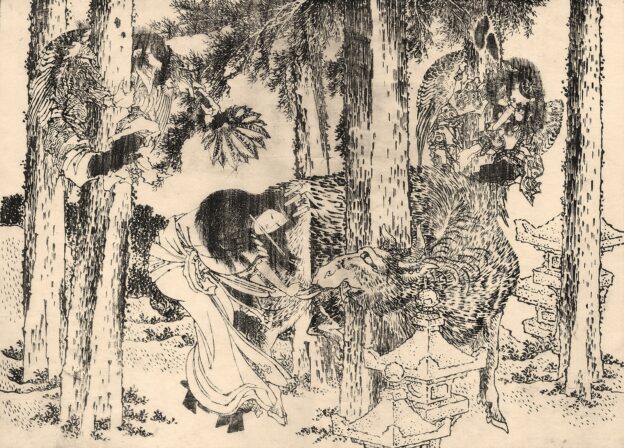
Cursing, at least in a formal manner, is to my knowledge now uncommon. As historic or consumed by fable as it may be, it is not however wholly unthinkable. It persists in the modern vernacular as a moderate expression of disfavour and hopefulness for recourse of one’s perceived violation. I acknowledge nonetheless that the strength of the vindication is limited by comparison to a full-on hex.
A curse (also called an imprecation, malediction, execration, malison, anathema, or commination) is any expressed wish that some form of adversity or misfortune will befall or attach to one or more persons, a place, or an object. In particular, “curse” may refer to such a wish or pronouncement made effective by a supernatural or spiritual power, such as a god or gods, a spirit, or a natural force, or else as a kind of spell by magic (usually black magic) or witchcraft; in the latter sense, a curse can also be called a hex or a jinx. In many belief systems, the curse itself (or accompanying ritual) is considered to have some causative force in the result. To reverse or eliminate a curse is sometimes called “removal” or “breaking”, as the spell has to be dispelled, and often requires elaborate rituals or prayers.
The believability of a curse is likely its most successful detriment. My late mother and a girlfriend of hers from Vancouver were accustomed to visit a soothe sayer or crystal ball gazer whom I seriously doubt they accepted as anything more than entertainment. But I also imagine they thrilled to hear what the fortune teller or palm reader had to say. It sounds to me to have been a very profitable hors d’oeuvre for a chilled martini or two.
A less whimsical look at artful speculation is heraldry. This, I confess, is for me a more gripping theme than astronomy though its magical influence is probably no less unwarranted. It has at least the element of ornamental accessory which is most notably not lost on the Scots or the Saxons who have traditionally adorned themselves with broaches, sgian dubh, sporrans, kilt pins, buckles and flashes. Getting oneself an heraldic symbol may constitute a more academic and less cosmetic preoccupation though somehow the venture is for me tainted by seeming inconsequence and pretence.
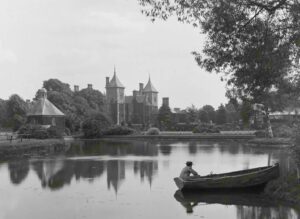
This isn’t however to suggest I haven’t an attraction to mindful speculation. Not the least of such an endeavour is what comes to mind when I gaze from my elevated perch upon the tranquil river in the distance. Oddly it is not the conciliating feature of the image which draws me; rather it is the indisputable perfection of the picture which oddly reminds me of the sea (to which I have always attributed the height of imagery).
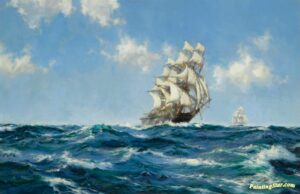
Though I excuse my indulgence of the sea by suggesting its inheritance from my youthful days of studying law at Dalhousie University adjacent the crashing North Atlantic Ocean (which I regularly visited on weekends or the cavernous Halifax harbour) it is nothing more than an innate maritime infection lately regenerated by the burgeoning events of Upper Canadian friends relocating to Mahone Bay. It is fruitful enterprise like this which captivates me as well. It is impossible to make an assessment of life other than serendipitous and splendid! I won’t allow myself to trump the spiritual dynamic of that conjecture by repeating the vulgar (though to me enlivening) details of today’s retail. I am never one to diminish a heartfelt optimism!
Mahone Bay is a town on the northwest shore of Mahone Bay along the South Shore of Nova Scotia in Lunenburg County. A long-standing picturesque tourism destination, the town has recently enjoyed a growing reputation as a haven for entrepreneurs and business startups. The town has the fastest growing population of any municipality in Nova Scotia according to the 2016 census, experiencing 9.9% population growth.
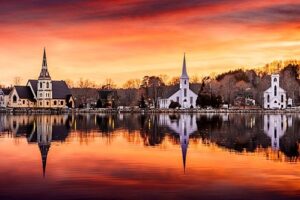
Mahone Bay’s boat building history begins with the Mi’kmaq. The Mi’kmaq were built birch bark canoes. The British began the first industrial production of ships. They established sawmills to produce lumber for shipbuilding. The earliest official registration form found for a vessel built in Mahone Bay dates from 1817. By 1850, at least 43 vessels had already been built by small shipyards in the Mahone Bay area and larger shipyards began being established to build mainly schooners and other smaller vessels, primarily for fishing and moving goods. As years passed, the trend was to build larger vessels for longer distance trading with the United States, West Indies, and elsewhere.