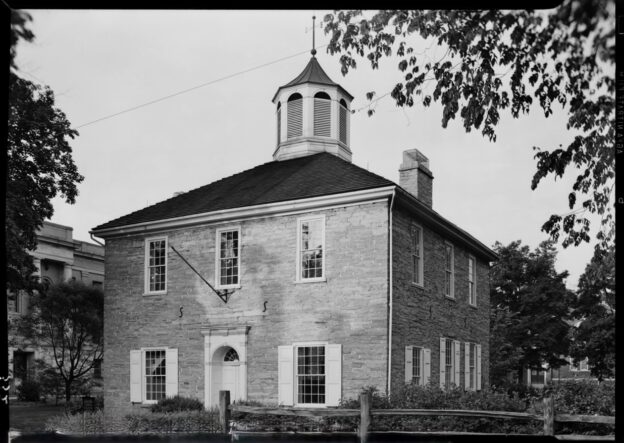
Serendipity is forever a sustaining strand of my life. Specifically I am enthralled by those whom I chance to meet. Inevitably there is an unanticipated connection, a degree of commonality, a vein of deeper association and conviviality. Not entirely unexpected is the link we’ve developed with people living in Indiana, USA (not far from the Province of Ontario in Canada). These are predominantly people whom we’ve met while wintering in Florida (either Longboat Key or Key Largo).
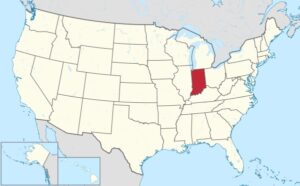
Normally I am shamefully consumed by my own minutiae. Nonetheless I acknowledge the benefit of enlightenment through discovery. Granted on-line research is a crude method of sophistication but it affords a platform. Otherwise I am afraid I will too easily bend to what is immediate and moderately less taxing.
I was intrigued to find the word “hoosier” associated with Indiana. It suffers an element of colloquialism in the modern vernacular.
Dunn traced the word back to the Cumbrian hoozer, meaning anything unusually large, derived from the Old English hoo (as at Sutton Hoo), meaning “high” and “hill”.
Hoosier
A native or resident of Indiana is known as a Hoosier. The etymology of this word is disputed, but the leading theory, advanced by the Indiana Historical Bureau and the Indiana Historical Society, has its origin in Virginia, Kentucky, the Carolinas, and Tennessee (the Upland South) as a term for a backwoodsman, a rough countryman, or a country bumpkin.
The relatively fresh beginnings of North America often include alliances with France and England (and thus Canada as well).
In 1679, French explorer René-Robert Cavelier, Sieur de La Salle was the first European to cross into Indiana after reaching present-day South Bend at the St. Joseph River. He returned the following year to learn about the region. French-Canadian fur traders soon arrived, bringing blankets, jewelry, tools, whiskey and weapons to trade for skins with the Native Americans.
The native bloodlines ran deep. Conflict was a constant in this newly discovered world far from the niceties of British and French society which had paid for the exploration.
By 1702, Sieur Juchereau established the first trading post near Vincennes. In 1715, Sieur de Vincennes built Fort Miami at Kekionga, now Fort Wayne. In 1717, another Canadian, Picote de Beletre, built Fort Ouiatenon on the Wabash River, to try to control Native American trade routes from Lake Erie to the Mississippi River. In 1732, Sieur de Vincennes built a second fur trading post at Vincennes. French Canadian settlers, who had left the earlier post because of hostilities, returned in larger numbers.
Indiana is part of what is frequently called Midwestern USA. Compared to the eastern and western states of the union, the midwest is generally considered conservative.
In the 1920s, state politics was heavily influenced by the rise of the Indiana Klan. First organized in 1915 as a branch of the Ku Klux Klan, it appealed to white Protestants alarmed by social and economic trends, including changes induced by immigration from southern and central Europe. In the name of defending “hundred-per-cent Americanism”, the Klan sought to exclude from public life “Bolsheviks, Catholics, Jews, Negroes, bootleggers, pacifists, evolutionists, foreigners, and all persons it considered immoral”. By 1925 the Klan had 250,000 members, an estimated 30% of native-born white men. By 1925 over half the elected members of the Indiana General Assembly, the governor of Indiana, and many other high-ranking officials in local and state government were members of the Klan.
It is generally reckoned to this day that Indiana fulfills the broad characterization of the Midwest. This conviction is however succeeded in its elemental influence by the following catastrophe.
On December 8, 1964, a Convair B-58 carrying nuclear weapons slid off an icy runway on Bunker Hill Air Force Base in Bunker Hill, Indiana and caught fire during a training drill. The five nuclear weapons on board were burned, including one 9-megaton thermonuclear weapon, causing radioactive contamination of the crash area.
The evolution of modern day intelligence is reportedly from Germany.
German is the largest ancestry reported in Indiana, with 18.8% of the population reporting that ancestry in the census.
What however has notably intrigued me is the tie with the automobile. This is no small compliment and may well give cause for adjustment to the snobs of Grosse Pointe, Michigan (where – serendipitously – my mother’s brother Uncle Lawrence formerly resided and routinely touted his domestic automobile).
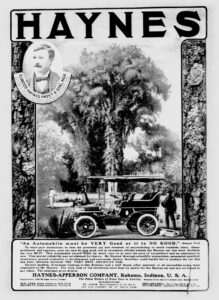
In its earlier years, Indiana was a leader in the automobile boom. Beginning its production in Kokomo in 1896, Haynes-Apperson was the nation’s first commercially successful auto company. The importance of vehicle and parts manufacture to the state was symbolized by the construction in 1909 of the Indianapolis Motor Speedway.