Fast Cars Superstars
When the base get bumping up in the club
Pour another shot and show me some love
I wanna get the party going, ladies to front
Now let me see you shake it and turn the music up

Fast Cars Superstars
When the base get bumping up in the club
Pour another shot and show me some love
I wanna get the party going, ladies to front
Now let me see you shake it and turn the music up

There is nothing wrong with a bland day. In fact I rather enjoy a bland day because it memorializes everything else, from putting on one’s socks to relishing the soft hues and the spiky trees of the distant minor vale by the river. What, I ask, can be more fulfilling than rejoicing in the pleasure of seeing and doing what is at hand! It is a relief from urgency and projection plus of course the adjoining lack of compulsive necessity. It is the gratification of one’s pertinency.

Today was a cool day in early December. Grey sunlight blurted from a murky orb low in the sky hidden in a wintry fog. By late afternoon the breath of indoor heat was welcome. I passed a woman in the lobby carrying a bag from which protruded a silvery bough heralding Christmas decoration. A delicate almost imperceptible snow had fallen and for the moment remains undisturbed, the first of the Artist’s gentle applications of which no doubt more shall follow. Recovering roost at my desk while overlooking a now mystified white field and frowzy grey river, accompanied by a bowl of sliced green apple to the left and a tiny mug of chilled espresso to the right, I was fitted to address that inexorable question, “Now, where was I?”

Recently over luncheon and casual conversation at table our co-host curiously began a discussion of the etymology of measurement. He started for example with reference to a stone’s throw which of course is an obvious allusion to the estimate of that standard of achievement. After mentioning as well other prescriptions such as a stone of weight and a foot or a league, his iteration adopted a more scientific approach to measuring by noting that a second of time is a reflection of the duration which a particle of light travels by some unfathomable calculation.
(The) second, fundamental unit of time, now defined in terms of the radiation frequency at which atoms of the element cesium change from one state to another. The second was formerly defined as 1/86,400 of the mean solar day—i.e., the average period of rotation of the Earth on its axis relative to the Sun.
By strange consequence this peculiar rumination provoked me to recall an equally singular law school study of comparative law from which I had drawn the conclusion that all laws of whatever geographic jurisdiction or cultural evolution are essentially the same. This seemingly odd transition from a chat about measurement to one of law reminded me of a greater synthesis; namely, we’re all looking at the same thing however differently it is characterized or identified or measured. The importance is that it is not identity or calculation which predicts the nature of things. Measurement of any description – whether fundamental or scientific – is nothing more dignified than human attribution howsoever plain or grand it may be. And while one’s weight or height are tolerably variable, it is a reminder too that the more esoteric constructs of religion and law are equally subject to different descriptions of the same thing (notwithstanding how independently we may choose to manifest them). Furthermore there is nothing inherently significant in the terms or manner in which we choose to dignify those calculations of measurement or limitation of conduct. They are all products and estimates of our own human invention and calculation (and dare I say prejudice), not some mystical revelation or magical scientific discovery.
The common cubit was the length of the forearm from the elbow to the tip of the middle finger. It was divided into the span of the hand or the length between the tip of little finger to the tip of the thumb (one-half cubit), the palm or width of the hand (one sixth), and the digit or width of the middle finger (one twenty-fourth). The Royal Cubit, which was a standard cubit enhanced by an extra palm—thus 7 palms or 28 digits long—was used in constructing buildings and monuments and in surveying in ancient Egypt. The inch, foot, and yard evolved from these units through a complicated transformation not yet fully understood. Some believe they evolved from cubic measures; others believe they were simple proportions or multiples of the cubit. In whichever case, the Greeks and Romans inherited the foot from the Egyptians. The Roman foot (~296 mm) was divided into both 12 unciae (inches) (~24.7 mm) and 16 digits (~18.5 mm). The Romans also introduced the mille passus (1000 paces) or double steps, the pace being equal to five Roman feet (~1480 mm). The Roman mile of 5000 feet (1480 m) was introduced into England during the occupation. Queen Elizabeth I (reigned from 1558 to 1603) changed, by statute, the mile to 5280 feet (~1609 m) or 8 furlongs, a furlong being 40 rod (unit)s (~201 m) of 5.5 yards (~5.03 m) each.
The result is therefore moderately disturbing. The insinuation naturally is that apart from what we attribute to anything, it has no critical meaning. Given the right intelligence and perspicacity one may dilate anything into anything. That, I might add parenthetically, is the psychology behind what little culinary talent I have; viz., I never measure when cooking.
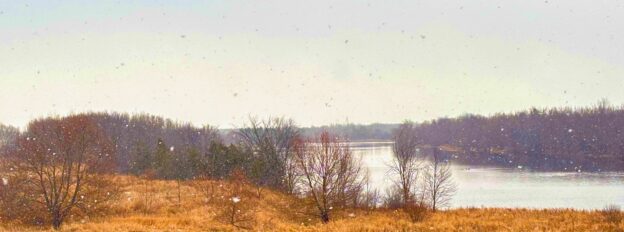
Today is December 1st. It marks the first snowfall of the season. We had just returned home from Dim Sum at Sea King Shark Fin Seafood Restaurant on Merivale Road in the city when the ghostly flakes began to materialize in the misty grey atmosphere. Of a sudden we turned the hibernal corner! Equally precipitous was the thought of glossy green holly bush leaves with their spikes and brownish stems supporting a cluster of red berries. It is for me the picture of Christmas. The memory hearkens back to my earliest childhood at Sunday school when I heard for a first time the lyrics of The Holly and the Ivy the traditionally British folk Christmas carol.
Christians have identified a wealth of symbolism in its form. The sharpness of the leaves help to recall the crown of thorns worn by Jesus; the red berries serve as a reminder of the drops of blood that were shed for salvation; and the shape of the leaves, which resemble flames, can serve to reveal God’s burning love for His people. Combined with the fact that holly maintains its bright colors during the Christmas season, it naturally came to be associated with the Christian holiday.

There is a hackneyed saw that one should not linger at table beyond three hours, after which the candles melt and the guest begins to smell like unattended fish. Today we were not only conspicuously close to violating that formula, we in fact transgressed the boundary. The extension was however evidence not so much of bad manners as it was of a thoroughly pleasant Saturday afternoon communion on a chilly late November day. It is nearing the Christmas season and we were alerted to the theme immediately upon our arrival at the front door. Thence followed further publication of the Advent and all that that entails. It was patently clear that the celebration of the ritual has its transcendental tenor, stimulating a long standing family tradition.

As much as I like to dwell upon life’s random inadequacies, there are too by equal proportion moments of victory which stand out to attention.
Golf Club Pro
This incident has nothing to do with golf. In fact I am not sure what it had to do with. But I remember it provoked me. I had been employed by a golf club to be the lifeguard of the swimming pool. The golf professional, like so many others in his line of work, also ran a sporting goods store wherein his particular line of apparel was locally well known. For reasons I cannot recall (I think it had something to do with clothes but maybe not), I had a disagreement with the chap. Honestly I cannot imagine to what the argument may have pertained. Whatever it was, we got into disagreement. My written response to his invasion (whatever it was) reeked of all the usual gambits in a debating society, with violent assertions followed by revelations of contradictions and ensuing accusations. Clearly the recipient was unaccustomed to formal debate. Perhaps he dismissed me as erratic and unwell. In any event he chose not to contradict me further; instead, he chose to abandon the trifling matter before dignifying it further with a response which was assured to precipitate a rebuttal. This event took place when I was about 18 years of age. In retrospect it marked the beginning of a career of commitment to accuracy and intolerance of unmerited assault. Of course the ups and downs of life have never stopped. Such is life, always something. Hence this column of incidents, wreathed with its laurels of real, imagined and pyrrhic victories. And of course defeat.
Charitable Contribution
While working one summer for the Judge Advocate General during law school, the four students in the office were herded one day to a central government office for an untitled meeting. The room was full of other people, most of whom were young. It unfolded that all the summer students within a number of government offices were sent to attend a fundraising call from a local charity. I was revolted by the design and compulsion. After having endured the majority of a typical lecture, I stood up and removed myself from the room. I walked back to the JAG office. Not long afterwards I was summonsed to the office of the JAG himself, General Simpson. To my astonishment he apologized to me for having enforced my attendance at the charitable gathering. Furthermore he informed me that the agenda for similar use throughout the Public Service had been disbanded.
The Secretary
Though I am blessed to have employed the finest legal assistants throughout my career, there was once a temporary secretary hired during the summer months to allow one of my staff time off. I can’t remember the name of the temporary employment agency (I never had need of it again) but I do recollect the person whom they sent. She was not someone who was easily amused. When I said to her something resembling in her mind a slight regarding the quality of her work (she had probably been inaccurate about a client’s affairs) she threatened to sue me for office misbehaviour. Naturally nothing came of it. She proved to be simply inadequate and nothing further transpired apart from my having to crawl for supplication.
The Illegal Will
A client came to my office one day to instruct me about his last will and testament. He had lately split from his spouse. I drew his will as instructed (with the caveat included in the document that his ex-wife may have a claim against his estate for support and proprietary interests). It wasn’t until months later that the client called to arrange to sign the will. He was in the hospital suffering from acute liver decomposition. In spite of his horrible state, he recalled the terms of the will he had instructed and reiterated his intention to sign it. My secretary and I witnessed him do so. He died days afterwards. His estranged spouse challenged the will (because she would get more if he had died intestate). Her claim was I believe that her deceased husband was alcoholic and hadn’t a clue what he was doing with the disposition of his estate. We went to court. My secretary and I were examined independently in open court before a Judge of the Superior Court of Justice. The claim failed.
I could have done it for less
As you may have gathered by now, this was not the first time I was threatened by formal law suit. In fact I have been sued a number of times – though I am quick to add that none of them related to professional liability in the performance of my duties for my clients. Instead the suits were always personal or monetary. In this instance a well-to-do client sued me with the allegation that my retainer amounted to more than the going rate. In court I explained to the presiding judge that the transaction involved not one but fifteen properties (all of which the client was purchasing but each of which, though physically adjoining one another, required independent investigation). In addition my time involved had been precisely documented. The judge not only agreed but added 50% to the bill as compensation for my inconvenience. The suit so angered me that after the judgement I sent a letter to counsel for the claimant advising that if payment were not immediately remitted I would instruct the Sheriff of the County of Lanark to auction the client’s magnificent house. I got paid.
Copyright
Not so long ago I made the mistake of using a photograph a woman had emailed to me. What I thought was a casual contribution turned out to be a limiting venture. The photograph was one the woman had taken of the nearby river. I was writing something which involved the river and I added the photograph to the composition (which I then shared with the woman, thinking she would be pleased). Instantly I was hit with the accusation of appropriation without consent. On the one hand I was flattered that the photographer felt my audience was large enough to constitute publication within the definition of copyright infringement. What upset though was the violent reaction of the woman. If I had known of her attitude, if I had imagined that the original email of the photograph was subject to such broad limitation, I would readily have given her all the attribution for which she so deservedly opined. Instead I simply removed the photograph and reported to her, “Done!” This was an uncomfortable result. It succeeded to distance me forever from the woman. But it taught me not to use another’s photograph without prior consent or acknowledgment under any circumstances howsoever casual or friendly. A similar contest arose when I used a photograph (taken from a public site and advertisement on the internet) because it apparently contravened a privacy right. This conflict has also succeeded to distance me irretrievably from the complainant.
Conclusion
There are many other accounts of argument and disapproval which have arisen in my lifetime and scope of experience. Some though not all have afforded a happy outcome. One former friend for example has decided because I shared with him my late father’s quip, “You can’t have money and things!” that we shall never talk again. My friend inherited an exceedingly large estate and he is a spendthrift. Apparently he didn’t like the insinuation. We have yet to determine whether my late father’s intelligence is of any application.
Another former acquaintance who lately and inexplicably routinely avoided my telephone calls and emails has only today called to express concern for my well-being and hope to reunite in the near future. I thanked him for the call.
Amorous relationships are normally fodder for controversy. Though my youthful romantic associations have not prospered, none is with regret or lingering hardship. For the past thirty years I have been spared the complications of loneliness and mismanagement. Having an uncommonly close relationship, we find that we survive most happily within our own and limited sphere. Not all familial relationships are the same. Infection by those to whom one is close is a singular punishment. While its result is not the proclamation of victory, its defeat leaves an unending and often irredeemable sting.
The intellectual fabric of these disputes is often marginalized to the point of evaporation. Yet the critical feature of opposition is seldom dissolved. I say this with a portion of regret; but more so with mere admission. It would be irresponsible to overlook the reality of dispute among people (both its existence and its consequence). While I attach no celebration of having tangled with others (whatever their renown or ignominy), I consider it a fallibility to deny its occurrence. I have forgotten the reason, the cause, the name, the parties, the price or the meaning, but the peril of disturbance to the harmony of life is forever there.

When tricycling this morning in my usual solitary manner about our recently cleansed subterranean garage floor, and while reflecting as is my wont upon life in general, it occurred to me that it is all about circles. While you may think this spiral image was propelled by the repetitive act of orbiting the garage to fulfil my daily Olympic zeal of 30 minutes back and forth, the intellectual nutrition – granted not a great less humdrum by any account – was instead derived from other sources within my ambling and unbiased thoughts.
Years ago while studying Philosophy at Glendon Hall I saw the movie The Magus with a prep school colleague at the Toronto-Dominion Centre. We attended the movie on a gloomy Saturday afternoon in November. As we were in the financial district the normally frantic streets were void of traffic. The huge theatre was near empty.
The Magus is a 1968 British mystery film directed by Guy Green and starring Michael Caine (who said it was one of the worst films he had been in because nobody knew what it was about), Anthony Quinn, Candice Bergen and Anna Karina. The screenplay was written by John Fowles based on his 1965 novel of the same name.
Plot: Eventually, Nicholas (the lead actor who stumbles on Conchis, a wealthy Greek recluse) realises that the psychological games are re-enactments of the Nazi occupation and Conchis is suspected of having collaborated with the Nazis during World War II.
It is reported that when Peter Sellers was asked whether he would make changes in his life if he had the opportunity to do it all over again, he jokingly replied, “I would do everything exactly the same except I wouldn’t see The Magus.” My sentiments are similar. But what I more favourably recall of the film is the theme that we must leave what we know to discover whence we have come.
All my life I have been leaving places then returning to them. I would be reluctant to assert that I have ever maintained one domain in particular (as much as I cautiously hope the present is the last). As a child it involved moving in tow with my diplomat father as he and my mother skipped across oceans and about the planet. Going to and from boarding school at holidays and during the summer meant both curricular and circular alterations. Then followed the holiday cycloidal changes at undergraduate university (home and back), later law school in another province (Nova Scotia to Ontario), then articling in one city (Ottawa) and bar admission in another (Toronto). And even when at last settled in one town in the country to work for 40 years, I moved between three houses and two apartments on both sides of the river.
Yet overall I have returned to the same place, completing the circle. I am optimistically hopeful never having to recycle hereafter. Movement involves struggle which at my age and declension is taxing. The only family I have is predominantly within shouting distance (though once my family was 6,000 Kms away). The only friends I have remaining are similarly located (though they too have circled the globe).
Meanwhile I am discovering that apart from the physical aspect of cycling (bouncing to and from the identical point), my psychological bent is similarly inclined. The extraordinary feature of completing a circle is the inherent complication of erasing one’s prior indicia or experience. In effect the return to the point of commencement is a dilution or evaporation of what previously existed. This is of course a natural consequence of circular mobility; that is, the view changes as the cycle repeats (but not completely without the influence of the other).
In the process of completing a circle there is critical transformation; viz., elimination, evaporation or reconsideration. Call it what you will, there is change. And while change is “as the saying goes “ a good thing, it predicts the curious by-product of return to one’s initial perceptions and predominant psyche, one’s inner persona or subconscious mind. Now while I acknowledge this is getting spookily close to the melodramatics of The Magus, the intention is nothing more overt than acceptance that whatever we are will never change, that we are (as some have tragically opined) compelled to “travel the suburbs of our own mind” incapable to board a ship to take us away from ourselves. The less miserable though more fortuitous rendition of the adage is that we trim the sails of our craft, that we change course and embrace a wind from another direction, that we abandon the erstwhile objective and instead are homebound. Resilience I have found comes from trusting one’s instincts and being satisfied with the result notwithstanding whatever turmoil may hover about In its own superfluous and supercilious circles.

Breeding (in the sense of civility) is a complex and predominantly uncommon training. There are no books; instead it is upbringing. It is a prolonged tutelage not unlike that of clerks at the Inns of Court. It is refinement to which few have been exposed and which fewer have engineered with skill. It is a model from which one occasionally tumbles, at times with calamitous result. Its ignorance spells more than lack of polish or pedigree. Its precarious absence denotes a lapse into the vernacular, a descent into plain bad manners and vulgarity. What however makes the absence of breeding most incompatible is its reflection of underlying distortions and inadequacies which invariably render a fetid vapour.
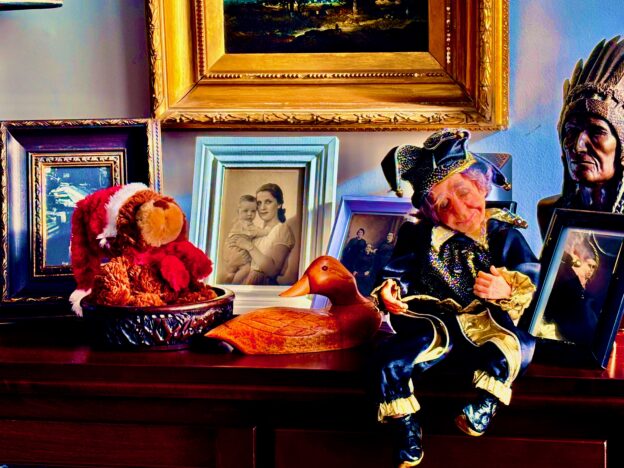
While it may at first blush (and preferably on a sunny day) appear rustic and charming, living on a country estate of 34 acres in an old house heated by a wood burning stove is not without alternative opinion. It does however have a compelling attraction to any of us who is not limited to a demonstrably cosmetic life free of domestic obligation. I for one would find it intolerable (as devoted as I am to the transcendental myth of Walden Pond).